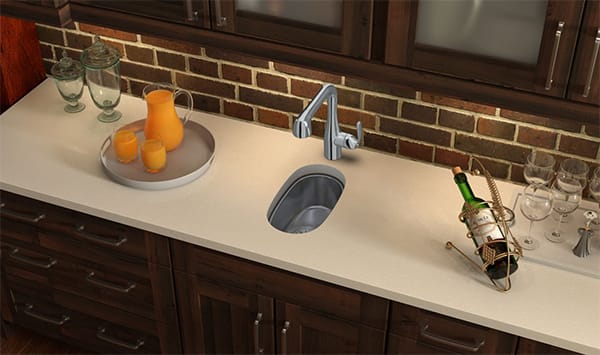
How to Choose Kitchen Sink Size
Shop Kitchen Sinks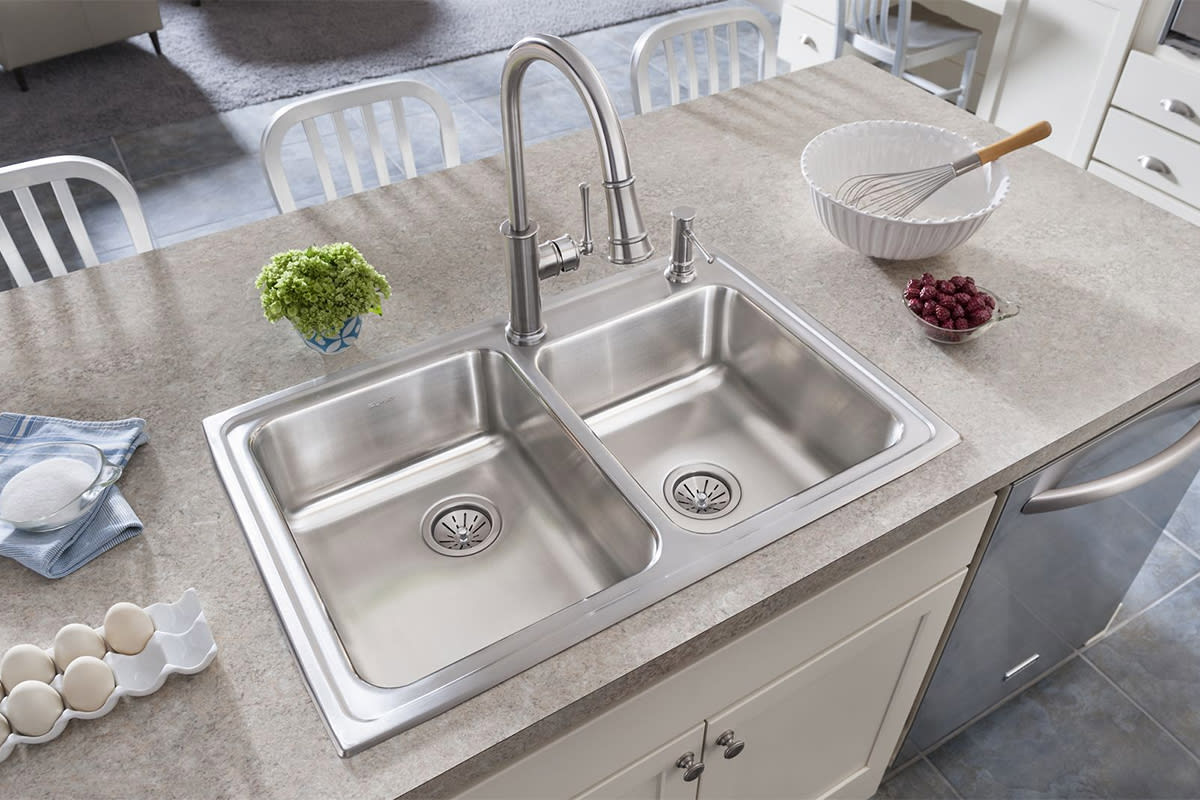
Size matters! Kitchen sinks come in a huge range of widths and depths. Check out this guide to the various sizes of kitchen sinks so that you can choose the one that measures up.
When it comes to choosing a kitchen sink, the options are overwhelming. Material, depth, size, shape, number of bowls, even drain options… you may be tempted to just take whatever builder’s-grade sink the kitchen place offers. Don’t do it! You’ll regret it sooner than later.
Because your kitchen sink is (arguably) the most-used fixture in the room, you need to choose the right one for your kitchen and your needs. One of the most important factors is the size of the sink.
Obviously, if you’re simply replacing an existing sink and not the counter, your sink size is predetermined (unless you want to replace a single-bowl with a double or vice-versa). But if you’re designing a new kitchen or replacing the entire sink area, you’ll need to choose the size that best fits your specific needs.
There are several factors to consider in choosing a sink size:
Average sink size
Kitchen sinks range from a diminutive 7″ to an enormous 72″ in width; standard sink size is 22″ – 30″.
Single-bowl sinks are available in widths up to 36″ (while larger widths are available, they’re uncommon and generally include extra-wide rims or attached worktop surfaces). Double-bowl sinks are generally available in sizes up to 48″ wide (bowls may be different sizes or depths). Triple-bowl sinks may measure up to 60″. Irregular sizes are commonly found in bar and prep sinks.
Sinks are generally between 6 and 12 inches deep. Most typical sinks measure 7 to 10 inches deep; if you like to stack dishes or frequently use large pots or cookie sheets, you may want to go with a deeper sink. Just not too deep – if you’re short you’ll have a hard time reaching the bottom of the sink, and if you’re tall you’ll have to bend down further to get to items. Keep in mind that an undermount sink will be approximately 1-1/2 inches deeper than a drop-in or flush mount.
To take full advantage of every inch of space, consider a zero-radius sink (or one with small radius corners). Zero-radius corners are completely angled, not rounded, so that large pans or pots fit into the corners. These sinks are more difficult to clean than those that are gently rounded (the smaller the radius, the sharper the corner), so be sure to consider that factor prior to buying a zero-radius sink.
Kitchen size
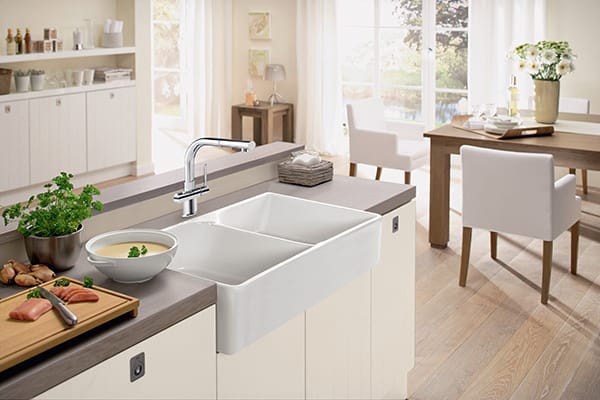
The overall size of your kitchen is a huge factor in sink size. In a smaller kitchen, where space is at a premium, a large sink means less counter space as well as less cabinet space. A rule of thumb, but not set in stone: kitchens up to 150 square feet can handle up to a 24″-wide sink. The reduced counter space can be remedied with a custom-fit cutting board, worktop, or cover to place atop the sink while it’s not in use.
If space is not an issue (or even if it is, but a large sink trumps that), be sure that the sink is proportionate to the overall kitchen layout. A massive apron-front sink will overpower a small kitchen (but an undermount of the same size won’t); a tiny sink will look puny in a large kitchen.
Base cabinet size
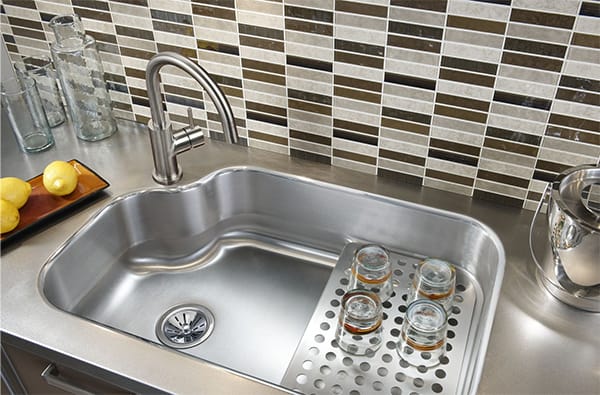
If you’re working with an existing layout or a small kitchen, you’ll need to consider the size of the base cabinet, which determines your maximum sink size. A large sink requires a large base cabinet, which may detract from overall cabinet space or look odd surrounded by comparatively smaller cabinets.
Standard kitchen cabinets are 24″ deep (25-1/4″-26″ wide and 36″-42″ high), but base cabinets are available in a large range of widths. To determine the maximum sink size for your base cabinet, measure the interior of your cabinet and subtract two to three inches from each dimension. A 36″ base cabinet can handle a 33″ sink at most; a 30″ cabinet should be fitted with a sink no larger than 27″ wide. The average 24″ sink base cabinet comfortably accommodates a standard 22″ sink; be sure to consider the depth of your sink when planning storage inside the base cabinet. Still unsure? Read our step-by-step guide on how to measure the base cabinet for your kitchen sink.
You may be able to cut into the cabinet to fit in a bigger sink, but that’s not recommended for several reasons: it voids the cabinet warranty, compromises the counter support, and replacing the sink will require damaging the cabinets.
Average usage
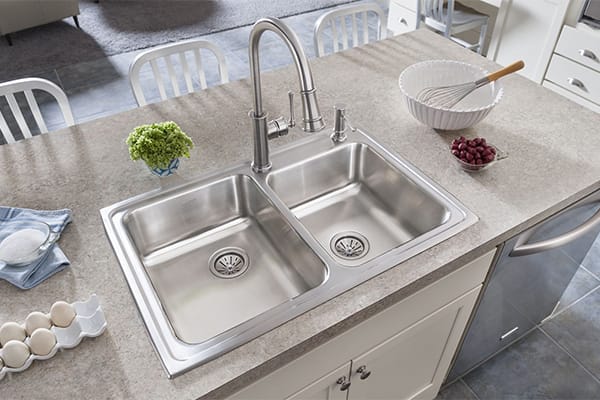
How many dishes do you use in a day? How big is your largest serving platter? Do you bathe children or pets in your sink? Before you decide on a sink size, take a closer look at your cooking and cleaning habits. If you clean up as you go, your sink doesn’t have to be large, but if you like to let the dishes pile up, consider a bigger size. If your big roaster only gets washed on Thanksgiving, you can manage with the inconvenience of wedging it into your sink once a year; if you bake regularly, you’ll want a larger sink for those cookie sheets.
Depending on your particular cooking and washing style, you may want to consider a sink with extra features such as an integrated drain board or a smaller prep bowl. Different sink styles work well for different kinds of cooks: many prefer a large single-bowl sink for its uninterrupted capacity; others opt for a double-bowl sink and use one side for dishes and the other for food prep; still others prefer a triple-bowl sink with ample washing space and a dedicated prep sink, while some choose two entirely separate sinks for multiple users. Multi-bowl sinks with low dividers provide the advantages of both larger single-bowl sinks and multi-bowl sinks in one package.
Surrounding area
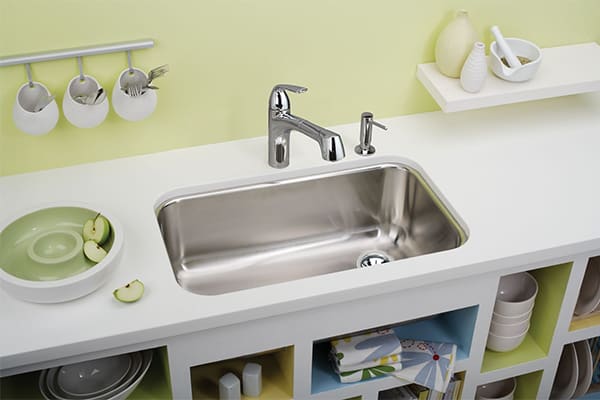
Like you did with overall kitchen size, consider the sizes of surrounding elements. Check out the window over the sink and other nearby fixtures – counters, stoves, accessories, even cabinet detailing – and measure to see if your sink will look proportionate. Place a piece of paper cut to size on the sink area or map it out with masking tape to accurately judge the effect.
Remember to take other elements of the kitchen into account when measuring: the backsplash, faucet, soap dispenser, hot water dispenser, and any other countertop accessories that take up space.
Other needs
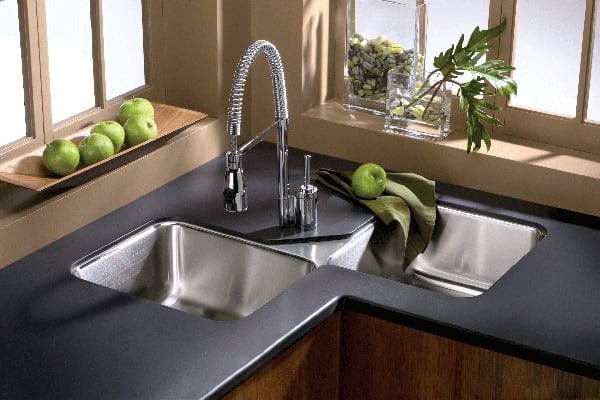
If you frequently host parties, chill drinks, prepare a lot of fresh food, or just don’t like taking a drink over a sink full of dirty dishes, consider a narrow bar sink or prep sink. They’re both decorative and useful, especially for an enthusiastic entertainer with space to spare.