How to Design a Custom Shower
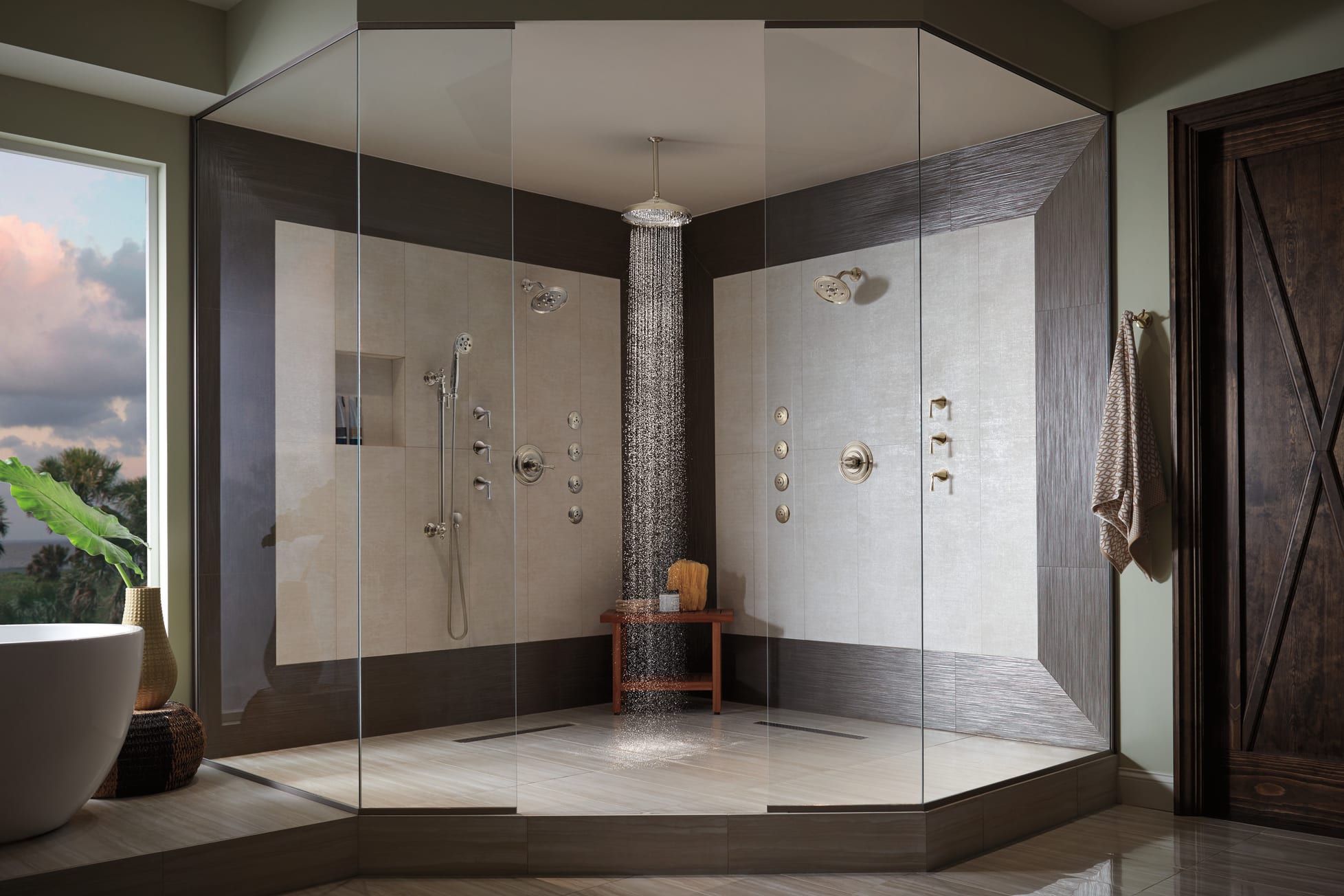
Shower yourself with luxury - every day! Indulge in a custom shower designed according to your preferences. This step-by-step guide will help you make decisions with confidence.
Installing a custom shower is exciting! There are tiles and styles, faucets and flooring to choose… but some of the most important components of the shower are those that you can’t see.
You’ll need to be familiar with the different parts of the shower when choosing your fixtures; this knowledge will help you make the right choices and avoid potential problems.
Get it right the first time! Just follow this guide.
A step-by-step guide to designing and building your custom shower
Step 1: Choose your system type
Decide whether you’d like a pressure balance or thermostatic shower. Thermostatic systems allow for independent control of water volume and temperature, as well as the ability to operate multiple sprays simultaneously; pressure balance systems lack these features, but are generally cheaper.
Step 2: Choose your configuration
Rainhead and handheld? Tub/shower combo? Every body spray you can fit? Decide what kind of sprays you would like, how many of each, and where you intend to place them.
Step 3: Assess your plumbing
Meet with your plumber and/or contractor to determine if your home’s systems – pipes, heater, drainage – can handle your proposed shower. A Sydney plumber can help assess whether your current setup needs adjustments, such as upgrading old pipes, checking for potential leaks, or improving drainage to prevent water buildup. With expert guidance, you not only get the shower that matches your style but also the peace of mind that it’s built on a reliable foundation, keeping comfort and function in perfect balance.
Addressing potential weak spots in the system early on saves you from unexpected repairs down the line and helps your new shower perform exactly as intended. Small details like proper pipe alignment, secure fittings, and effective drainage design can make a big difference in both comfort and efficiency.
For that kind of thorough workmanship, homeowners often turn to Near Me Plumbers Limited, a team known for combining practical know-how with reliable results. Their careful approach ensures that every element—from water pressure to long-term durability—is handled to a high standard. With experts managing the process, you can enjoy a stylish new shower backed by plumbing that’s built to last.
Step 4: Choose your trim
Pick the handle(s) that you’d like in your shower.
Step 5: Choose compatible valves
This is important: choose the valves (the components that go inside the walls), and be sure that they are compatible with your chosen trims; even within the same brand, not every trim is compatible with every valve, so check carefully to be sure that they’ll work together
Shower components
Terms to know
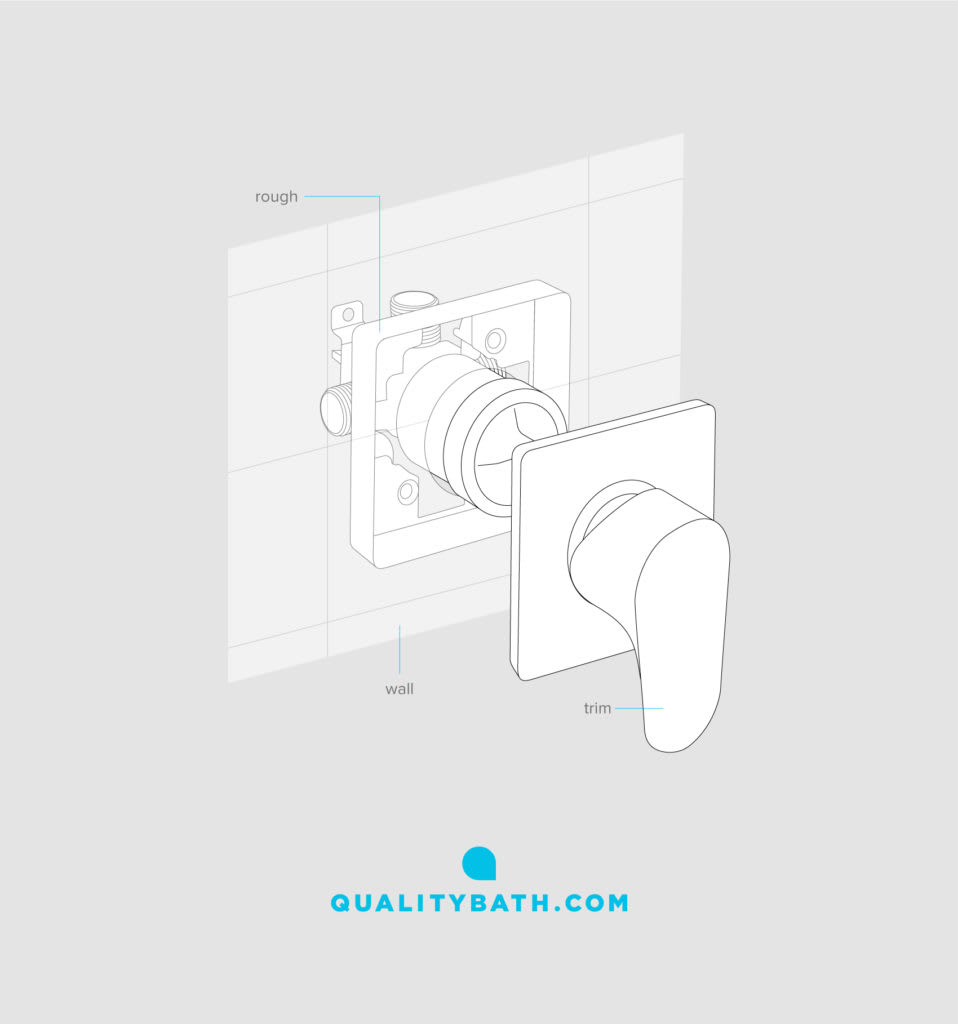
Trim: the external fixtures – handles, shower head, tub spout – found on the finished end of your shower.
Valve/Rough: the general term referring to the components found inside the walls (valves, pipes, diverters, etc.). These components control the temperature and flow. Sometimes referred to as a rough-in valve.
Diverter valve: the valve used in a tub/shower combination or multi-head shower; diverts the water flow from the shower head to the tub spout, handshower, or body spray. The diverter may be found on the tub spout itself or integrated into the trim.
Mixing valve: the valve that mixes hot and cold water before sending it to the shower head; may be pressure balance or thermostatic (see below).
Pressure balance valve: a valve that senses the ratio of hot to cold water; controls both temperature and flow volume.
Thermostatic valve: a valve that senses the temperature of the water, allowing users to control temperature and volume independently of each other.
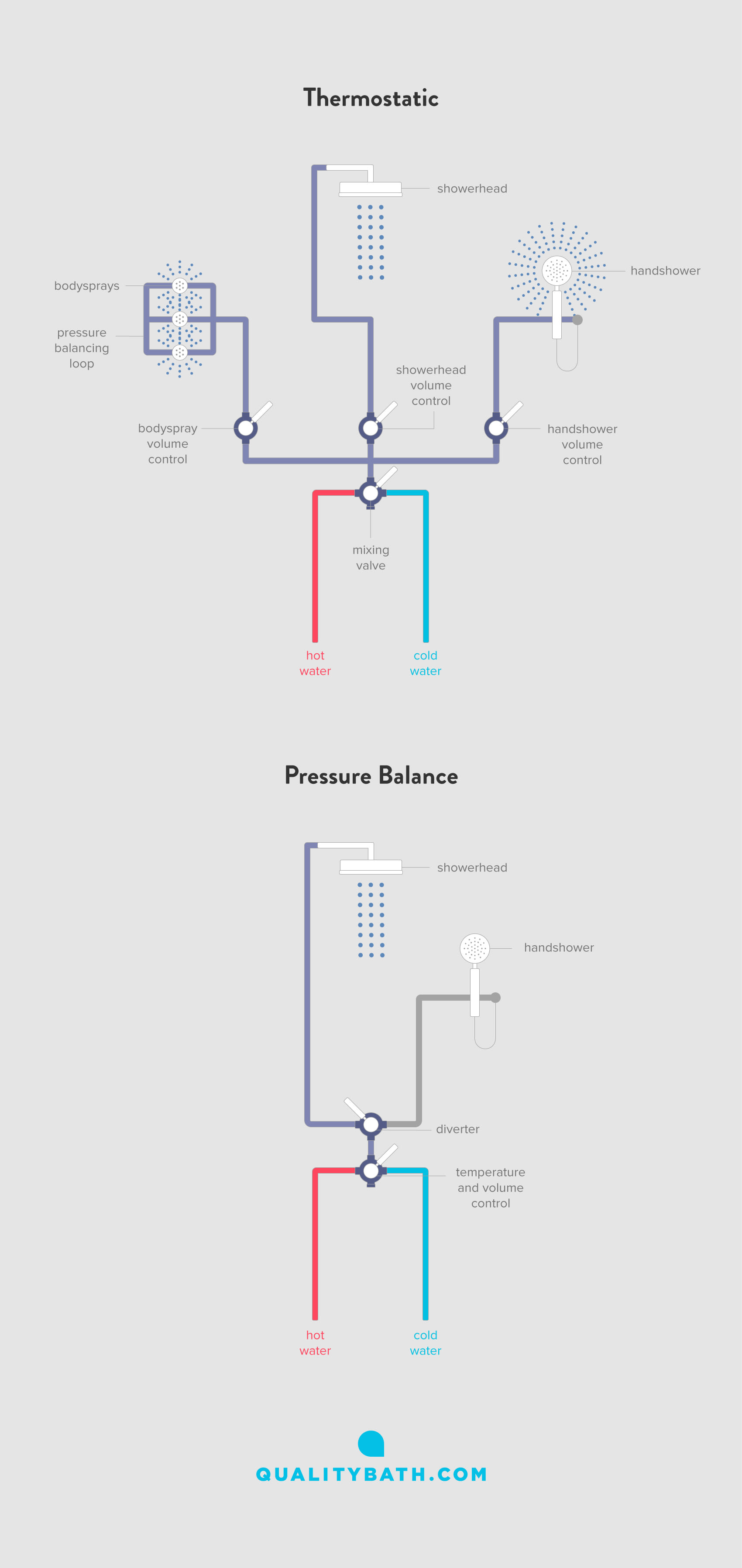
To learn more about thermostatic and pressure balance showers, check out this post.
Configurations
Single-function shower
This classic, simple configuration features one wall-mounted shower head and a mixing valve.
Two-function shower
As showers become more luxurious, two-function showers are becoming increasingly popular. There’s the typical bath/shower combo, but also showers with multiple heads such as a rain head/handheld or overhead/body sprays.
In many two-function showers, the water can only be diverted to one head or function at a time, though it is possible to install plumbing that allows two or more heads to run simultaneously. These showers require a diverter or multiple volume controls to operate the different functions.
Multi-function shower
If you’d like, you can have more than two functions for a truly indulgent shower experience. These require an additional three-way diverter rough and/or multiple controls to allow the water to flow to all heads and sprays. Some systems will need more roughs to allow multiple functions to be used simultaneously.
Placement
Once you’ve decided on which shower heads and body sprays you’d like to have, you’ll need to decide where to put them.
Consider these points:
- If you’d prefer to stand further away from the shower head, be sure to choose one that is forceful enough to propel the water to you (and check that your home’s water pressure will accommodate it)
- Shower head height should be slightly higher than the tallest user, but within reach of the shortest user (for kids or people with disabilities, consider a handshower on a height-adjustable bar)
- Body spray height is largely a matter of preference, but most people like them at three points: shoulders, lower back, and upper/mid-leg
- If your shower will include a seat or bench, consider it when placing the shower heads: do you want it to be in the shower stream or not? Will the body sprays hit you directly in the face when you’re seated? Should you install another volume control next to the bench so that you can turn the water on and off while seated?
Technical considerations
When planning your custom shower, be sure to discuss – preferably with a skilled plumber and/or contractor – the less glamorous (but super important) aspects of the shower to ensure that your home can handle your dream.
- Water usage: a custom shower uses at least 10-12 gpm (gallons per minute); depending on size and number of sprays, you may need ¾” pipes and valves rather than ½” for the water supply to keep up
- Water pressure: to keep the spray heads running at a comfortable volume, 50 psi (pounds per square inch) is recommended; if your system’s pressure is under 45 psi, you may need a water booster pump
- Water heater: your standard 50-gallon heater may not be able to keep up with the demands of a multi-head shower for more than a few minutes; consider a larger or tankless water heater
- Drainage: all that water needs somewhere to go: for configurations with multiple sprays, you may need two standard drains or a larger (or linear) drain to prevent flooding
- Local codes: plumbing codes vary from state to state and may affect your flow rates or trim types, so check your state’s plumbing code or consult with your plumber before buying
Compatibility
Before buying, it’s especially important to make sure that your components will work together. Some parts are not compatible even if they are made by the same manufacturer!
- The rough-in valve and trim must be compatible; most trim kits require a specific valve and will not necessarily be compatible with other valves, even from the same manufacturer. Some manufacturers offer adapter kits that enable the valve to work with other trim kits.
- Several manufacturers, including Delta, Grohe, and Hansgrohe, offer universal valves that will work with various trim kits (but only with trim kits from the same brand).
- Any shower head and tub spout may be used, regardless of brand; only the valve and control must be compatible, so you can change the shower head and tub spout freely.
- In an existing shower, the valve is not easily accessible; to renovate, the plumber will need to cut open the wall (either in the shower or from the other side of the wall behind it) in order to change the valve.
Shower systems: an alternative option
If all of these details sound overwhelming to you, don’t worry! You can still get a custom shower without worrying about all the details. For your convenience, we’ve put together a range of pre-configured shower systems with hundreds of styles and feature combinations – all you need to do is choose one that you like. Run it by your plumber to ensure it’ll work with your plumbing, hit order, and you’re all set!
Get started
Ready to start designing your custom shower? We have everything you need to build the shower of your dreams.
Whether you choose to fully personalize your shower by picking individual shower components or prefer to select from our collection of pre-configured shower systems, our dedicated specialists are here to help you at every step of the process. Chat with us or give us a call at 800.554.3210.