Think Outside the Bath: Where to Put a Freestanding Tub
Shop Freestanding Tubs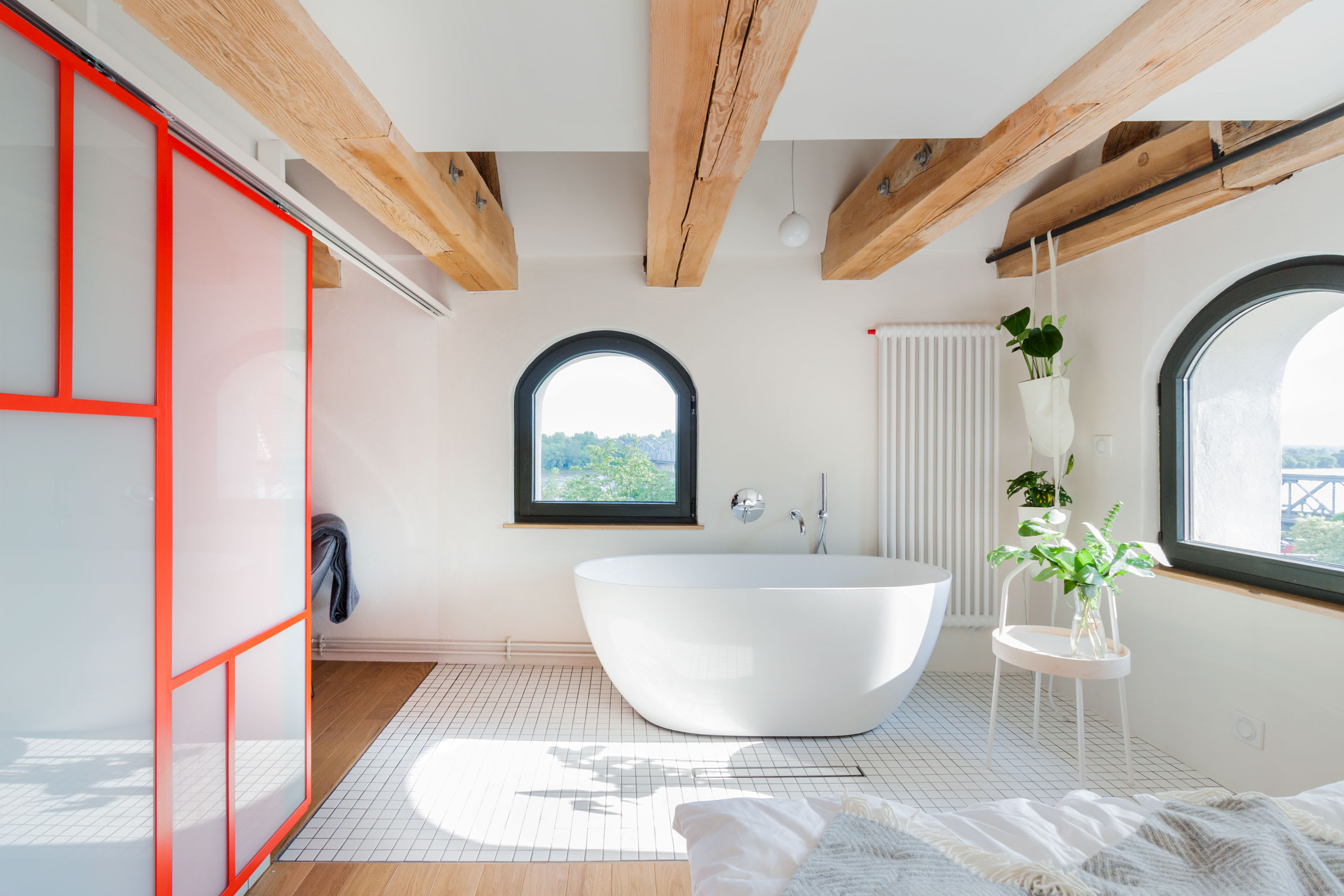
So you’ve bought your dream tub. Congrats! Now for the next big question: where to put it? Explore your options – bathroom, wetroom, shower – in this guide.
Freestanding tubs are all the rage today, steadily gaining popularity for their striking beauty and luxurious comfort. Like every trend, a surge in popularity leads to additional trends and considerations: how to install it, embellish it, decorate around it, and make it shine.
One important decision to make about your tub: where to place it.
While the placement of a freestanding tub often focuses on aesthetics, homeowners also need to think about the comfort systems that support the space. Bathrooms can quickly lose warmth, especially in colder months, making reliable heating an important part of the overall design.
Regular heating maintenance ensures that systems operate efficiently, keeping rooms evenly warmed while preventing sudden breakdowns that could interrupt daily routines.
Professional servicing becomes even more valuable in homes where comfort and design go hand in hand. Technicians from Moreno Mechanical often emphasize routine inspections, thermostat calibration, and system cleaning to keep heating equipment performing smoothly throughout the season.
Consistent upkeep not only protects the system from unnecessary wear but also helps maintain a cozy atmosphere that complements the relaxing experience a well-placed freestanding tub is meant to provide.
Go beyond the typical deliberations (like center of the room vs. near the wall). The placement that we’re discussing in this post is the actual room: in the traditional bathroom, in a special wetroom, or inside the shower.
Placement option #1: the bathroom
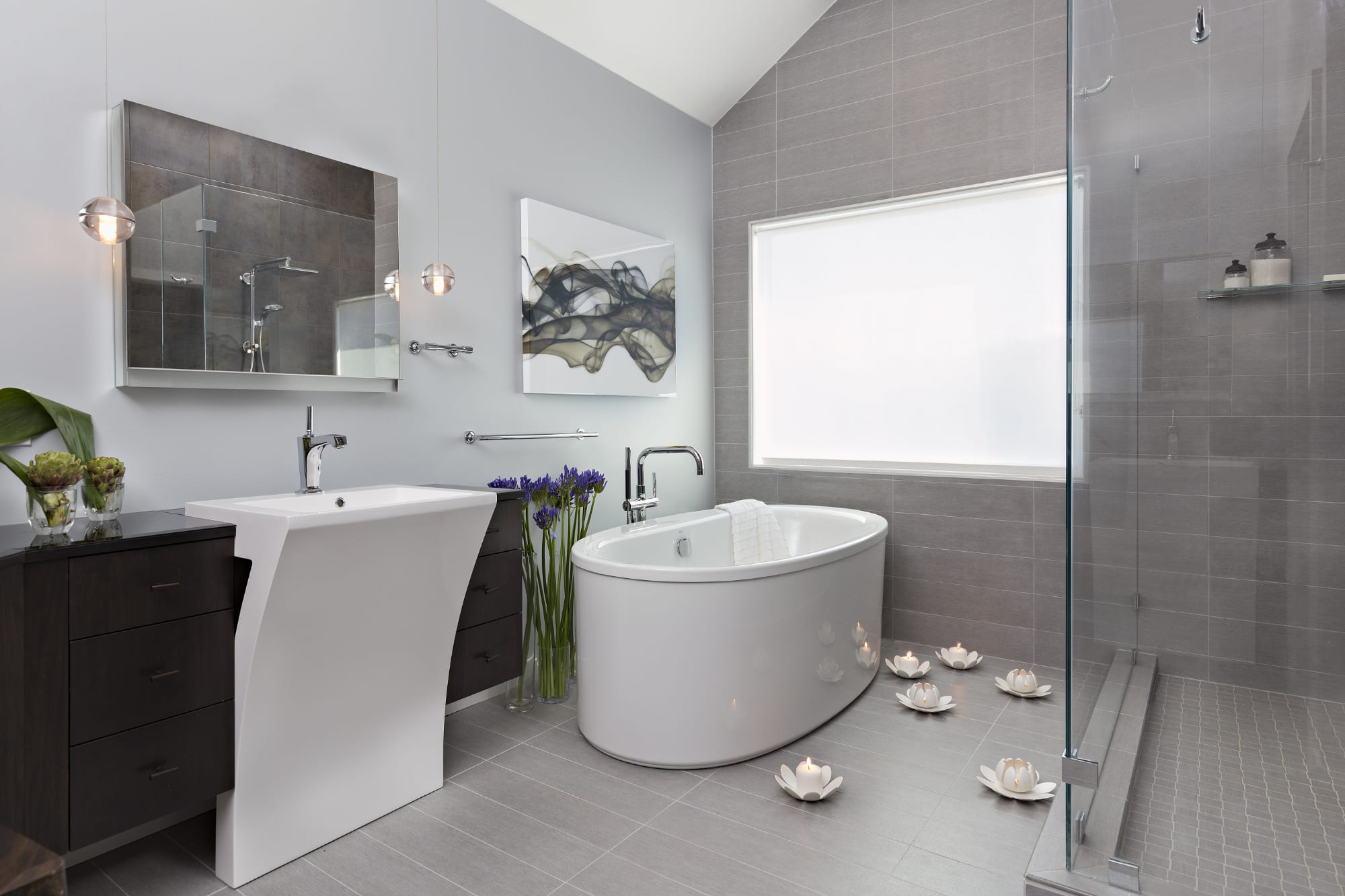
This one’s the obvious choice. You can place the freestanding tub virtually anywhere in your bathroom, where it serves as a focal point and is where you’d expect it to be. However, you’ll contend with dripping on the floor and cold-air drafts.
Pros of the bathroom:
- Affordable: it’s a “typical” placement, without added costs that you may encounter in other placements
- Flexible: may be installed in rooms of any size
- Lower-maintenance: easier to keep dry, because water is restricted to one area
- Warm: may be equipped with radiant heating throughout
- Traditional: adds resale value to your home
Cons of the bathroom:
- Layout restrictions: you’ll need to consider the plumbing and proximity of fixtures more carefully than in a wetroom
- Wet floor: exiting the bath or shower may result in puddles on the floor without effective drainage
- Drafts: you may be able to install radiant flooring, but the open-air bath invites cold air when you’re bathing
Placement option #2: the wetroom
A wetroom is – just like it sounds – a room that’s designed to be wet. It may have all bathroom fixtures in it (where does the toilet paper go?!) or contain only a shower and bathtub. The entire room is waterproofed, with floors sloped to drain completely and moisture-resistant materials. They’re often found in space-challenged European bathrooms, but they’re becoming popular worldwide and in rooms of every scale.
Pros of the wetroom:
- Barrier-free: it’s accessible to those with disabilities and has fewer placement limitations than traditional bathrooms
- Watertight: because it’s designed to be wet and to drain well, there won’t be puddles on the floor
- Luxurious: can add resale value to the home (just be sure to have a traditional bathroom as well)
- Self-contained: keeps water in one place (so you won’t unwittingly step into drips with your socks on!)
Cons of the wetroom:
- Expense: with waterproofing and installation, the typical wetroom costs 20-30% more than a traditional bathroom
- Heating restrictions: radiant flooring may not be able to be installed under areas of direct spray
- Higher-maintenance: may be prone to mold or mildew growth; a high-quality ventilation fan can help
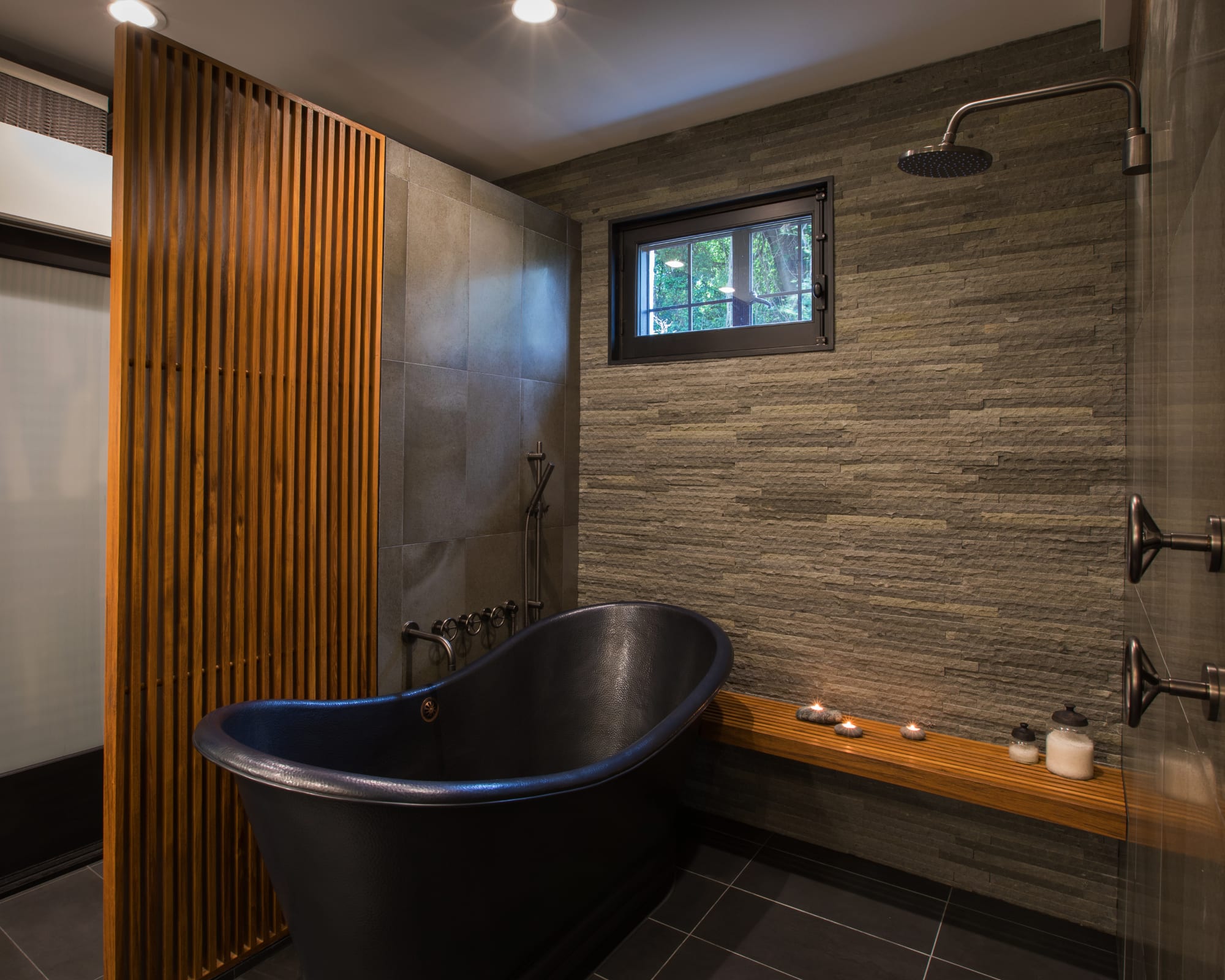
Placement option #3: the shower
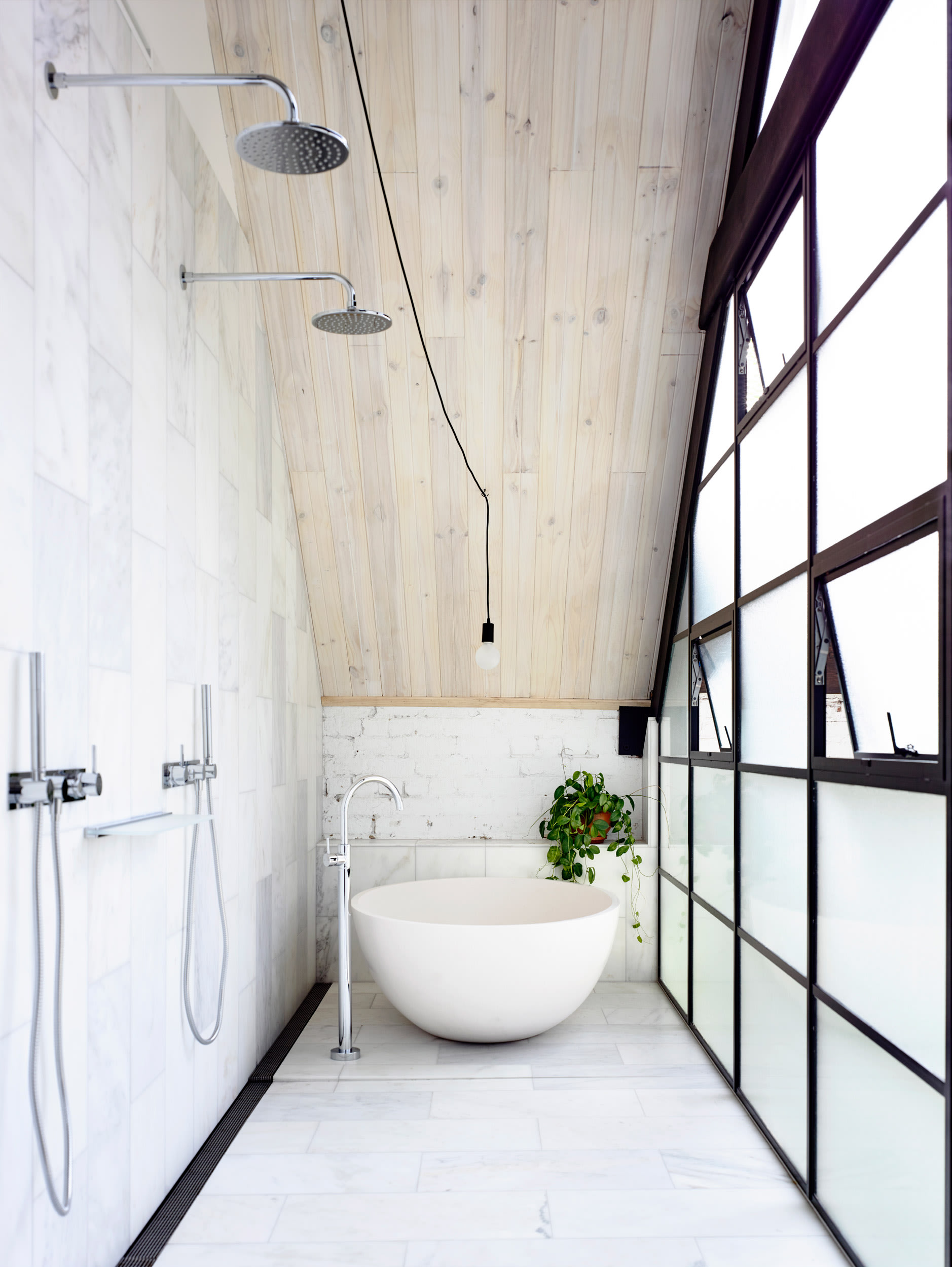
A happy medium between a conventional bathroom and a wetroom: putting the tub in the shower. (Not a tub-shower!) Some consider this a wetroom, but typically, it’s part of the bathroom. It’s essentially a large shower enclosure that also contains a bathtub, keeping all wetness contained to one space.
Pros of the shower:
- Cost-effective: does not require extra waterproofing beyond what you’d put in a typical shower
- Heat retention: putting the tub and shower inside an enclosure keeps the warmth in, so you can bathe without the shivers
- Low maintenance: easy to keep clean; keeps water out of the rest of the bathroom
Cons of the shower:
- Less flexibility in layout: since the tub and shower need to be together, placement options may be limited (but within the shower area, there are many layout options)
- Requires skilled waterproofing: it’s not quite as simple as sticking a tub into the shower; you’ll need proper materials and graded floors
- Less visual impact: depending on the materials used and the placement of your tub, it may not be as noticeable and impactful when placed inside the shower
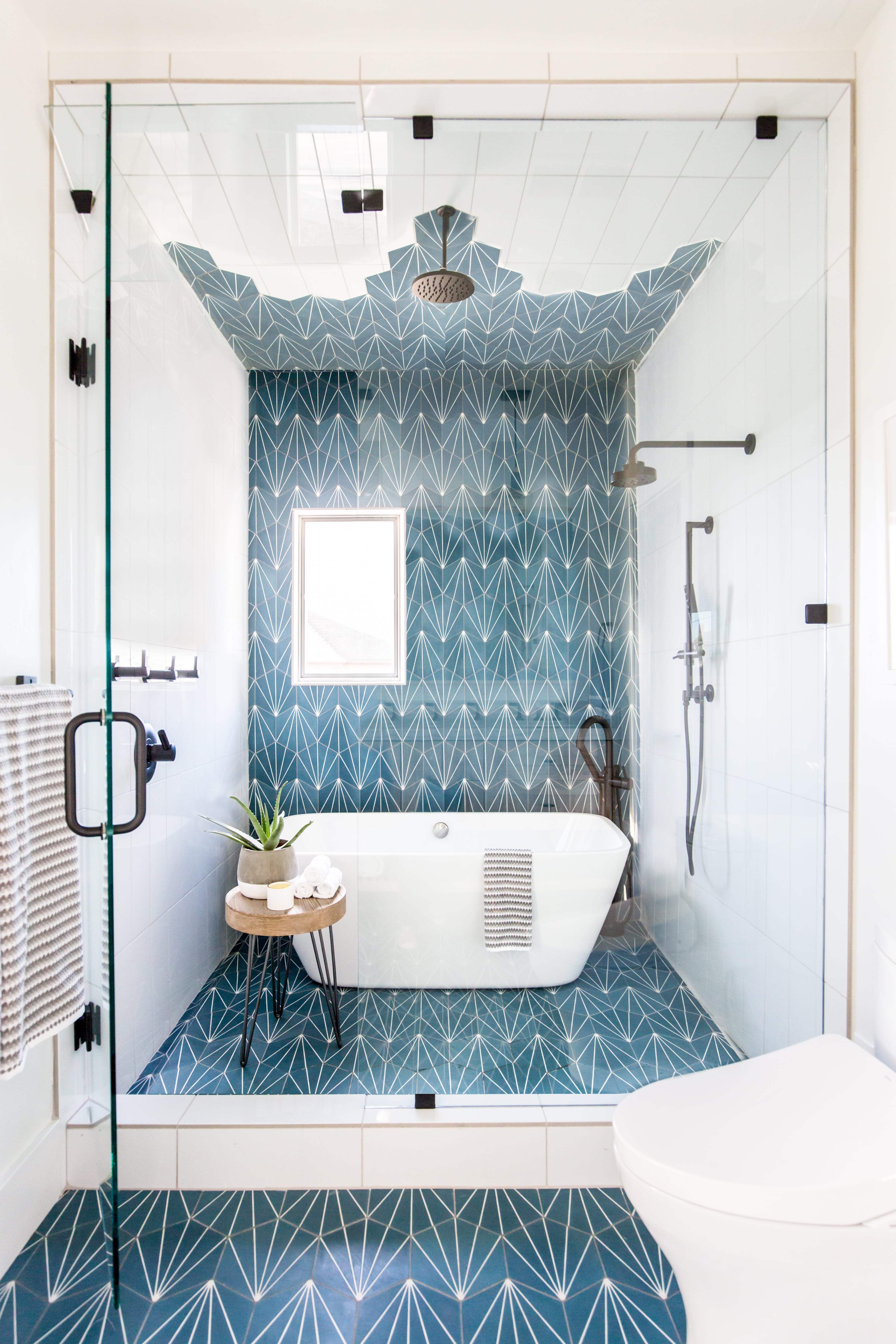
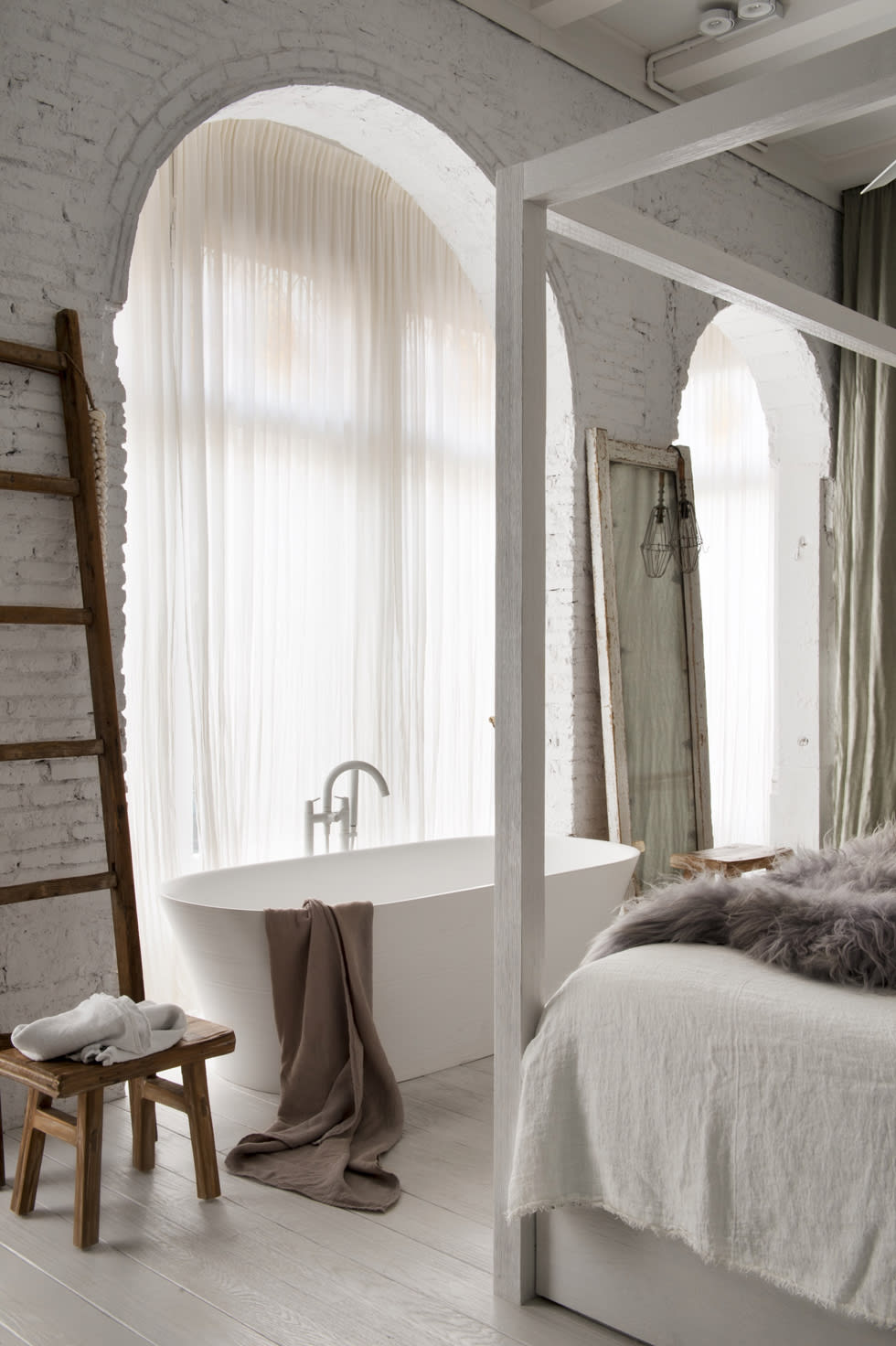
Bonus placement option: the bedroom
One fairly recent trend has the design world divided into the enthusiastic supporters and the equally fervent opposers: letting it all hang out, with the bathtub in the actual bedroom.
Pros of the bedroom:
- Visual impact: a romantic, eye-catching design choice
- Space conservation: saves space in the bathroom (but takes up space in the bedroom)
Cons of the bedroom:
- Reduced resale value: as an unconventional choice, potential buyers may be turned off
- Requires careful planning: flooring and waterproofing must be executed properly
- Spillage: this particular setup invites puddles on the bedroom floor
- Cold air: open-plan means no walls to keep the heat in during soaks