Shape Up: Everything You Need to Know About Different Tub Shapes
Shop Tubs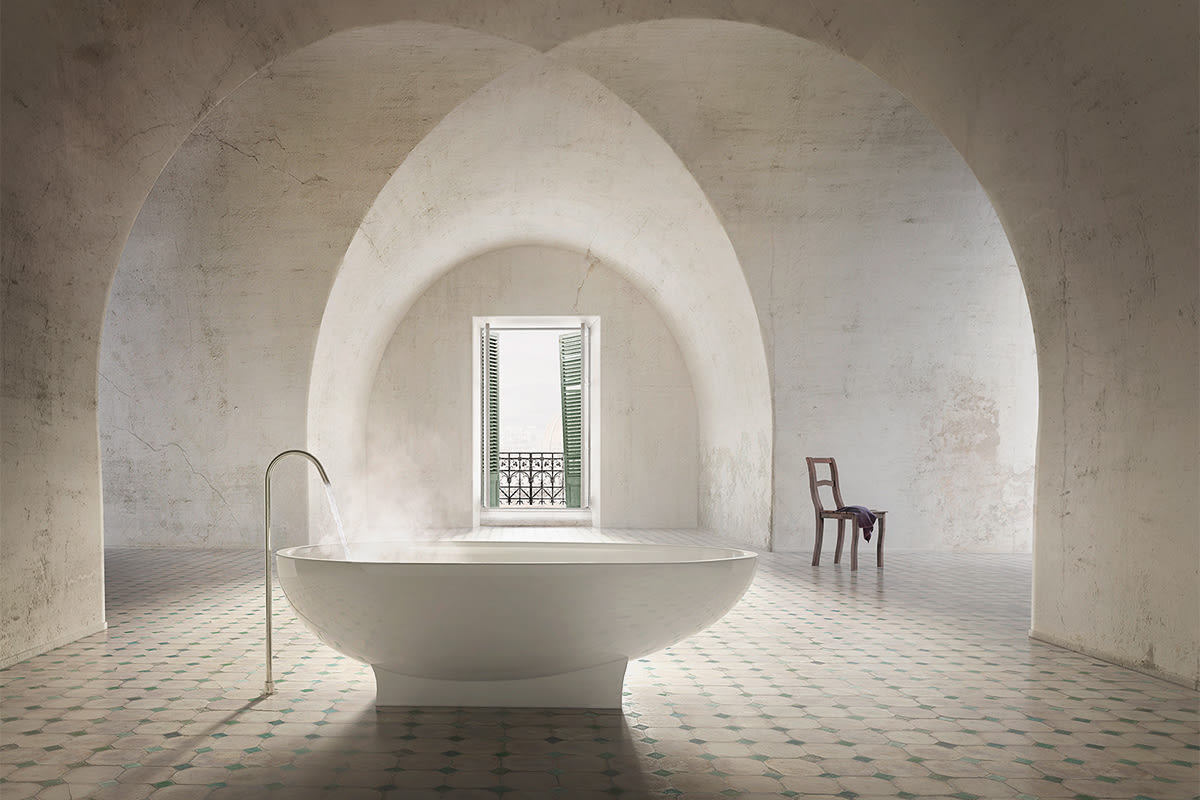
Whip your bathroom into shape! One of the first decisions you’ll make in the tub-buying process is the shape of your bathtub. Start with this guide to the different tub shapes you’ll encounter.
Buying a bathtub? Decisions, decisions! The enormous selection of tubs available today can make your head spin like that whirlpool you’ve been eyeing. One of the most basic decisions is also a huge one as it affects – and depends on – your entire bathroom design: what tub shape is best for me?
Corner tub
What is a corner bath?
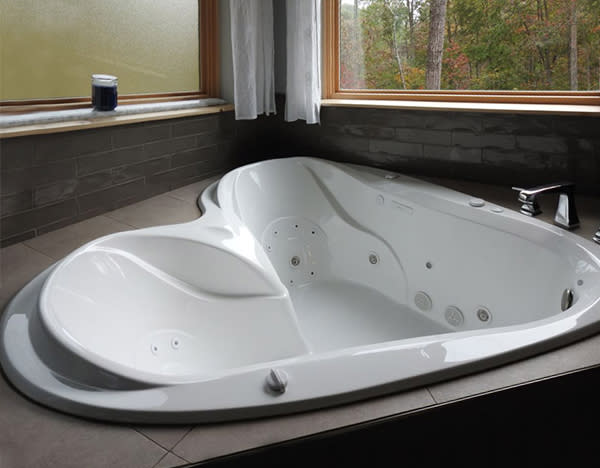
A corner tub is a bathtub with three or five sides (though they are available in various shapes, sizes, and configurations), designed to fit into corners.
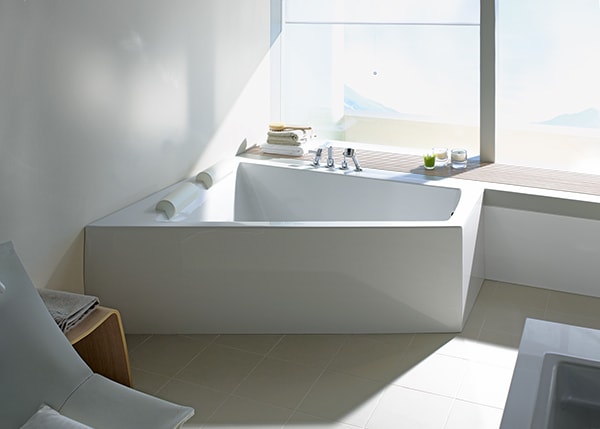
What are the pros and cons of a corner tub?
Pros
- May provide more bathing space than other tubs
- Efficiently utilizes corners, odd angles, or dead space; allows for unimpeded floor space in the center of the bathroom
- Abundant deck space
- Visually interesting
- Easy to combine with a shower (or create space for a separate shower)
Cons
- Far corners may be difficult to reach when cleaning
- May be bulky; not always the most efficient solution for layout
- May be difficult to enter and exit the tub, depending on shape and deck location
How much does a corner tub cost?
Depending on the size, system, and material of the tub, the average price range for corner tubs is approximately $1,300 to $8,000.
How big is a corner tub?
Corner tubs are available in a large selection of sizes and depths to fit into virtually every corner. They typically range from 42” to 76” in length, 31” to 83” in width, and 17” to 29” in height; the most common corner tub dimensions are 4’x4’ and 5’x5’. Many models can comfortably fit two or more bathers at once.
What do I need to know before buying a corner tub?
To learn all about corner tubs and the factors you’ll need to consider before purchasing one, see our extensive corner tub guide.
What makes a corner tub special?
Corner tubs are unique in that they allow homeowners to install a bathtub in locations that would be impossible or impractical with other tub shapes; they are typically larger on the inside than other types of tubs.
Slipper bath
What is a slipper bath?
A slipper bath tub features one or two raised, sloping ends. (A single slipper tub has one raised end; a double slipper tub has two.) The tubs are ergonomically shaped and have charming vintage appeal.
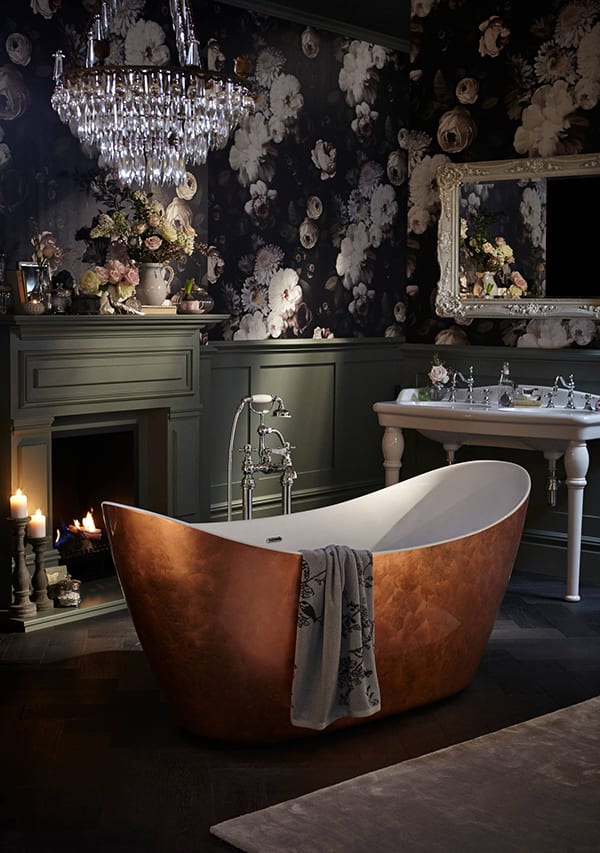
What are the pros and cons of a slipper tub?
Pros
- Comfortable, ergonomic shape
- Classic, striking silhouette
- May comfortably accommodate two bathers
Cons
- Likely to require additional floor support
- Requires adequate space for installation and maneuvering around the tub
- May be more costly than other tub shapes
How much does a slipper tub cost?
Prices vary widely due to several factors such as size, material, system, and brand. They range from under $900 to over $35,000!
How big is a slipper tub?
Most slipper tubs are large for comfort, but compact tubs are also readily available. Tub measurements range in length from 30” to 80”, in width from 19” to 67”, and in depth up to 36”.
What do I need to know before buying a slipper tub?
For more information about slipper tubs, check out our comprehensive slipper tub buying guide.
What makes a slipper tub special?
Slipper tubs are sculpted to cradle the bather’s back, neck, and head in a natural reclining position, with the sides acting as armrests and the ends as backrests. The shape allows the bather to remain in a reclined position with the majority of the body under the water’s surface for a soothing, warm experience.
Round bathtub
What is a round bath?
A round tub offers visual appeal as it contrasts the standard straight lines of a bathroom: linear countertops, walls, floors. These tubs are typically deep rather than wide for an upright bathing experience.
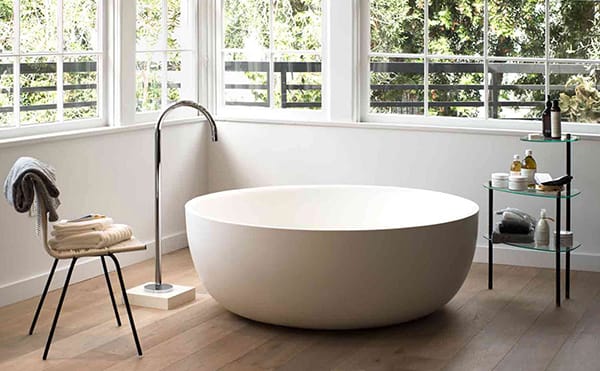
What are the pros and cons of a round tub?
Pros
- Visual interest
- Small footprint; does not take up much floor space
- May be sunken
- Allows for deep, upright bathing
Cons
- May be difficult to place without creating “dead space”
- Less inner space to stretch out
- May be difficult to climb in and out; some are equipped with stairs
How much does a round tub cost?
Like all tubs, the cost of a round tub varies significantly; prices start at approximately $1,300 and range up to over $25,000.
How big is a round tub?
Round tubs are designed to be compact. Some models are a diminutive 40” in diameter, while others are larger – up to 76” – to comfortably accommodate more than one bather.
What do I need to know before buying a round tub?
Most round tubs are Japanese-style round soaking tubs, which means that the bather sits upright in deep water rather than reclining in a longer tub. Be sure that you enjoy that bathing experience before buying. People with physical restrictions may find it difficult to climb in and out of the tub unaided.
Additionally, ensure that your bathroom can accommodate a round freestanding bathtub without wasting much space and while allowing you to maneuver comfortably around the tub.
What makes a round tub special?
The very shape of the round tub is striking and unusual, creating an instant focal point in the bathroom. For those who enjoy sitting upright while bathing, a round or square tub is an ideal option, and its compact footprint may allow homeowners to install a tub in a short-on-space bathroom.
Square bathtub
What is a square bath?
A square tub is a tub whose sides are equal in length, typically with a deep interior like a round tub; some square tubs feature a round bathing well for the curved sensation of a circle tub combined with the practical deck and ease of installation of a square tub.
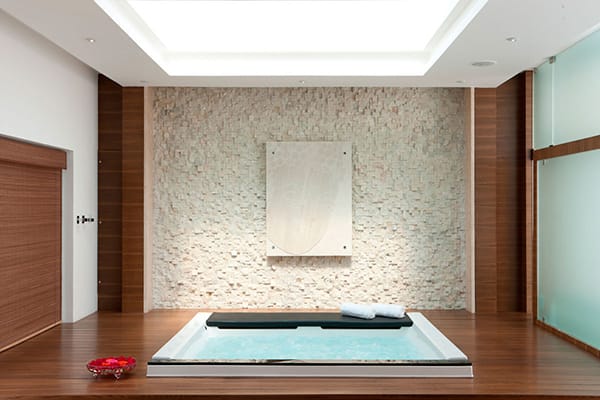
What are the pros and cons of a square tub?
Pros
- Fits comfortably in corners and along walls without wasting space
- Deep bathing well
- Plentiful deck space
- May be sunken
- Small footprint
Cons
- May have hard-to-clean corners
- May be difficult to climb in and out of the tub; not recommended for those with mobility difficulties
- Less interior space than other shapes; provides a different bathing experience
How much does a square tub cost?
Square tub prices range from $1,700 to nearly $30,000, with a large variety of options at every price point.
How big is a square tub?
There is a large range of square bathtub sizes to accommodate bathers and bathrooms of every size. Like round tubs, square tubs have a compact overall footprint – typically 40” to 70” – making them ideal for small bathrooms.
What do I need to know before buying a square tub?
If you have difficulty maneuvering in and out of a deep tub, consider a square tub with slip-proof steps inside and/or outside for safety. These tubs are generally not recommended for bathing small children or those with physical impairments.
What makes a square tub special?
Square tubs offer the advantages of round tubs with the added advantage of fitting neatly along walls and in corners, without disrupting the flow of the room. They are frequently chosen as sunken tubs for an added element of spa-like luxury.
Oval bathtub
What is an oval bath?
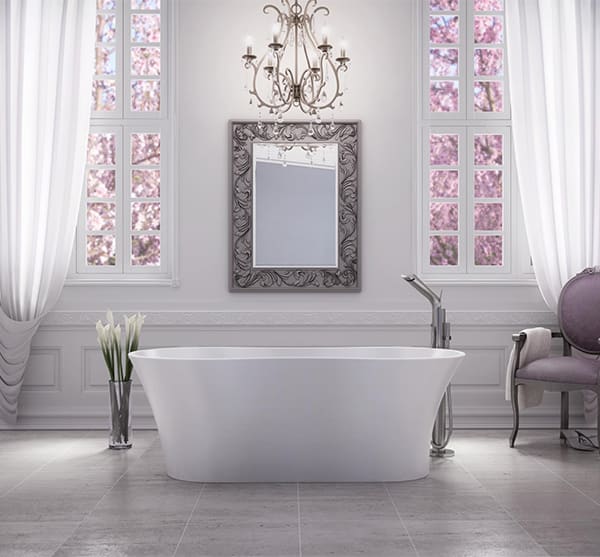
Oval bathtubs are a common choice for aesthetic and comfort purposes. The most popular oval configuration is the oval freestanding tub (for statement-making purposes), though oval drop in tubs are popular as well, combining the curves of an oval with the linear appearance of a rectangular tub.
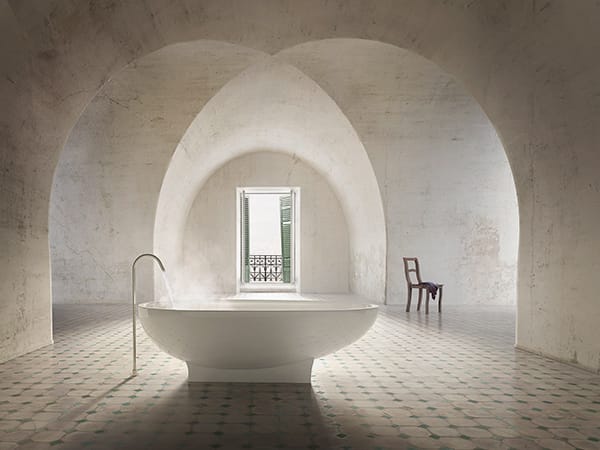
What are the pros and cons of an oval tub?
Pros
- Rounded ends for comfort
- Striking appearance
- Various installation options to suit bathrooms of different sizes
- Easy to clean
Cons
- Limited storage space (when freestanding)
- May require extra floor reinforcement
- Limited deck space (unless dropped in)
- Not the most efficient use of space
How much does an oval tub cost?
Oval tub prices range from the cost-effective ($850) to the ultra-luxurious (over $80,000 for one particularly memorable tub!), with plenty of options in between to suit every budget.
How big is an oval tub?
Oval tubs vary widely in size – length, width, and depth – to fit virtually any bathroom. Sizes range from a compact 43” length to a generous 74” length, with depths ranging from 16” to 40” or more.
What do I need to know before buying an oval tub?
If you’re considering an oval freestanding bath, check that your floor is adequately reinforced to hold the weight of the tub and that your proposed placement allows enough room for unimpeded use of the bathroom. Additionally, check that the tub is not too deep for you to climb in and out easily, especially in a freestanding tub that may make grab-bar placement difficult.
What makes an oval tub special?
Oval tubs are particularly striking as well as comfortable and can typically be easily incorporated into the bathroom layout and design. Their versatile shape can be installed in several different ways to suit every style.
Rectangular bathtub
What is a rectangular bath?
The rectangle is the most common bathtub shape. It’s adaptable to virtually any bathroom layout and with practically limitless installation options.
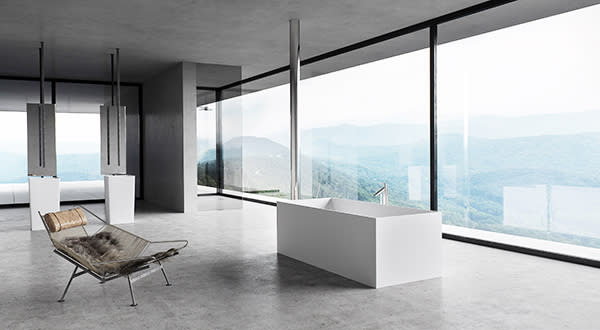
What are the pros and cons of a rectangular tub?
Pros
- Versatile and space-saving
- Cost-efficient
- Numerous installation options
- Clean, linear appearance
- Provides deck space and often storage space
Cons
- Depending on interior shape, may be difficult to clean corners
- Must have adequate wall space for non-freestanding tub (and adequate floor space for a rectangular freestanding tub)
- May be visually bulky due to its solid, heavy shape (less likely with footed tubs)
How much does a rectangular tub cost?
Due to their popularity, rectangular tubs are typically the most affordable option with prices starting at $660 or less, ranging up to over $28,000.
How big is a rectangular tub?
Most rectangular tubs are designed for the bather to stretch out comfortably, though there are smaller models; they range in length from 48” to 86”, in width from 27” to 84”, and in depth from 16” to 45”. Some are built to accommodate more than one bather.
What do I need to know before buying a rectangular tub?
Be sure that your tub will fit through all doorways and stairwells that it will encounter on its way to its final destination (this is important for all tubs, but the angled bulk of a large rectangular tub is likely to present challenges).
What makes a rectangular tub special?
Whatever you seek to accomplish with a bathtub – visual impact, comfort, ease of installation – you’re likely to find a rectangular tub to suit your needs. You may decide on a sunken tub for a spa-like feel, a rectangular freestanding bath to make a statement, a drop in rectangular bathtub for extra deck space and a built-in appearance, or a rectangular corner bathtub to conserve space (both physical and visual.
Hourglass tub
What is an hourglass bath?
An hourglass bathtub is an oval-shaped tub that curves in the center, forming an hourglass or figure-8 shape. The hourglass shape provides built-in armrest-like contours and additional visual interest. You may find oval or rectangular tubs featuring an hourglass-shaped bathing well.
What are the pros and cons of an hourglass tub?
Pros
- Visual interest
- Comfortable, contoured bathing well
- Various exterior shape options
- May provide additional deck space
Cons
- May present challenges in installation and placement
- May decrease or “waste” overall interior size of tub
How much does an hourglass tub cost?
Hourglass tubs are available at most price points, ranging from $1,250 to $7,700 or more, depending on material, size, brand, and system.
How big is an hourglass tub?
On average, hourglass tubs range from 59” to 72” in length, 28” to 48” in width, and 16” to 34” in depth.
What do I need to know before buying an hourglass tub?
Consider your reasons for buying an hourglass tub before deciding on shape. If you seek to make the tub a focal point in the bathroom, consider a freestanding hourglass tub for maximum impact; if you would prefer to have your tub placed against the wall, a drop in hourglass tub would most likely be ideal (and will provide extra deck space when tiled in, though it may be difficult to climb over the deck into the tub).
What makes an hourglass tub special?
The hourglass tub’s unusual shape is both aesthetically pleasing and ergonomically comfortable, giving you the best of both worlds: good looks and comfort!
Specialty
Don’t want to box yourself in to a more “typical” shape? Opt for an unusually-shaped bathtub to satisfy your desire to be different. Create a romantic bathroom with a heart-shaped bathtub; try a slightly asymmetrical twist on a common shape; go geometric with an octagonal bathtub; or check out our tubs in various shapes that don’t quite fit any particular “shape” category.