Acrylic Tubs: Everything You Need to Know
Shop Acrylic Tubs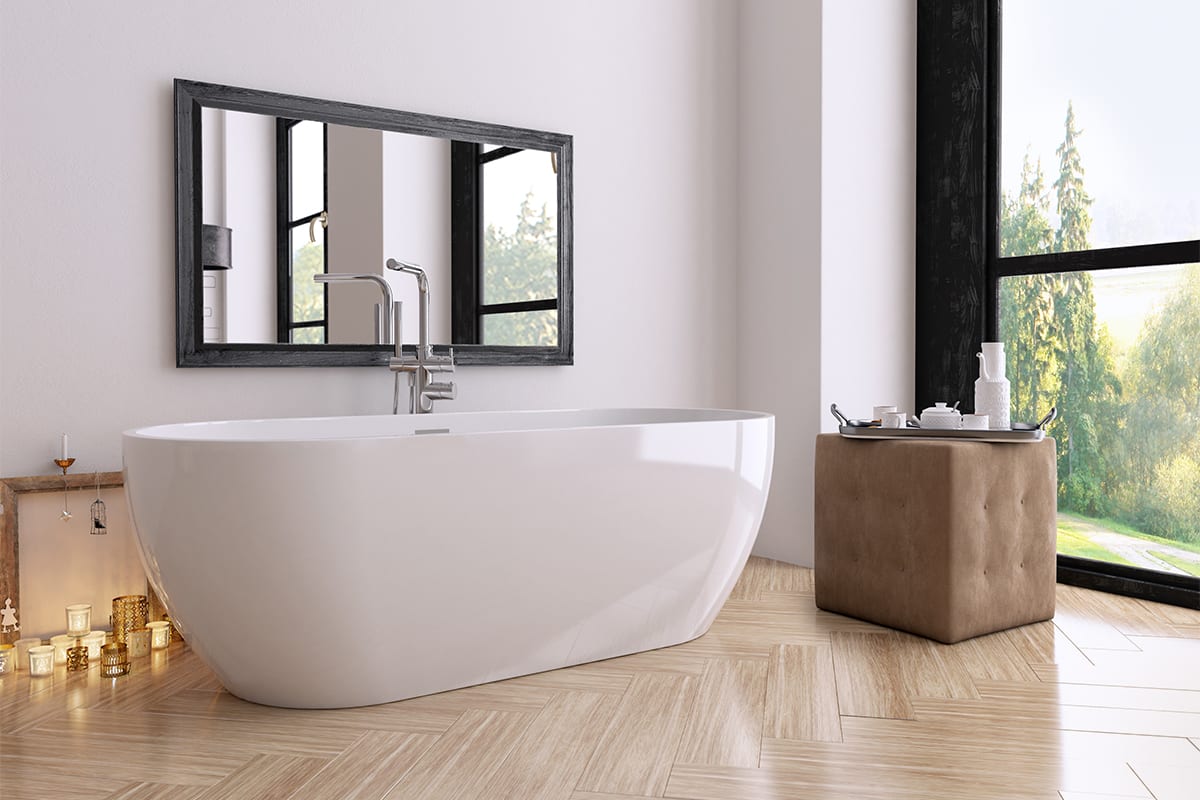
Durability, versatility, heat retention, and smoothness… with an affordable price tag. Acrylic tubs are easy on the eye, the body, and the wallet.
There’s a reason this tub material is a favorite on the market. It’s comfortable, low-maintenance, warm, and lightweight, and, best of all, it’s affordable. Here’s what you need to know before you buy an acrylic bathtub.
What is an acrylic tub?
Acrylic tubs are made of vacuum-formed sheets of acrylic, often reinforced with fiberglass for added durability. Since the material is inherently soft and supple, it’s the perfect material for a large variety of tub shapes and sizes.
Acrylic is lightweight, so it can be installed on any level of the home. It’s also easy to maintain, repairable, and damage-resistant.
What are the pros and cons of acrylic tubs?
Like every bathtub material, acrylic has its advantages and disadvantages.
Pros
- Affordable
- Resistant to cracking and chipping
- Easily repairable
- Smooth, nonporous, comfortable surface
- Retains heat; remains warm to the touch when dry and at room temperature
- Many color, size, and configuration options
- Lightweight
- Durable, especially when reinforced with fiberglass (a common option)
- Easy to clean and maintain
Cons
- Prone to scratching (though repairs are simple and inexpensive)
- Prone to staining and discoloration
- May feel “hollow”
Compare and contrast: acrylic vs. cast iron tub
These two popular materials are quite different, though they may look similar in shape or style. (Click here to learn more about cast iron tubs.)
Weight
Cast iron tubs are extremely heavy while acrylic tubs are lightweight (on average, over 300 pounds for cast iron vs. 75 for acrylic – and that’s before the water is added). Heavier tubs often require extra floor support and some upper-story bathrooms may not be able to adequately support a cast iron tub.
Appearance
Acrylic tubs may mimic the appearance of cast iron tubs, but genuine cast iron has the added advantage of authenticity, timelessness, and richness.
Durability
Cast iron is a material that can literally last for decades or longer, and acrylic – while durable – will not stand the test of time as well as cast iron.
Maintenance
Both materials are fairly easy to clean and require regular light cleaning with mild, non-abrasive cleaning agents. While acrylic tubs may scratch more easily than cast iron, they’re less susceptible to chipping and the cracks may be easily repaired (a feat more complicated in cast iron tubs).
Heat retention
Cast iron is known for its excellent heat retention properties. Acrylic also boasts superior warmth, as the nonporous surface is generally warm to the touch (even when not filled with warm water), so both materials are good choices for those who like to soak for long periods of time.
Cost
Acrylic is significantly more affordable than cast iron, though it will not have as long of a lifespan.
Are acrylic tubs durable?
That’s a big one: how long will an acrylic tub last?
Many high-end acrylic tubs are reinforced with fiberglass, making them more durable. Overall, acrylic is a durable material that tends to hold up well for years. Plus, when a tub does scratch, it’s fairly easy to repair the scratch.
What shapes and sizes do acrylic tubs come in?
Thanks to the malleability of the material, acrylic tubs are available in virtually every shape, size, and configuration, as well as with every conceivable system. Choose an acrylic drop in tub for an easy update in a new or existing surround; a corner tub to free up space in the bathroom; an acrylic clawfoot tub (or really any acrylic freestanding bathtub) to make a striking statement; or any tub in this versatile material as a low-maintenance, high-style option.
If it’s long, deep soaks that you crave, an acrylic soaking tub will do the trick for you, but you can also choose tubs with jets – air, water, or a combination of both – for an invigorating or soothing experience.
Cleaning and maintenance of acrylic tubs
Acrylic tubs may be low-maintenance and easy to clean, but there are cleaning products and processes that will extend the lifespan of your tub – and some that will shorten it.
How to clean and maintain an acrylic tub:
Good news: there’s no special acrylic bathtub cleaner that you absolutely must use to preserve the life of your tub. Cleaning an acrylic tub is easy: just use mild, nonabrasive cleaning agents and materials (to avoid scratching) on a regular basis. Try filling the tub with warm water and a few squirts of dish soap, allowing it to sit, and then wipe with a soft cloth or sponge and rinse. Use dish soap or all-purpose cleaner to clean the tub’s exterior.
To keep your tub shiny (and make it easier to clean), apply automotive wax a few times a year for a just-off-the-showroom-floor gleam and water resistance.
Will acetone damage an acrylic tub?
Acetone, and cleaners containing acetone, is not recommended for use on acrylic tubs. Avoid using any solvents on your tub to prevent damage. If a spill occurs, rinse it out immediately.
Will baking soda scratch an acrylic tub?
No, it will not; in fact, it’s a good mild scrubber for more stubborn stains. Sprinkle the wet interior of your tub with baking soda, spray it with water, allow it to sit for a few minutes, and gently scrub with a nonabrasive cloth or sponge. (Don’t use the rough side of the sponge to clean an acrylic tub.)
Other common questions address the matters of acrylic bath repair and refurbishing:
How to repair an acrylic tub:
Acrylic tub repair is fairly simple and inexpensive. After thoroughly cleaning the tub, use a sheet of fine-grit sandpaper to sand out scratches, then buff the surrounding area with car wax – and watch the scratches disappear. Mild surface scratches may be buffed out using toothpaste and a damp cloth.
Can an acrylic tub be resurfaced or painted?
Acrylic tubs may be reglazed or relined professionally, but that can get expensive. Visit your favorite home improvement store for a DIY acrylic bathtub refinishing kit to restore your tub all by yourself!
One of the great features of acrylic is that it’s available in lots of fade-proof colors to complement every color scheme. If you’ve tired of your tub’s color, you may choose to paint it with a two-part epoxy paint. Be sure to protect all surrounding tiles and materials prior to painting your tub or you may risk damaging the rest of your bathroom.
Can you tile an acrylic tub?
Most acrylic tubs cannot be bonded securely to tile, causing the tiles to fall off and likely voiding your tub’s warranty. You may choose to install a tub surround around the tub – not stuck to the tub itself – as an alternative.
What’s the best brand of acrylic tub?
When it comes to acrylic, excellent quality can make all the difference in the durability, longevity, appearance, and comfort of the tub. Luxurious, streamlined, artistically sculpted freestanding Perlato acrylic tubs are our personal favorites; they’re silky-smooth, striking, durable, and affordable. Check out the full collection here to find your new relaxation spot!
Also on our radar for awesome acrylic tubs: Bain Ultra’s super-relaxing air tubs, which offer heated air massage for consistent temperature and prolonged massage; Hydro Systems tubs in every configuration, including soaker and jetted, freestanding, undermount, and even walk-in, and every conceivable shape; striking, sumptuous, and colorful acrylic tubs by Maax; and MTI’s line of versatile, comfortable acrylic tubs.