Drop In Tubs: Everything You Need to Know
Shop Drop In Tubs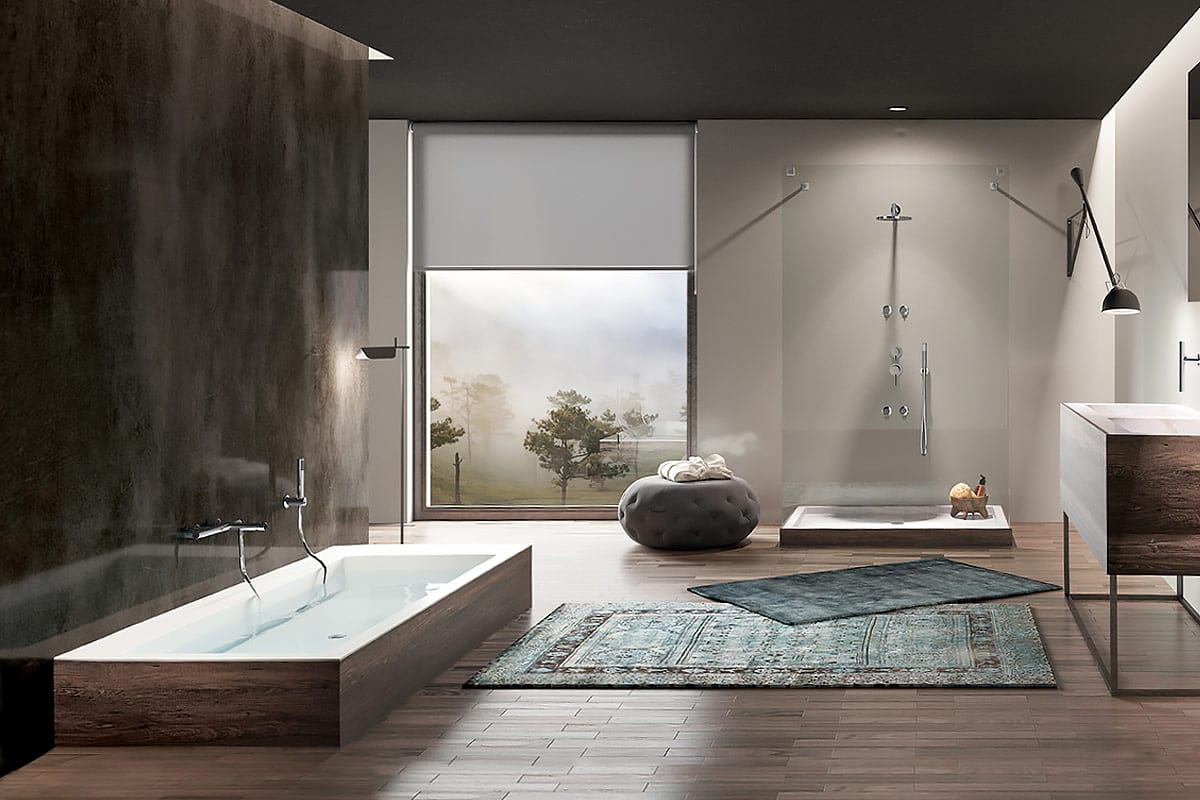
Drop everything: these bathtubs are a beloved choice for long, luxurious soaks and visual appeal. Find out why the drop in tub is a classic favorite and learn all about it.
Time for a new tub? The most commonly sold bathtub is popular for many good reasons. Here’s why you should choose a drop in tub – and how to choose it.
What is a drop in tub?
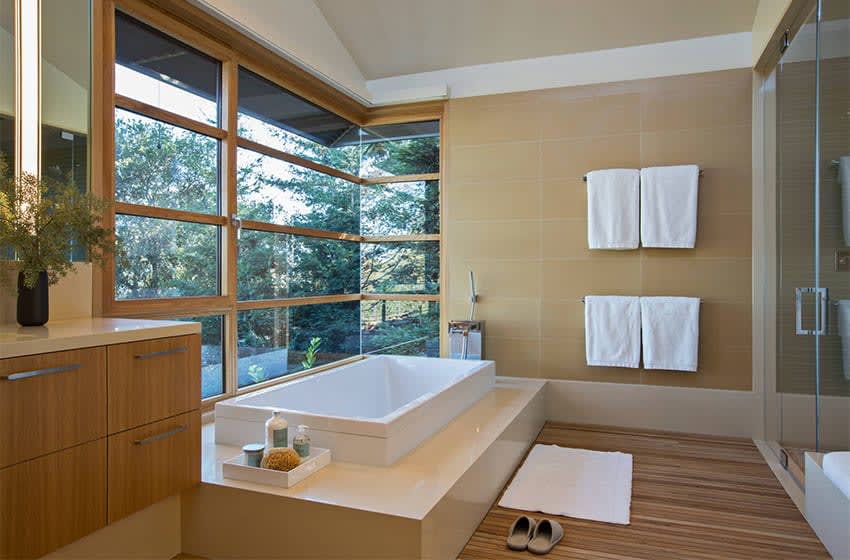
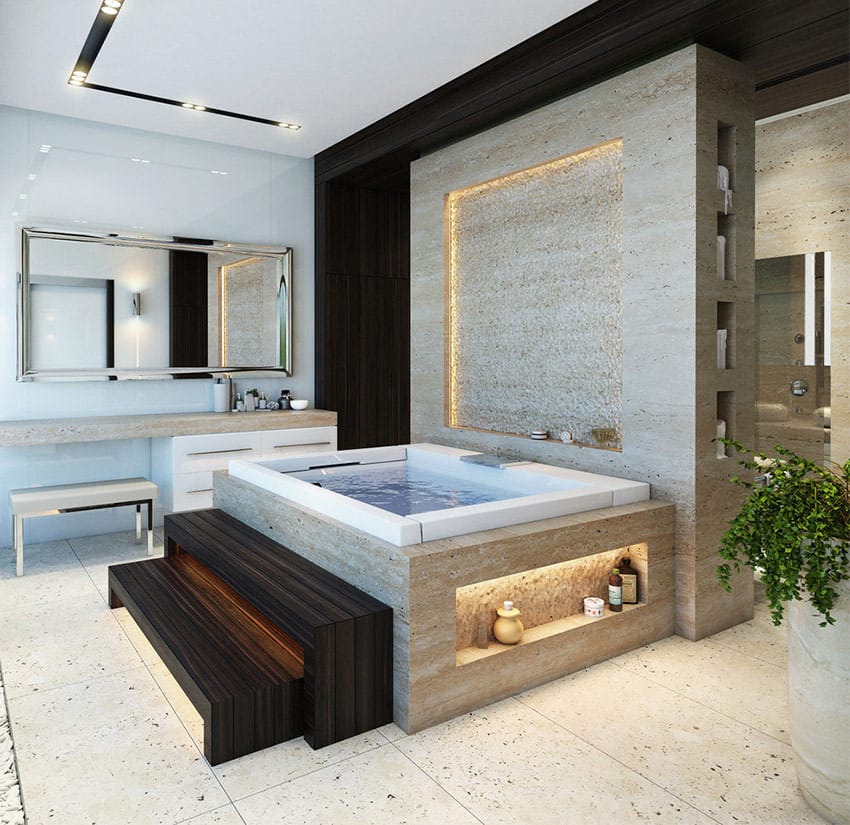
A drop in bathtub is a tub that is “dropped in” to a frame or structure known as a surround. These tubs feature a rim around the top to fasten to the top of the frame, which can be tiled or built out of wood or other materials. The outside of the tub is concealed by the surround, leaving only the rim visible.
Drop in tubs are popular due to their relatively low cost, variety of shapes and sizes, and flexibility of design. The surround or deck can be built along a wall, in an alcove, or freestanding, and can be decorated in virtually any imaginable way. These tubs can also be easily replaced and fitted into an existing surround at minimal cost.
What are the pros and cons of a drop in tub?
Pros of a drop in tub
- Often more space efficient than a freestanding tub
- Often provides more bathing space and flexibility than an alcove tub
- Affordable
- Many design and installation options; provides style flow with similar materials on sinks, vanities, floors, and/or tub deck
- Offers storage space and deck space for toiletries and towels
- Easy to clean; exterior is concealed
- Easy to replace or update existing tub
- Raised rim prevents tub overflow
Cons of a drop in tub
- Limited placement options as compared to standard freestanding tub
- Requires platform or surround construction
- More difficult to access plumbing (install a removable panel in the surround for access)
- Less visually appealing or stylish than freestanding
What features can a drop in tub have?
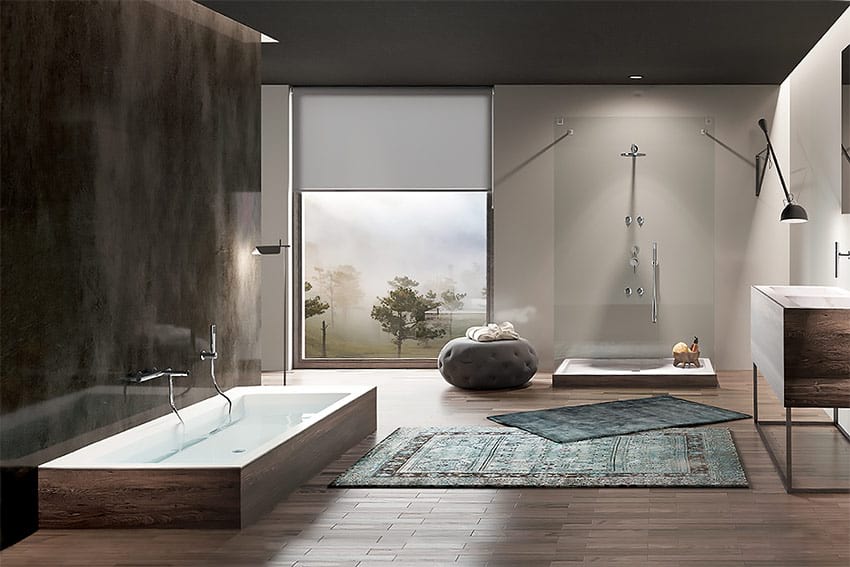
Because drop in bathtubs feature a raised rim over the platform or surround, they’re excellent at keeping the water inside the tub. For that reason, drop in tubs are favored for those who love to soak in deep water without fear of flooding the bathroom.
A drop in soaking tub provides a place to settle in for a long, relaxing soak, while a drop in jetted tub allows the bather to luxuriate in a multisensory experience. Loosen the tension in your body with the invigorating massage of a drop in whirlpool tub, melt away stress in a drop in air tub, or mix up your bath on a daily basis with a drop in combo tub. (To learn more about soaking tubs and whirlpool vs. air tubs, check out our comprehensive guides.)
Beyond jets, drop in tubs may boast extra-luxurious features such as chromatherapy lighting, sculpted bathing wells, pillows, aromatherapy, built-in heaters, strategically-placed cascading waterfalls, and even sound systems.
What are drop in tubs made out of?
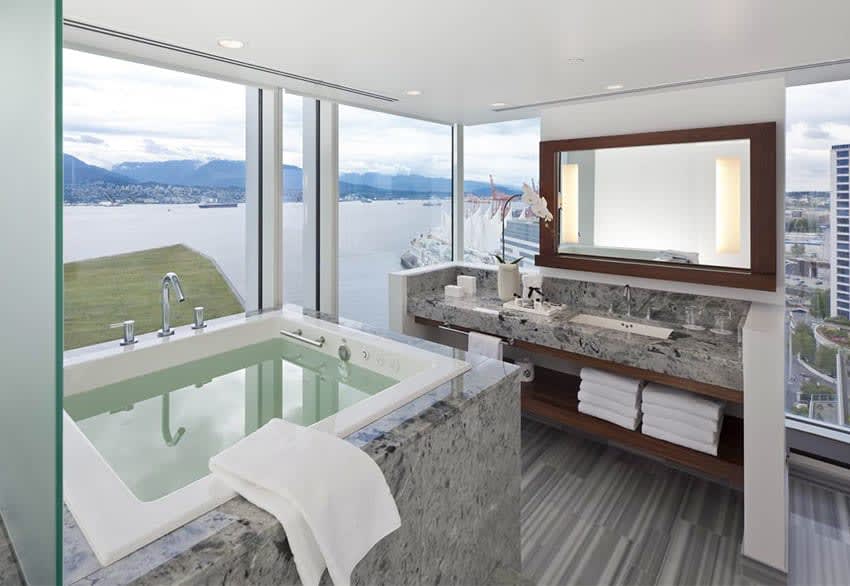
Most drop in tubs are made of acrylic, which makes them lightweight yet strong and easy to clean. While the acrylic drop in tub is most popular, other material choices exist: copper drop in tubs for timeless beauty and durability, cast iron drop in tubs for sturdiness and excellent heat retention, lightweight and durable fiberglass drop in tubs, and tubs made of stone, manmade stone, and solid surface for an unusual twist on a classic.
What shape is a drop in tub?
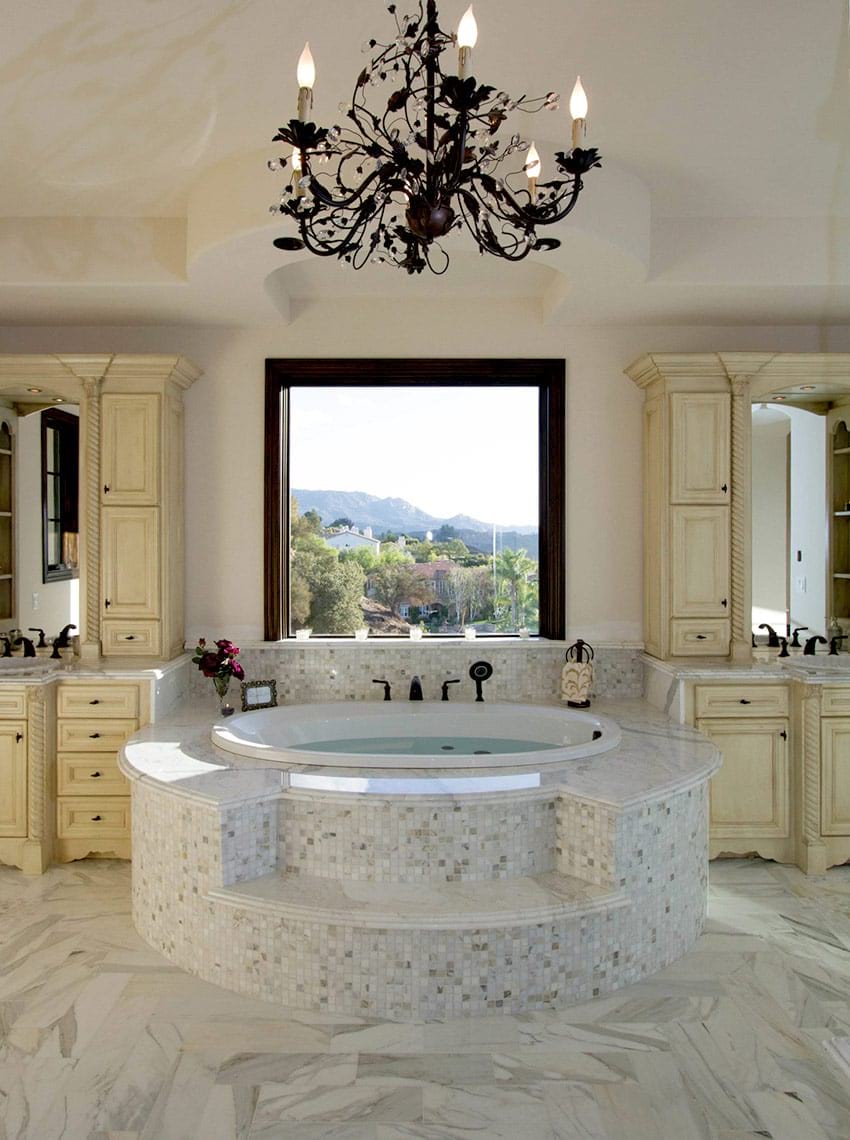
Most drop in tubs are standard rectangular tubs, but they’re available in virtually every shape; choose a corner drop in tub for extra bathing room (to learn more about corner tubs, see our corner tub guide), an oval or hourglass drop in tub for visual interest and contoured shape, or a round or square drop in tub for deep, compact bathing.
How big is a drop in tub?
Drop in tubs vary widely in size, making them an excellent choice for virtually any size bathroom. Typical tub lengths range from a diminutive 35” (on deep Japanese-style tubs) to a generous 86”, with widths ranging from just 20” to an oversized two-person (or more!) 84” and depths ranging from 12” to 41”.
How much does a drop in tub cost?
The widespread popularity of drop in bathtubs is largely due to their affordability. A high-quality drop in tub can cost as little as $700, with prices ranging up to over $20,000, but most are cost-efficient and within the average homeowner’s means. These tubs won’t break the bank, and they’ll look like a million bucks regardless!
Common installation questions:
How is a drop in tub installed?
A drop in tub installation is a process not recommended for a casual DIYer. Hire a competent professional who knows how to install a drop in tub and how to secure a drop in tub properly (it requires a mortar base in addition to a sturdy, level frame; all plumbing should be completed before installing the tub). The tub will likely also require a tub flange kit to secure the tub to the wall.
If you have experience in tub installation and frame construction and would prefer to install it yourself, be sure to educate yourself on the multiple stages and components of the installation; start with a comprehensive overview to ensure that you don’t miss a crucial element.
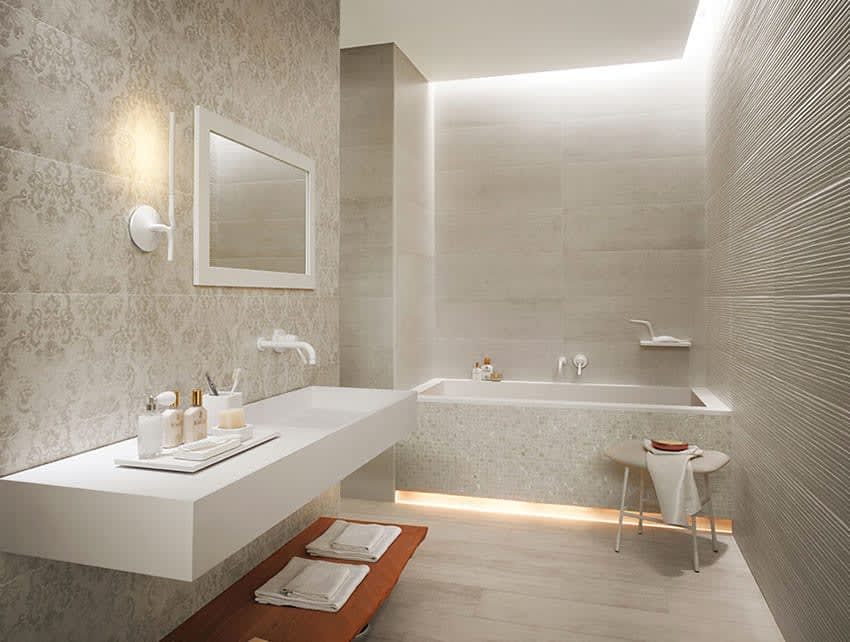
To get your tub looking its best, be sure to hire a professional who’s well versed in how to tile a drop in tub surround (or only attempt it yourself if you’re adept at tiling). The tiles should coordinate with the wall tile for a seamless, clean appearance and visual appeal. Drop in tubs may also be surrounded in wood paneling or other materials. Be sure that your tub surround includes a removable panel for easy access to plumbing.
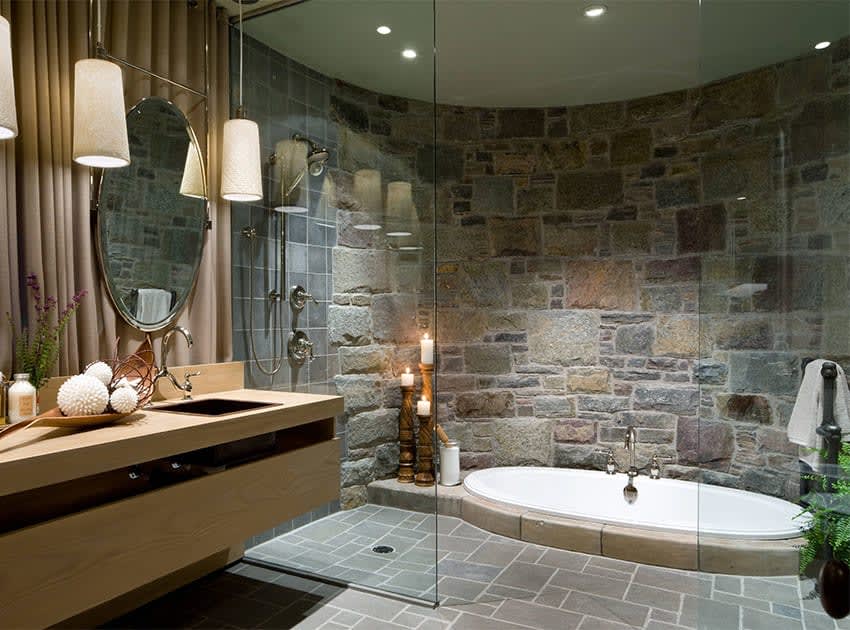
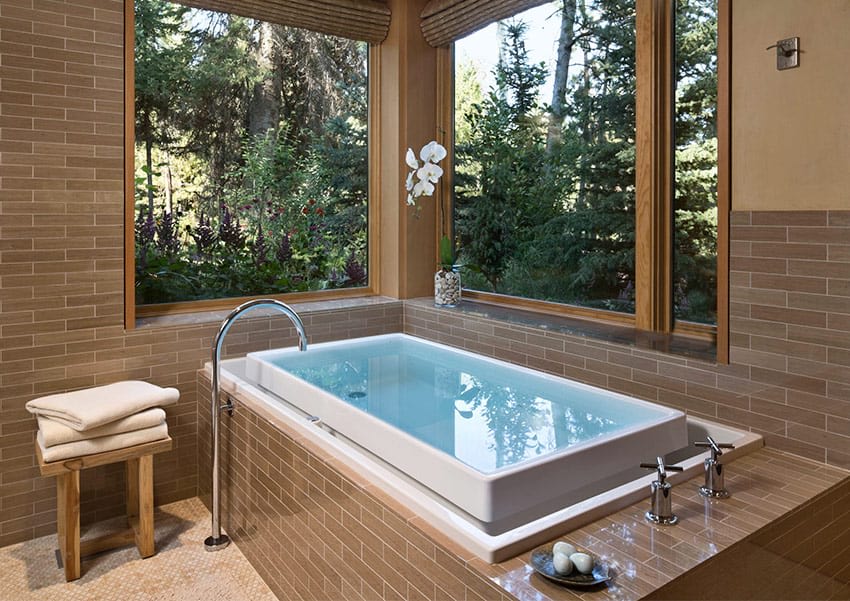
Alternatively, a drop in tub can be dropped directly into the floor for a spa-like experience. Do not install a tub in the floor if you or any other bather has difficulty maneuvering in and out of the tub or if it will pose a danger to children or pets.
Can a drop in tub be installed in an alcove?
Yes, drop in tubs can be installed in an alcove, but they’re more commonly installed in more open spaces, freestanding or jutting out from a wall. Depending on the size of the bathroom, a drop in tub installed in an alcove may provide less space; one may be able to fit a larger tub into another space in the room.
Can a drop in tub be undermounted?
Many drop in bathtubs may also be used as undermount tubs, where the deck covers the rim of the tub for a seamless appearance.
How much space around drop in tubs is necessary?
Deck size is a personal preference. If you’d prefer easier access to the tub, a narrower deck is better; if you want more space for tubside toiletries or entertainment, opt for a wider deck. At least 6 inches on each side of the tub is recommended; take the thickness of the surround and deck material (tile, granite, etc.) into account when taking measurements for a tub.
When measuring height, consider that the tub will be set into a supporting base such as mortar or foam; the deck will need to be built with a few additional inches above the height of the tub. If your tub is very deep, consider a set of steps (built into the platform or a freestanding set) to make climbing in and out of the tub easier and safer.
What are the advantages of an undermount bathtub vs. drop in tub?
One advantage of an undermount tub over a drop in tub is that undermount tubs are better suited for tub/shower combinations. If water collects on a deck surrounding a drop in tub, the lip of the tub prevents water from flowing into the bathtub.
Another advantage is an aesthetic one: some prefer the seamless appearance of an undermount tub to the visible rim of the drop in tub.
A disadvantage of undermount tubs is that it can be more difficult to enter and exit the tub as the deck adds height to the tub.
Can a drop in tub have a shower?
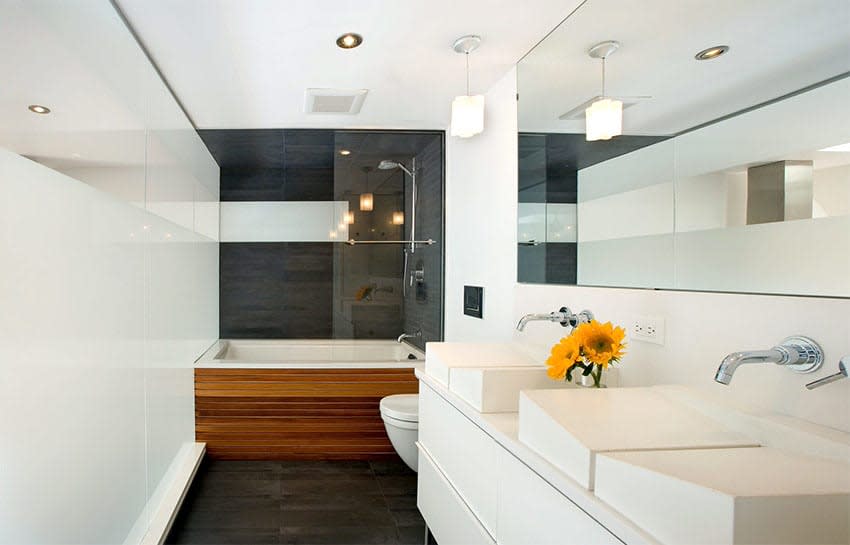
Yes, depending on where they’re installed, though it’s not the recommended usage. Most drop in tubs can be fitted with a shower as long as they’re against a wall and have an adequate enclosure; doors that sit atop the rim are recommended to keep water from collecting on the deck.
What’s the best brand of drop in tub?
We handpick the finest tubs to guarantee our customers’ satisfaction. Some of our favorite brands include:
- WS Bath Collection: sleek, stylish, and effortlessly beautiful, these tubs make a statement no matter how they’re installed
- MTI: with a huge range of shapes, sizes, styles, and systems, there’s an MTI drop in tub for every lifestyle and every budget
- Maax: drop in tubs by Maax offer awesome extras like lighting, heaters, and noise reduction for a rejuvenating bath
- Duravit: luxuriate in a deep soak with a Duravit drop in tub; every piece is crafted with the signature Duravit sophistication
- Bain Ultra: renowned for their silky surfaces and state-of-the-art therapeutic systems, Bain Ultra tubs will never go out of style
- Hydro Systems: quality, affordability, and luxury are all standard on every Hydro Systems tub; choose sumptuous add-ons and colors to match every scheme
See our full line of drop in tubs and start exploring your options!