Corner Tubs: Everything You Need to Know
Shop Corner Tubs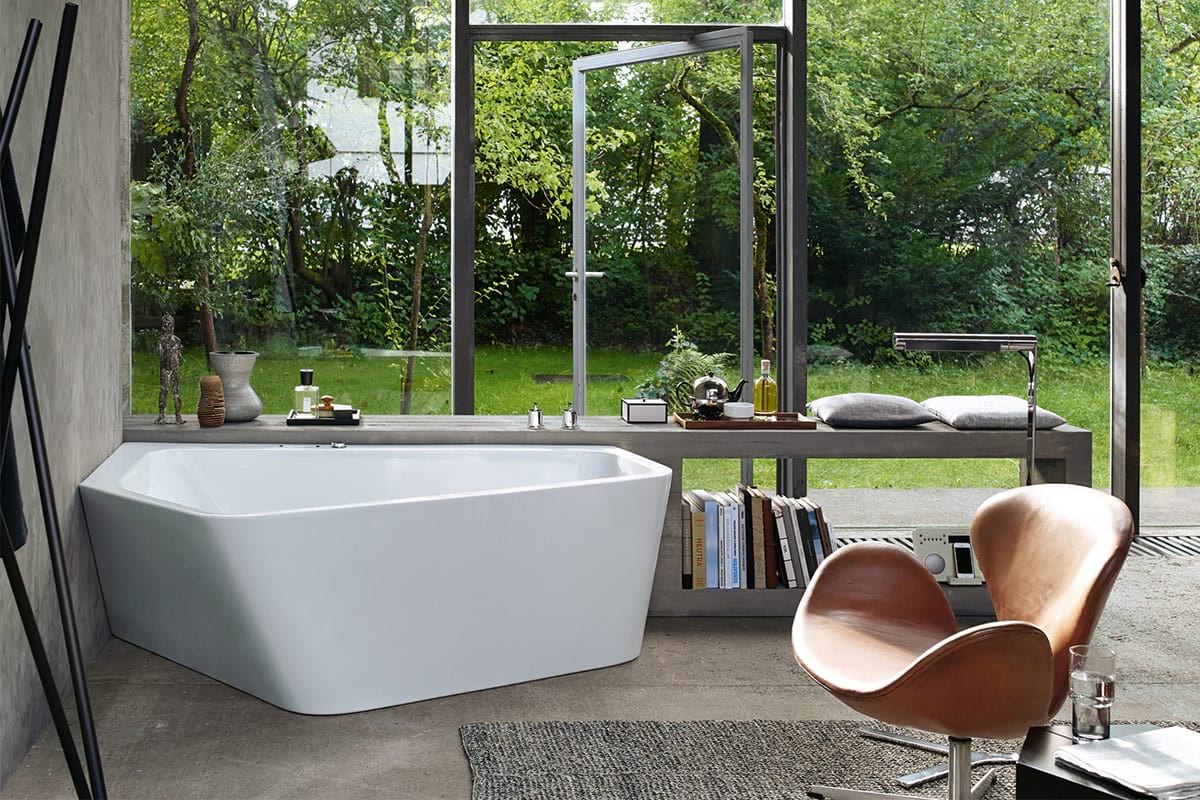
Back yourself into a corner… it may just be the best place for your dream bathtub. Find out why and how a corner bath can become your new favorite spot.
Awkward layout? Limited space? Or just looking for something a little different?
The answer to your bathroom conundrum may very well be a corner tub. That odd little corner or weirdly-shaped wall can present an opportunity for a truly awesome corner bath. Who knew your bathroom had so much potential?
Corner tubs can work their magic in every bathroom: the tiny bathroom, the angled bathroom, and even the straight and spacious bathroom.
What is a corner tub?
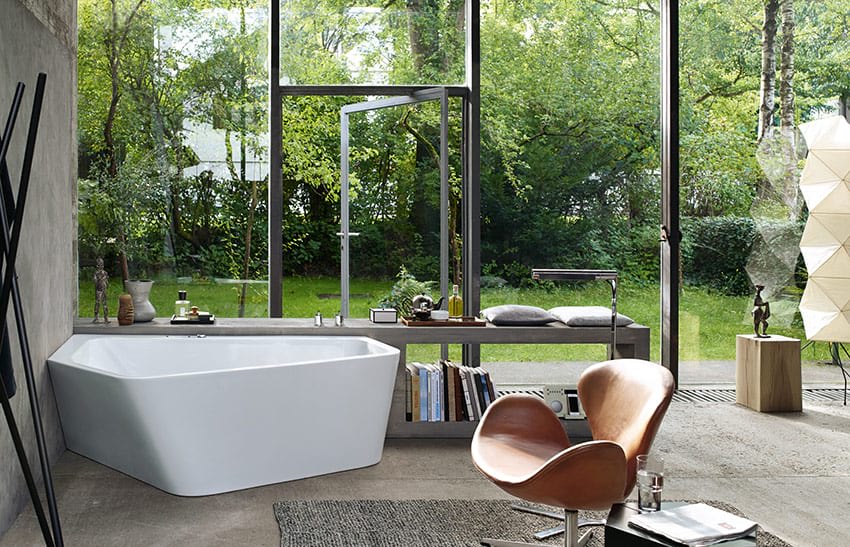
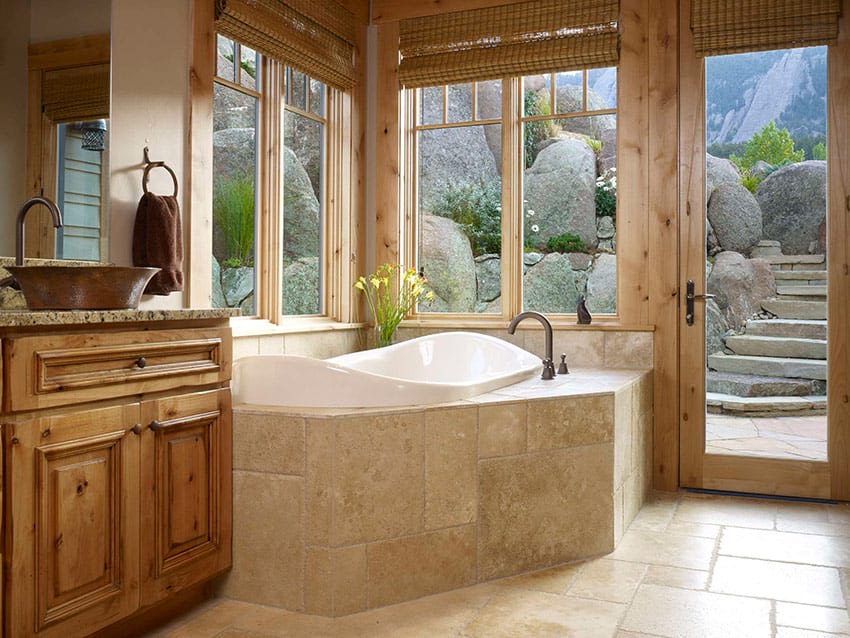
A corner bath tub is a bathtub shaped to fit into corners. Corner tubs are most commonly three- or five-sided but are available in various shapes, sizes, and configurations.
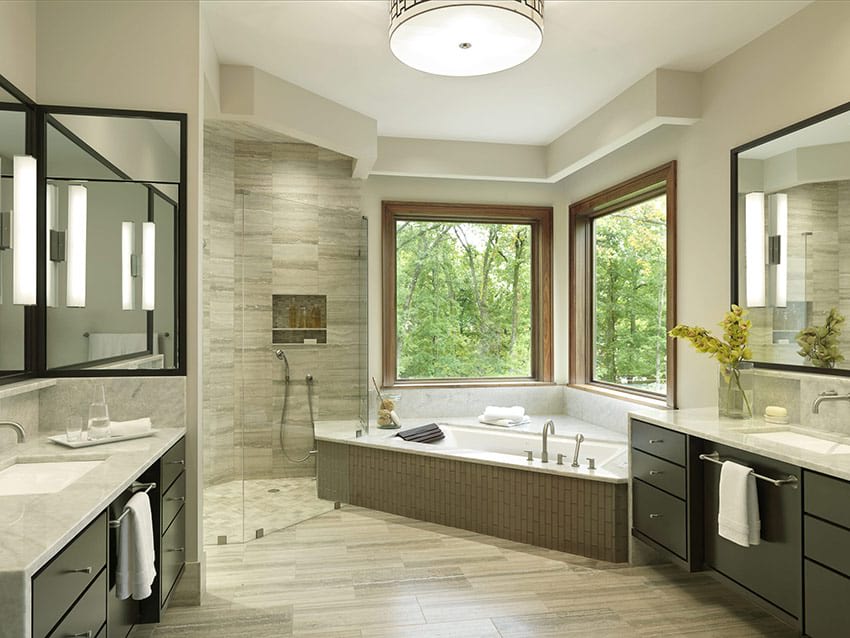
What are the pros and cons of a corner tub?
Pros
- Frees up bathroom floor space; improves flow and provides more space in the center of the room
- May provide more bathing space than other tubs
- Efficiently utilizes corners, odd angles, or dead space
- Often features abundant deck space
- Large variety of options in shape, size, configuration, and features
- Visually interesting; breaks up typical linear layout
- Can be combined with a shower or free up space for a separate shower
Cons
- Can be difficult to reach far corners for cleaning
- May not be the most efficient solution for layout; some can be bulky
- Depending on shape and size, may be difficult to enter and exit the tub
What size is a corner tub?
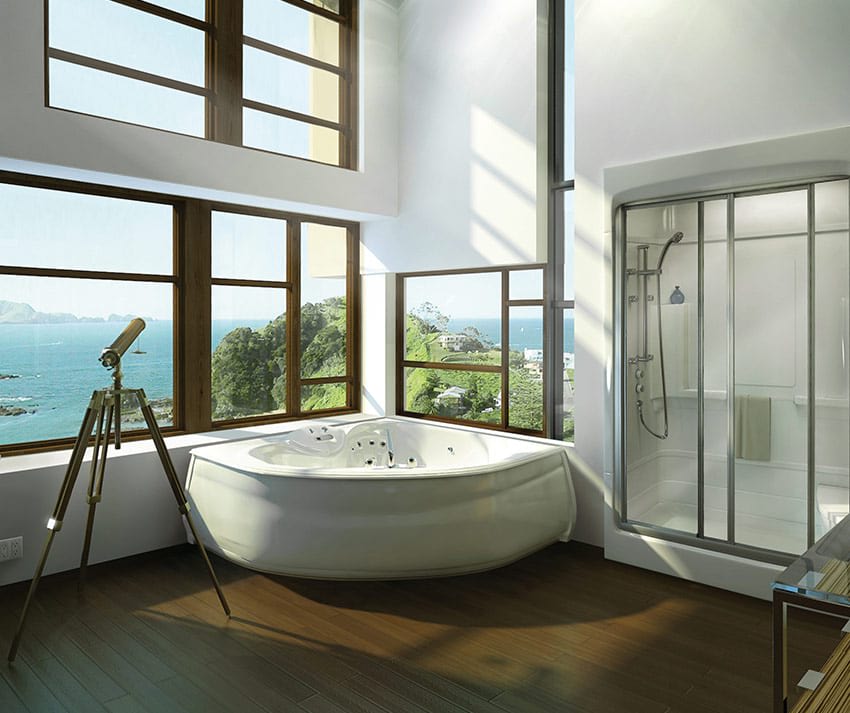
Corner tubs are available in a vast array of sizes and depths to fit in virtually every bathroom and corner. They typically range from 42” to 76” in length, 31” to 83” in width, and 17” to 29” in height; the most common corner tub dimensions are 4’x4’ and 5’x5’. Many can comfortably fit at least two bathers at once.
How to measure a corner tub:
Measure the tub at its widest and longest points to get the length and width; for height, measure the exterior of the tub from the floor to the top of the tub. Note that the width and length are often nearly the same on corner tubs.
Corner tubs are often installed with a tub surround, a low wall-like structure made of tile, acrylic, panels, or other materials that surround the tub to cover the outside of the tub and coordinate with the bathroom. If you intend to have a tub surround factor in at least one additional inch per side to ensure that you have enough space between walls.
When measuring your bathroom, measure the doorway and any other transitional spaces that the tub will have to traverse to get to the bathroom – be sure that it will fit through!
Corner tubs are space-savers, but be sure that your bathroom can accommodate one. The minimum recommended clearance space is 21” of clear space past the edge of the tub; 30” is suggested.
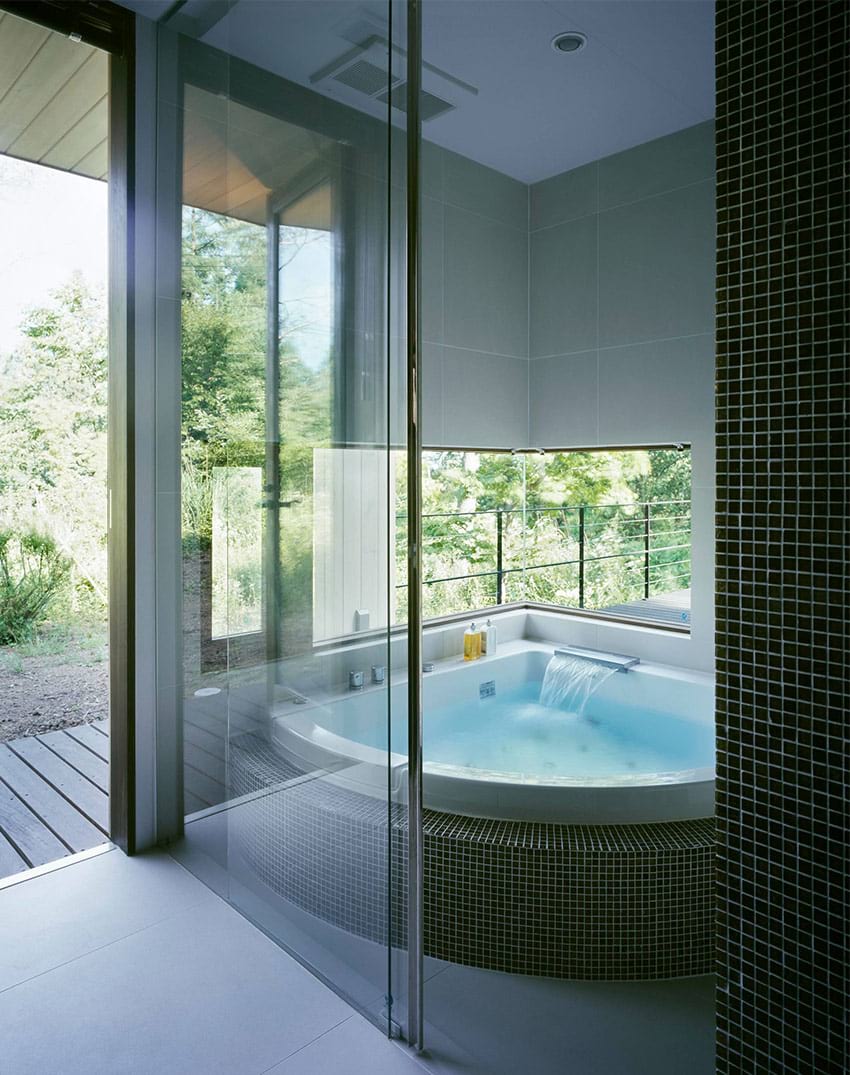
What are the installation options for a corner tub?
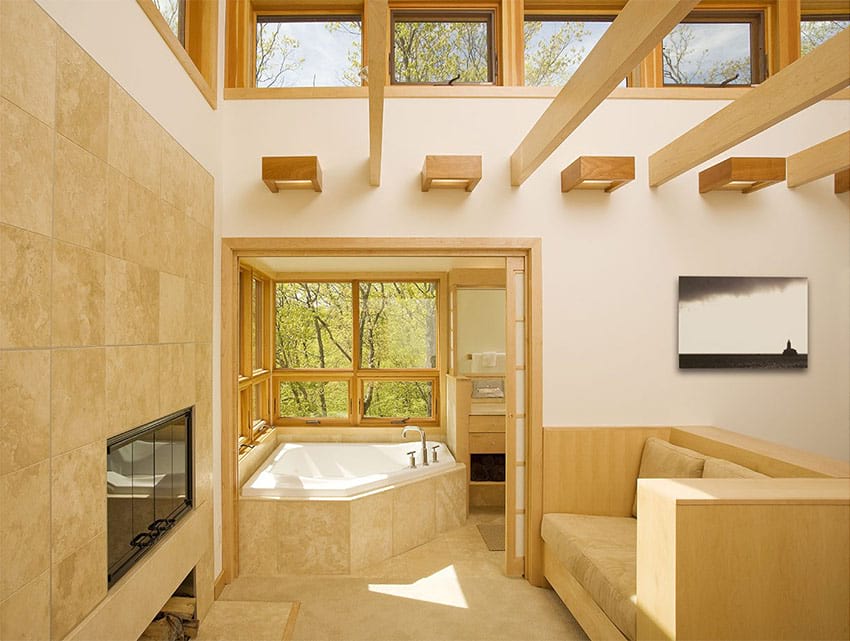
Corner tubs are versatile and can be installed in several ways. Many models are available with a choice of drain placement (right or left side or center) for easy access to plumbing. Plan to install your corner tub near a sink or vanity for better access to water and drainage pipes.
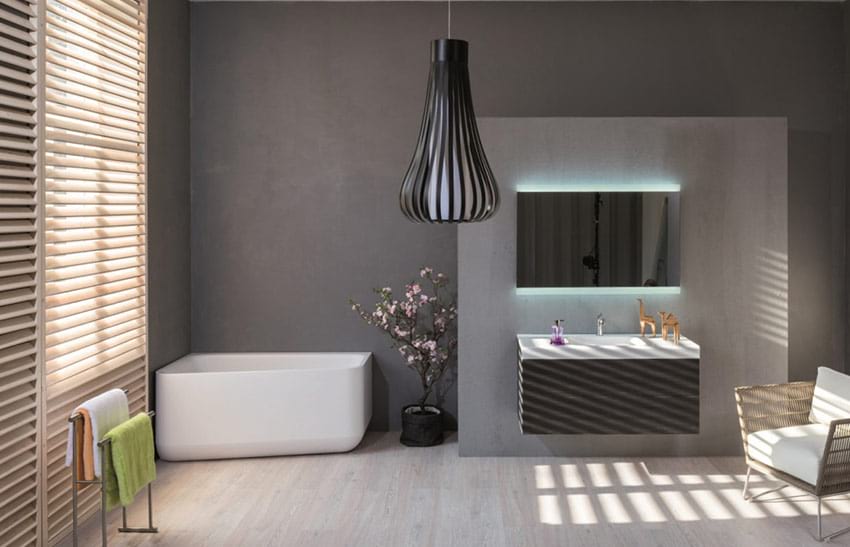
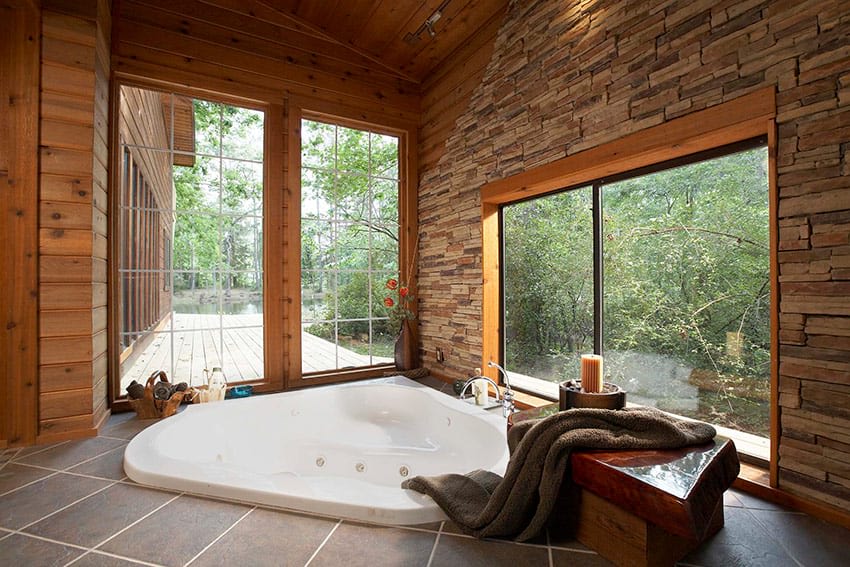
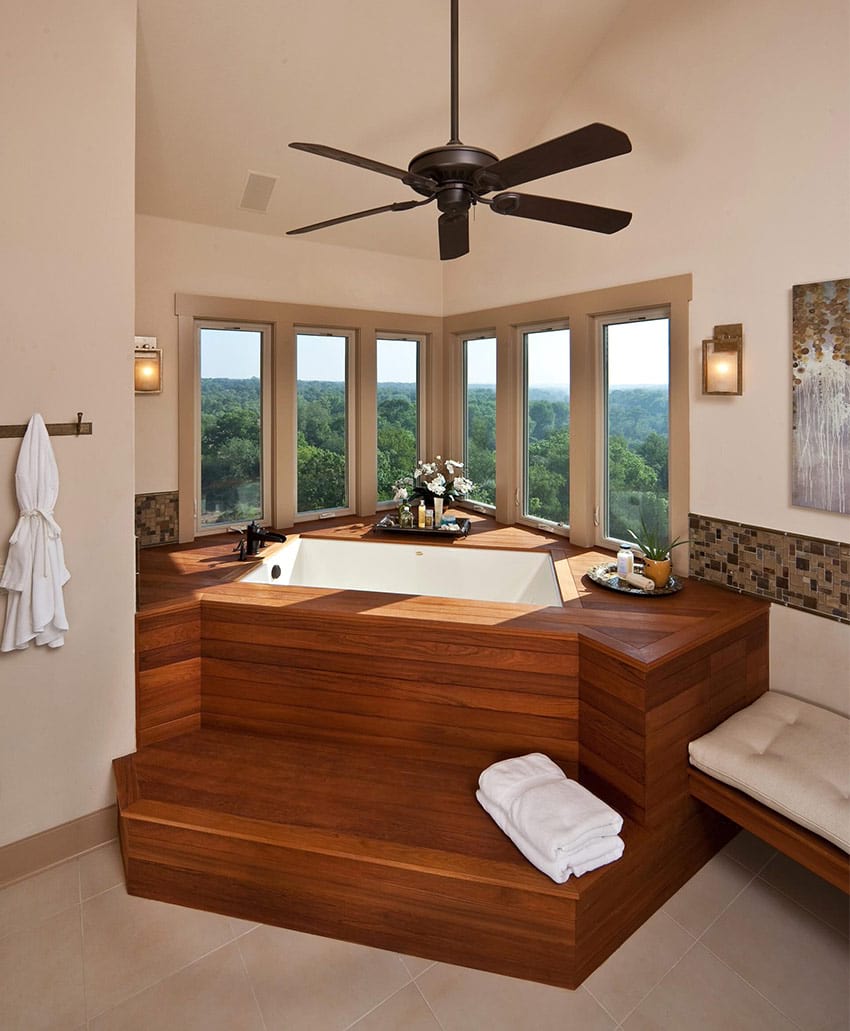
A corner freestanding bath makes a dramatic statement; if you’d prefer a larger deck and a more traditional look, consider a drop in corner tub with a surround. An undermount corner tub offers seamless installation (without a seam or lip between the tub and the deck) for easier cleaning.
What features are available on corner tubs?
With typically large bathing wells, corner tubs provide plenty of space for extra features. A corner whirlpool bathtub offers deep-tissue massaging jets, while a corner air tub provides a softer, effervescent effect; a corner combo tub offers both. To learn more about the different types of jetted tubs, see our guide on air tubs vs. whirlpool tubs.
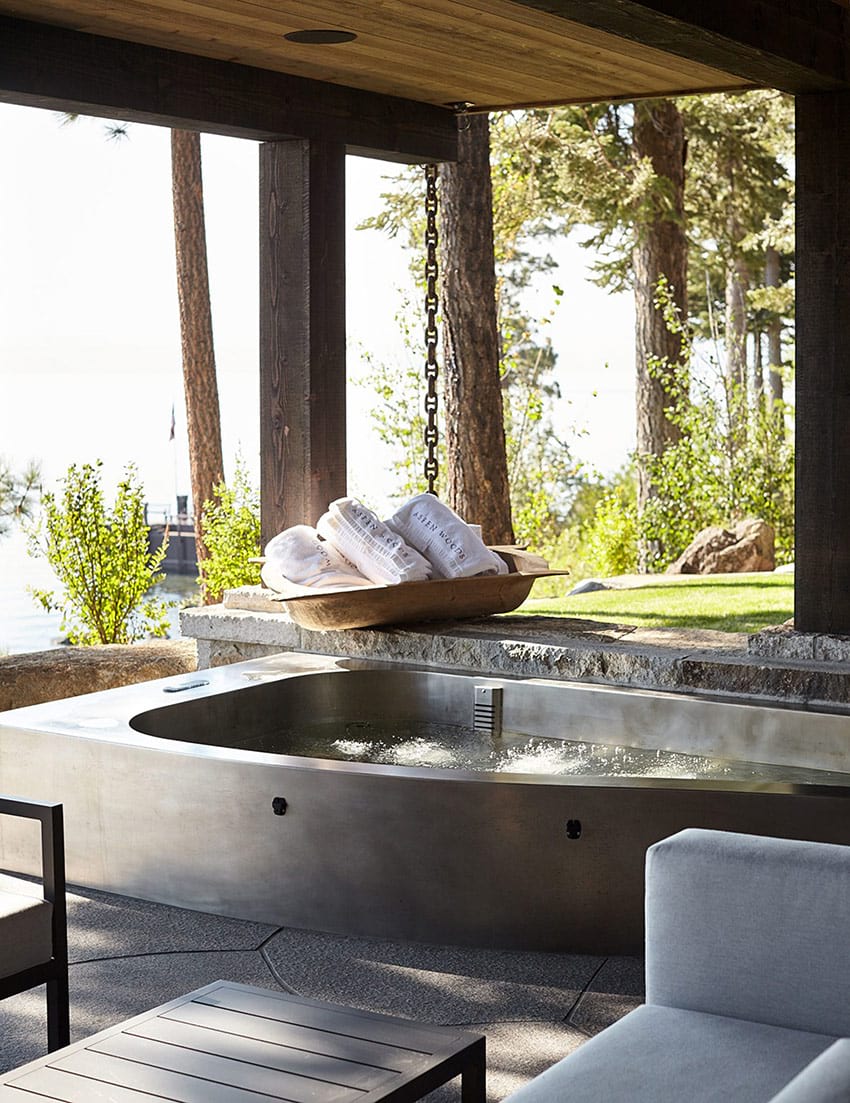

How can a corner tub be made most effective?
Don’t just park it there in the corner; make the most of your corner tub.
How to enclose a corner tub:
The tub may look beautiful as-is, but there’s a good chance you’ll want to enclose it to keep the heat in when you bathe (and if you combine it with a shower, you’ll definitely need an enclosure). A glass corner shower enclosure can be fitted to your tub to keep the cold air out; if you’d prefer to skip the doors (due to an atypical tub shape, cleaning demands, or other reasons), try a corner shower curtain rod.
How to update a corner tub:
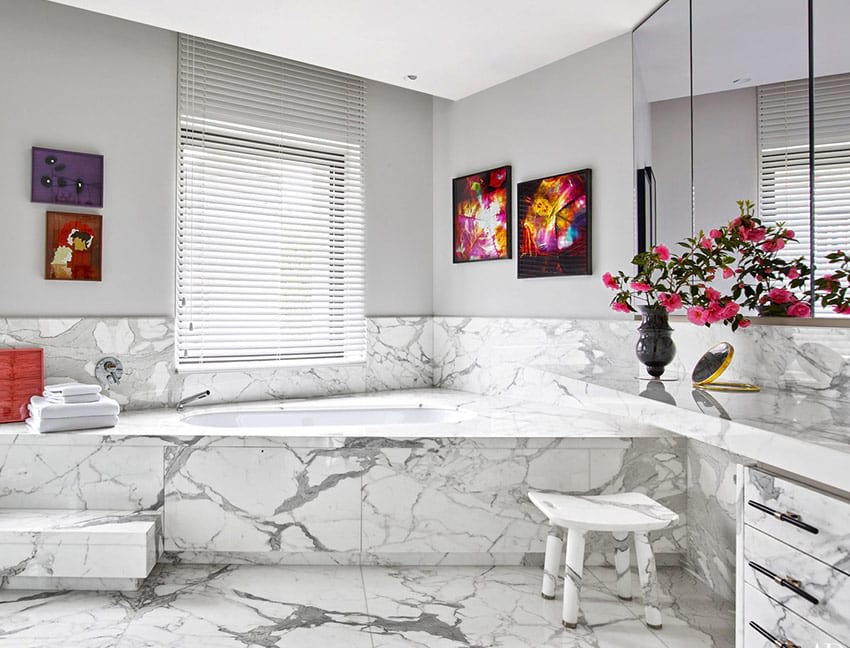
Some dismiss the corner tub as dated. Freestanding tubs are trendy – anything but dated! – and can easily be installed in a corner. If you’d like to update an existing corner tub or turn your nondescript corner tub into a thing of beauty, you have many options. Because these tubs have more exposed skirting than others, they can be paneled, tiled, or clad in virtually any material to become a bathroom focal point.
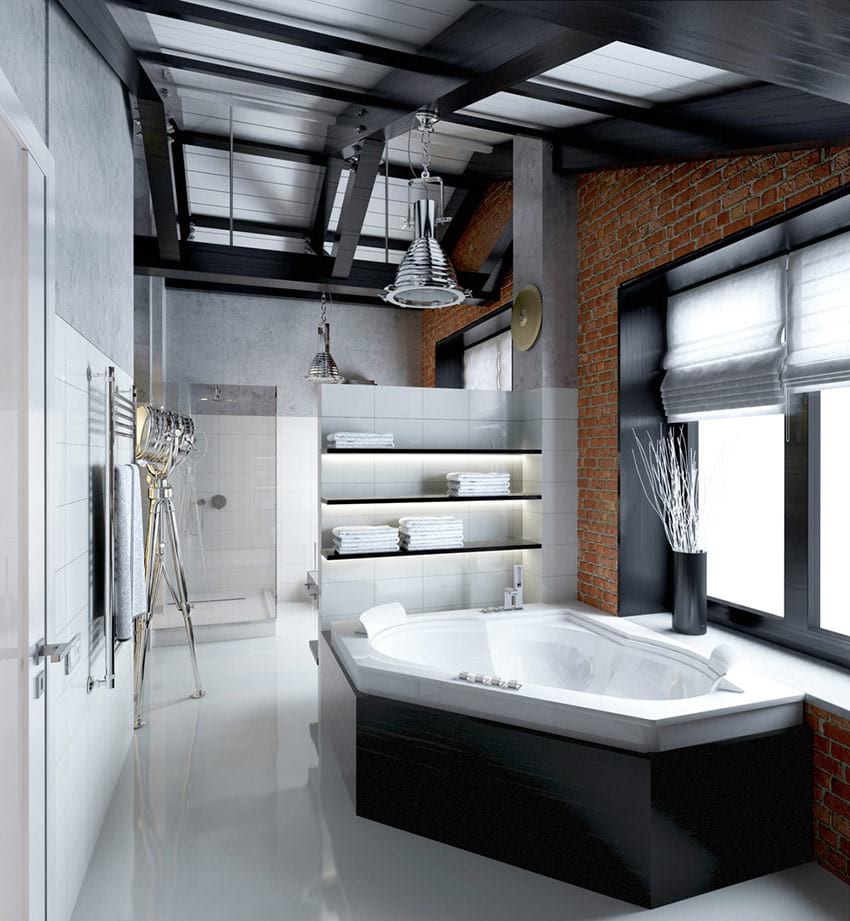
How to turn a corner tub into a shower:
Some corner tub shapes lend themselves to tub/shower combinations more than others; most can easily be used as both a tub and a shower. Take other structural details like windows and fixtures into consideration when adding a shower or installing a corner tub with shower.
For a luxurious experience, turn your corner into a mini spa with a corner steam shower and bathtub combination.
If you wish to do away with the tub entirely, that corner can be fitted with a corner shower enclosure using a corner shower base and coordinating shower doors.
How to decorate a corner tub:
Corner tubs often become a bathroom focal point; decorating around and next to it enhances the look. Add shelves or niches to the walls for extra storage and visual interest; for a truly relaxing bath time, place the tub under or near windows.