Specialty Kitchen Sinks: Everything You Need to Know
Shop Kitchen Sinks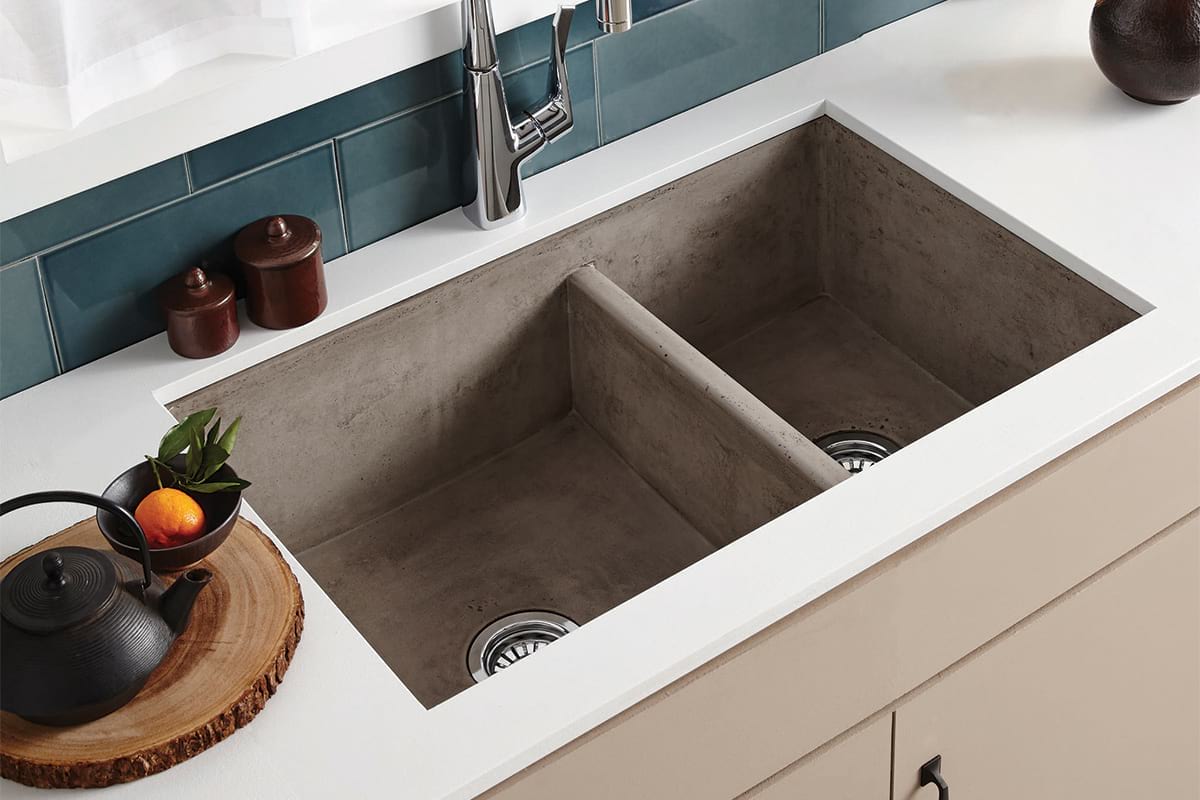
The typical sink materials are just not doing it for you. Now what? Now you look into the less-typical options like bamboo, soapstone, glass, and even concrete; here's everything you need to know.
So you know all about the standard and not-so-standard sink materials – stainless steel, fireclay, porcelain, cast iron, granite and quartz composite, and even copper – but none of them are particularly speaking to you. Now what?
The fact that your taste isn’t typical doesn’t mean you’re doomed to a sink you don’t love. Look beyond the most popular choices to find the kitchen sink that’s perfect for you! These sink materials are different, but that’s just what you’re looking for… so check them out and find your perfect piece.
Glass
It may seem like a terrible choice for a kitchen sink, but in reality, treated (tempered) glass holds up well to heat and chemicals. Glass is not the most durable or practical option available – it may shatter if a heavy or sharp object is dropped onto it – but it’s popular for bar or decorative sinks due to their distinct beauty.
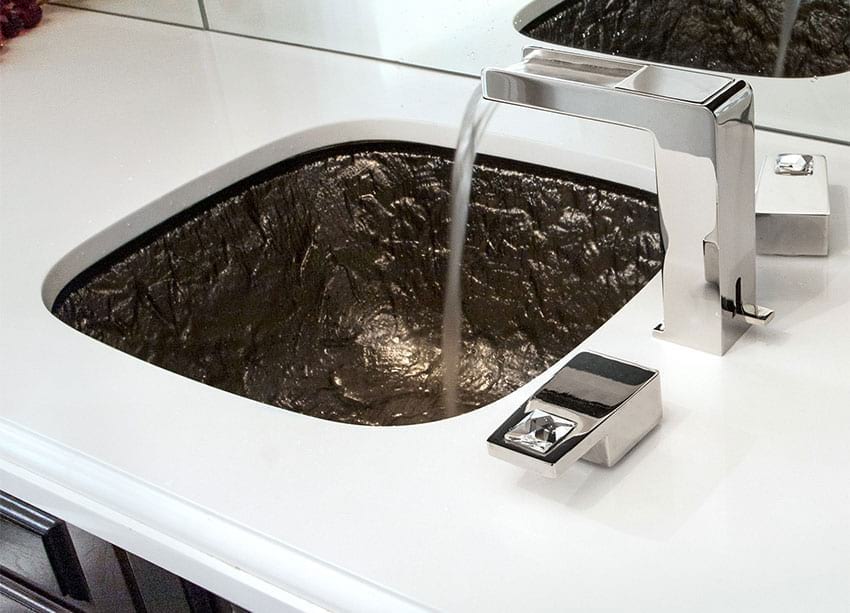
Most glass sinks available are vessel sinks and bathroom sinks, but there are undermount glass kitchen and bar sinks on the market as well.
Pros of glass kitchen sinks
- Unique appearance; large variety of color and style options
- Easy maintenance
- May be uplighted for extra visual interest – just add string lights or LED strips under the sink
Cons of glass kitchen sinks
- High cost
- May shatter under force
- Prone to water spots and scratching
- Lower heat resistance than many materials (though some, like Oceana’s Hard Roc glass sinks, are heat resistant to over 200 degrees)
- With clear or light-colored glass, pipes underneath may be visible
Average cost of glass sinks
If you’d like a glass kitchen sink, be sure to invest in a high-quality sink; lower-quality sinks will be more affordable but also more prone to damage, while higher-quality sinks are treated to withstand heavier use.
Expect to pay upwards of $350 (at minimum) for a decent glass sink; some may cost several thousand dollars.
Glass kitchen sink maintenance
- Glass sinks are fairly easy to maintain.
- Dry after every use to prevent water spots (ideally)
- Spray regularly with glass cleaner (like Windex) and wipe down
- If your sink has hard water spots or just needs a shine-up, spray with a solution of equal parts white vinegar and rubbing alcohol
- Always use a soft, non-abrasive cloth to wipe your sink (microfiber cloths are excellent for cleaning glass)
- A sink protector is recommended to keep your sink in optimal condition
Wood
What better way to unexpectedly warm up a modern white kitchen than with a bit of wood – on the sink? (Or, alternatively, to complement wooden cabinetry or butcher-block counters in a rustic kitchen?)
There are wooden bathtubs – why not wooden sinks? Wood is an eco-friendly option and can even be sanded and restained if necessary (obviously a complicated process once the sink is installed).
Pros of wood sinks
- Distinctive beauty and warmth
- Typically customized to meet your specifications
- May be refinished in case of damage
- Eco-friendly
Cons of wood sinks
- Prone to water damage without proper sealing and care
- High-maintenance
- High cost; generally custom-made
Average cost of wood sinks
Wood sinks are virtually impossible to price, as they are typically special-order and cost depends on the type of wood used.
Wooden sink maintenance
For a wooden kitchen sink that is likely to hold up to moisture, use wood and sealing products commonly used on boats. Caution: this is not a DIY project! Enlist an experienced professional for this one.
Bamboo
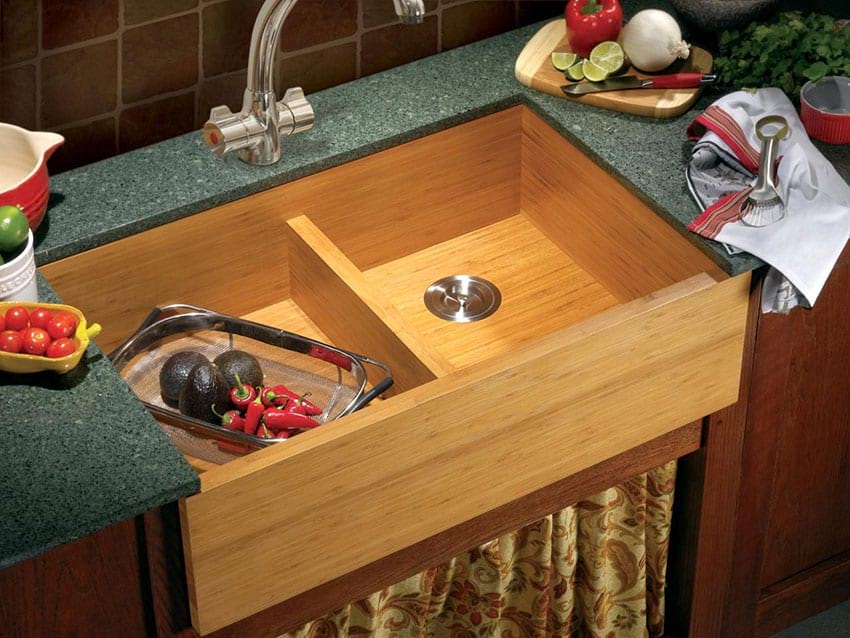
While wooden sinks are rare (and usually handmade to order), bamboo sinks are similar and a bit more attainable. Bamboo is a fast-growing grass that’s even more “green” than hardwood as it grows faster, requires less water, decomposes into reusable and nutrient-rich composted soil, produces large amounts of oxygen, and doesn’t contribute to deforestation. Plus, it looks awesome! And it’s hardy and affordable to boot.
Pros of bamboo sinks
- Sustainable, eco-friendly choice
- Unique appearance; colors vary
- Fairly low-cost
Cons of bamboo sinks
- Requires regular maintenance
- More prone to damage and leaking than other common materials
- Limited color options
Average cost of bamboo sinks
Most bamboo kitchen sinks range from $400 to $600, depending on size and quality. We recommend solid bamboo sinks by Alfi, available in single and double-bowl configurations.
Bamboo sink maintenance
Bamboo sinks are fairly high-maintenance.
- Do not soak dishes in the sink
- Wipe down after every use
- Wash daily with dish soap and wipe with a soft cloth to avoid soap buildup and water spots
- Apply wood sealer once a year
- Avoid contact with bleach, ammonia, harsh chemicals, or abrasive cleaning agents
Stone
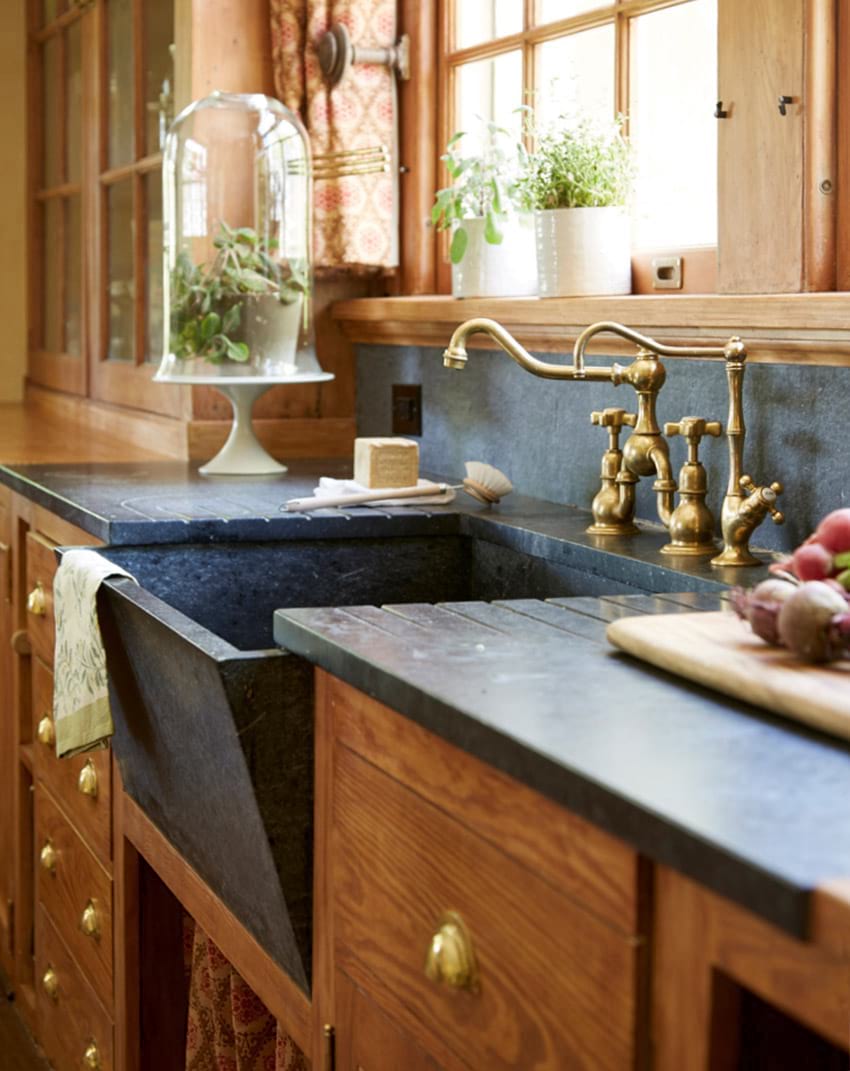
Natural stone sinks are breathtakingly beautiful and distinctive, especially in apron-front form to showcase their veining and details. They’re also fairly uncommon due to several factors, including cost, weight, and maintenance requirements, but for low-traffic kitchens or largely decorative sinks, natural stone is a showstopper.
Most natural stone kitchen sinks are made of soapstone, marble, slate, granite, or quartzite.
Soapstone
Pros of soapstone sinks
- Unique, dramatic appearance
- Stain-resistant
- Antibacterial properties
- Nonporous: impervious to heat, water, chemicals, and acid
- Can match countertops
- Low-maintenance
Cons of soapstone sinks
- Limited colors (typically dark gray, green, or bluish with veining)
- Soft stone; prone to scratching
- High cost; may include extra installation costs
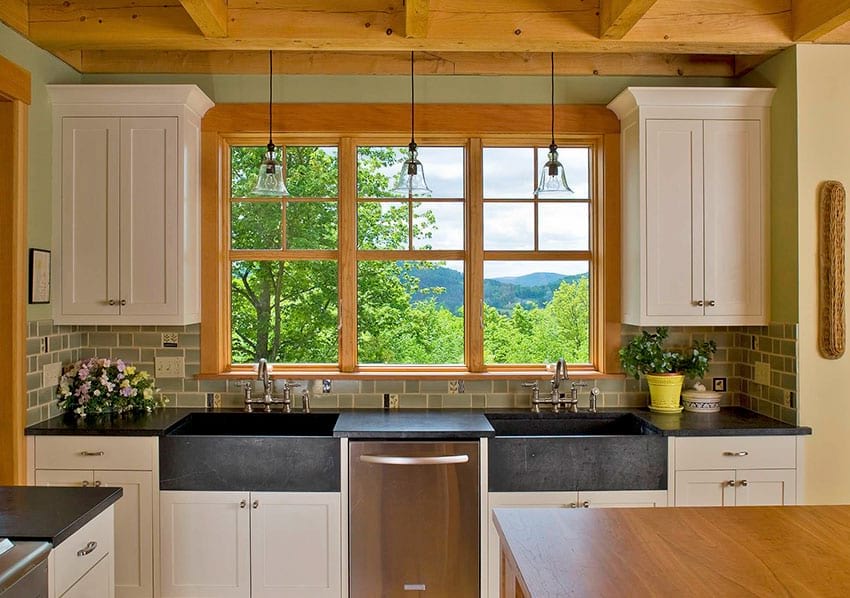
Average cost of soapstone sinks
These sinks will put a dent in your wallet. Soapstone slab sinks are less expensive (expect to pay about $1,000), while solid soapstone sinks (with rounded internal corners, so it’s easier to clean and maintain) typically cost over $2,000.
Soapstone sink maintenance
Soapstone is a fairly low-maintenance material, requiring cleaning with just soap and water. Due to its soft nature, it develops a patina over time (which may be an advantage or disadvantage, depending on your preferences); it’s also prone to scratches, which can usually be buffed out with mineral oil or fine-grit sandpaper.
Marble
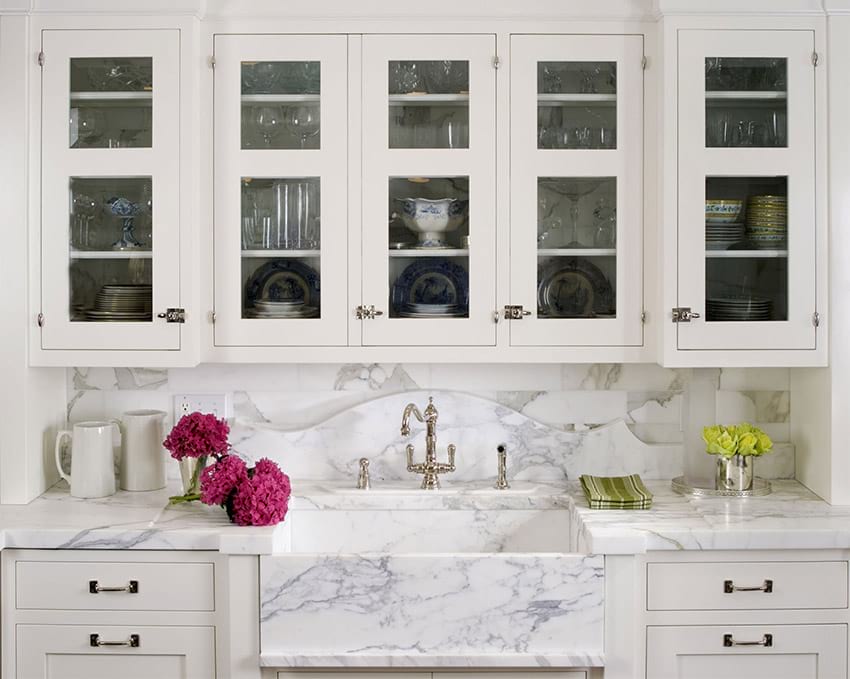
Pros of marble sinks
- Distinctive, luxurious appearance
- Can be made to match or integrate with counters or backsplash
- May be customized to your preferences
- Antibacterial properties
Cons of marble sinks
- Soft, delicate stone; prone to damage
- High cost
- Very heavy; requires extra installation costs and support
Average cost of marble sinks
Since marble sinks are generally custom-made, the price is correspondingly high; most (even commercially-produced sinks like the popular Barclay marble sinks) cost a minimum of $1,200.
Marble sink maintenance
Marble is a sensitive stone and must be treated accordingly.
- Reseal yearly for best results
- Request a sample before committing, it’s best to try the marble with a variety of potential stain-makers (red wine, lemon juice)
- Polished marble will stain less but etch more than honed marble
- Clean with mild soap and water and a nonabrasive sponge or cloth; avoid acids
Slate
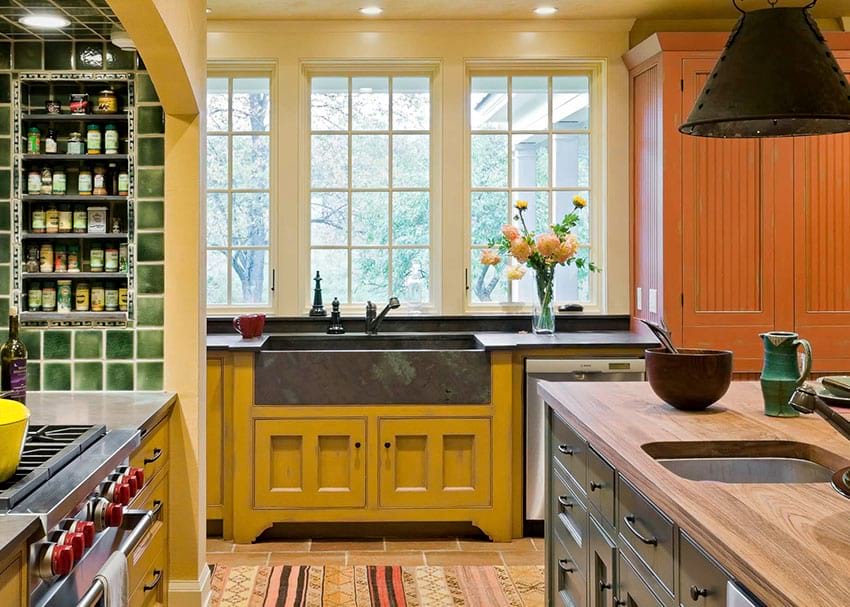
Pros of slate sinks
- Strong and durable; “bulletproof” sink
- Antibacterial properties
- Resistant to stains and heat
- Handcrafted to specifications
- Sustainable; may be refinished
Cons of slate sinks
- Fairly high cost
- Complex installation; may require extra support
Average cost of slate sinks
Because they’re typically made-to-order, slate kitchen sink prices vary; they average approximately $900 to $1,200 or more.
Slate sink maintenance
Slate sinks are low-maintenance; simply clean them with virtually any product of your choosing. It is difficult to damage a slate sink!
Natural granite and quartzite
(That’s quartzite, not quartz – it’s a hardy natural stone similar to granite.) Many sinks that are called granite are actually granite composite, a mixture of granite and acrylic resin that looks and feels like natural stone. Read more about granite composite sinks. A real granite sink will have distinct veining; no two natural granite sinks are exactly alike.
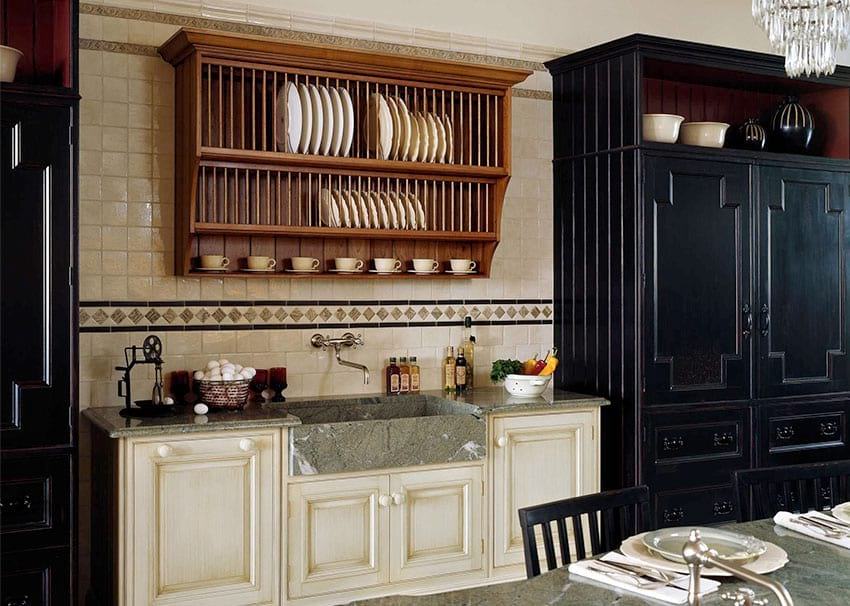
Pros of granite sinks
- Durable and hardwearing
- Unique appearance; may be chiseled, carved, sculpted, or smooth
- May be made to match countertops for a seamless, integrated appearance
- Resistant to stains, heat, and scratches
Cons of granite sinks
- High cost
- Very heavy; requires extra installation costs and support
- May chip
Average cost of granite sinks
Like all natural stone sinks, the price of a natural granite sink varies based on the stone and type of sink (custom-made vs. commercially produced, slab vs. solid); expect to pay at least $1,200.
Granite sink maintenance
Granite is fairly low-maintenance and durable. Reseal yearly with an over-the-counter spray and clean with regular cleaning products.
Concrete
A bit of a newcomer to the kitchen sink material club, concrete is a highly durable material with one-of-a-kind style. Concrete kitchen sinks are typically molded and polished; the material is considered practically indestructible. Like stone blends, there are also commercially-produced concrete-blend sinks – like Native Trails’ NativeStone™ sinks – that are lighter-weight than poured concrete.
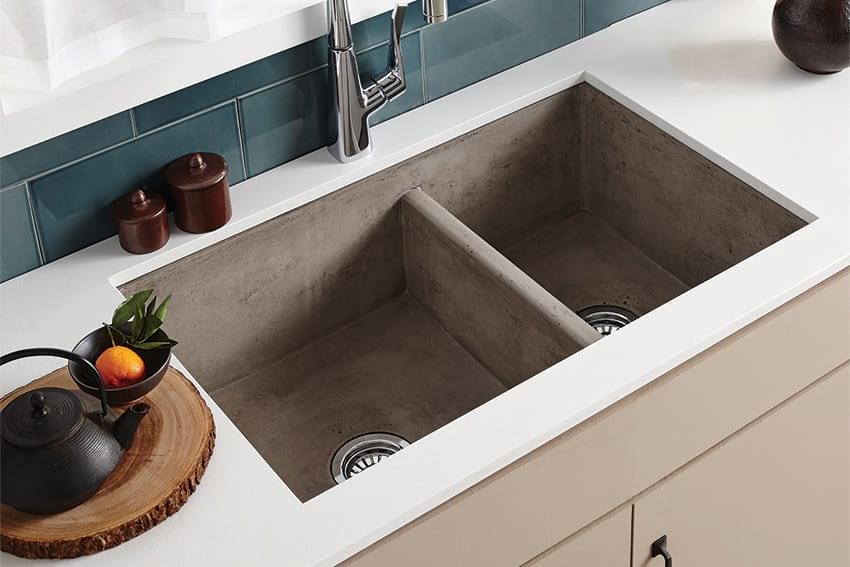
Pros of concrete sinks
- Unique appearance; can be customized to your style and requirements
- Virtually indestructible
- May be dyed to custom colors
- Eco-friendly
- Low-maintenance
- Relatively low cost
Cons of concrete sinks
- Extremely heavy
- May develop hairline cracks
- Requires sealing
- More difficult to clean than other materials
Average cost of concrete sinks
Poured concrete sinks vary widely by shape, size, and details; commercially-manufactured concrete-blend sinks typically cost between $400 and $1,800, depending on size.
Concrete sink maintenance
Depending on the type of sealant you use on your sink, care requirements will vary.
- Generally, concrete kitchen sinks may be cleaned with water-soluble cleaning agents
- Avoid acidic cleaning products and scouring cleansers
- Reseal or reapply oil or wax as necessary to restore shine