Quartz Sinks: Everything You Need to Know
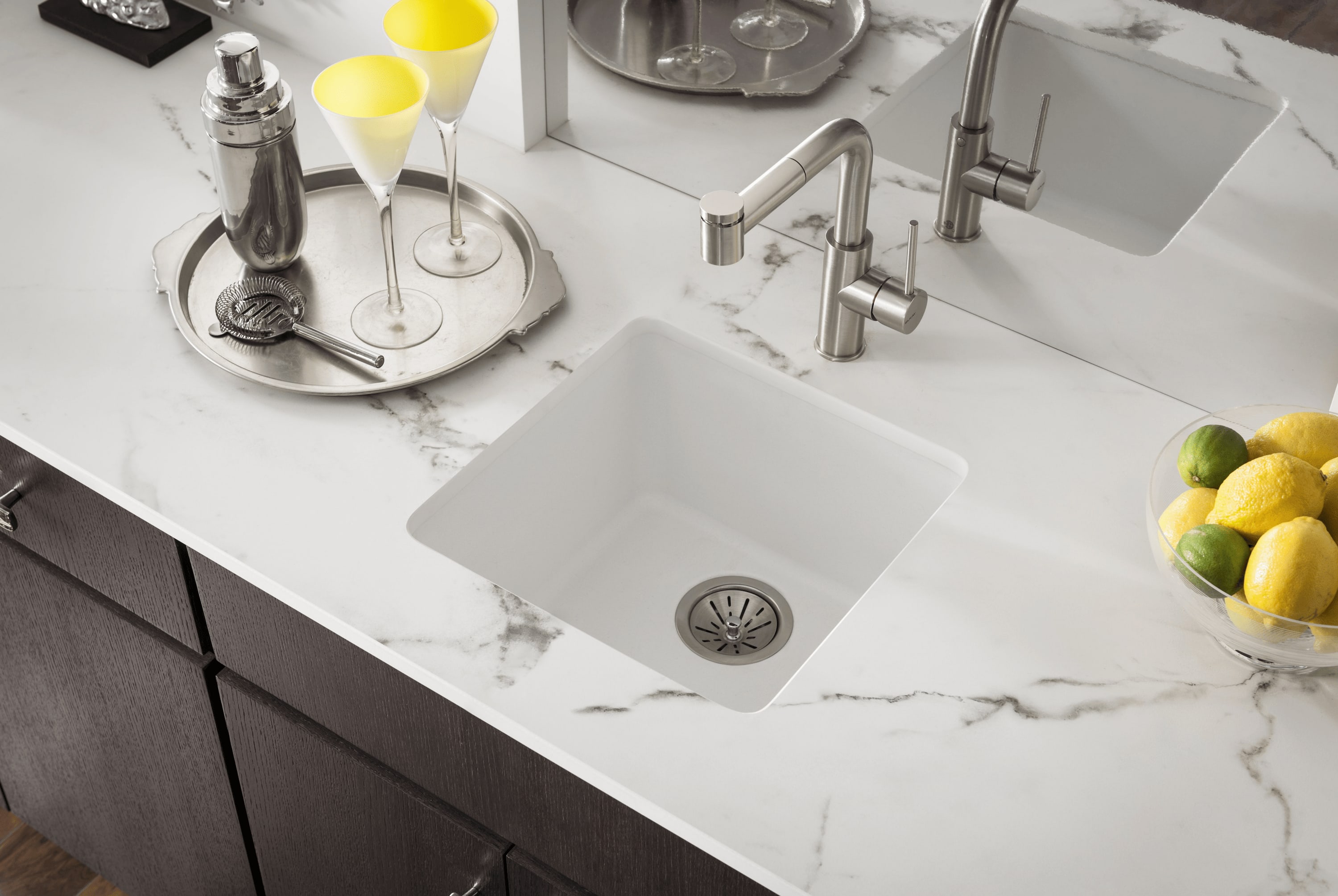
It doesn’t clatter and clang, you can wash the dishes without scratching the sink, and it doesn’t spread the germs from your dog’s leftovers. Finally… a sink that performs.
For years, the stainless steel kitchen sink has been the standby, standard choice. It’s neutral, durable, and bordering on cliche in the kitchen. But before you go with stainless steel just because “that’s what everyone gets,” or if you’re seeking something a little different, it’s time to check out a fabulous alternative: quartz kitchen sinks.
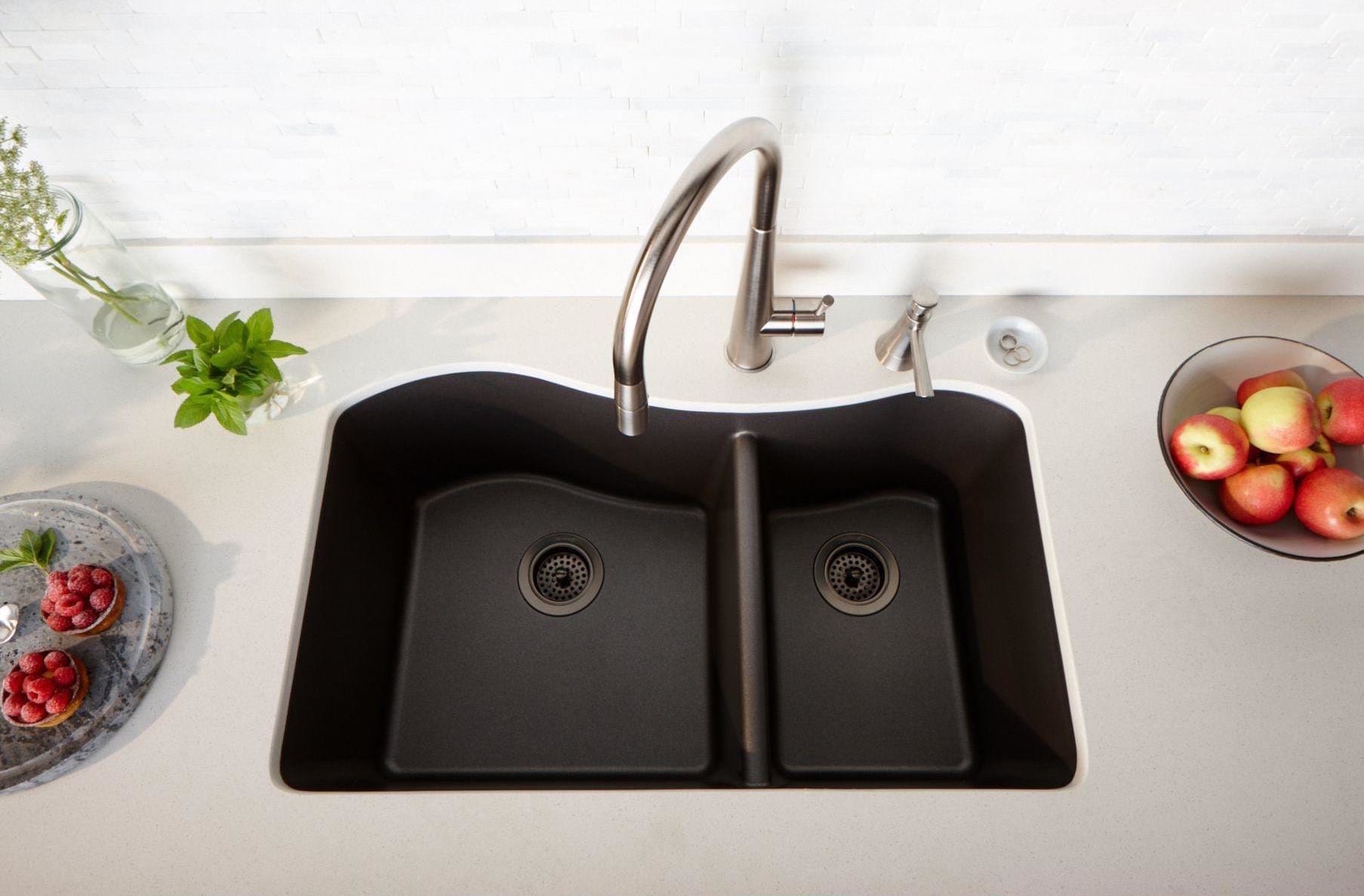
What is a quartz sink?
Quartz composite is a man made material, composed of natural quartz combined with acrylic resin (generally an 80%/20% ratio); granite composite is essentially the same material, made of granite mixed with resin. Stone composite sinks are highly durable with the look and feel similar to natural stone at a much lower price.
Pros of a quartz sink
- It’s incredibly durable and resistant to heat (up to 535° F), scratches, stains, and impact
- Its smooth surface is easy to clean and maintain
- Its natural soundproofing absorbs noise
- It’s nonporous, so food particles don’t spread
- It’s hygienic and bacteria- and odor-resistant
- It complements popular quartz countertops as well as other materials
- It retains its color and uniformity for a lifetime
- It’s affordable
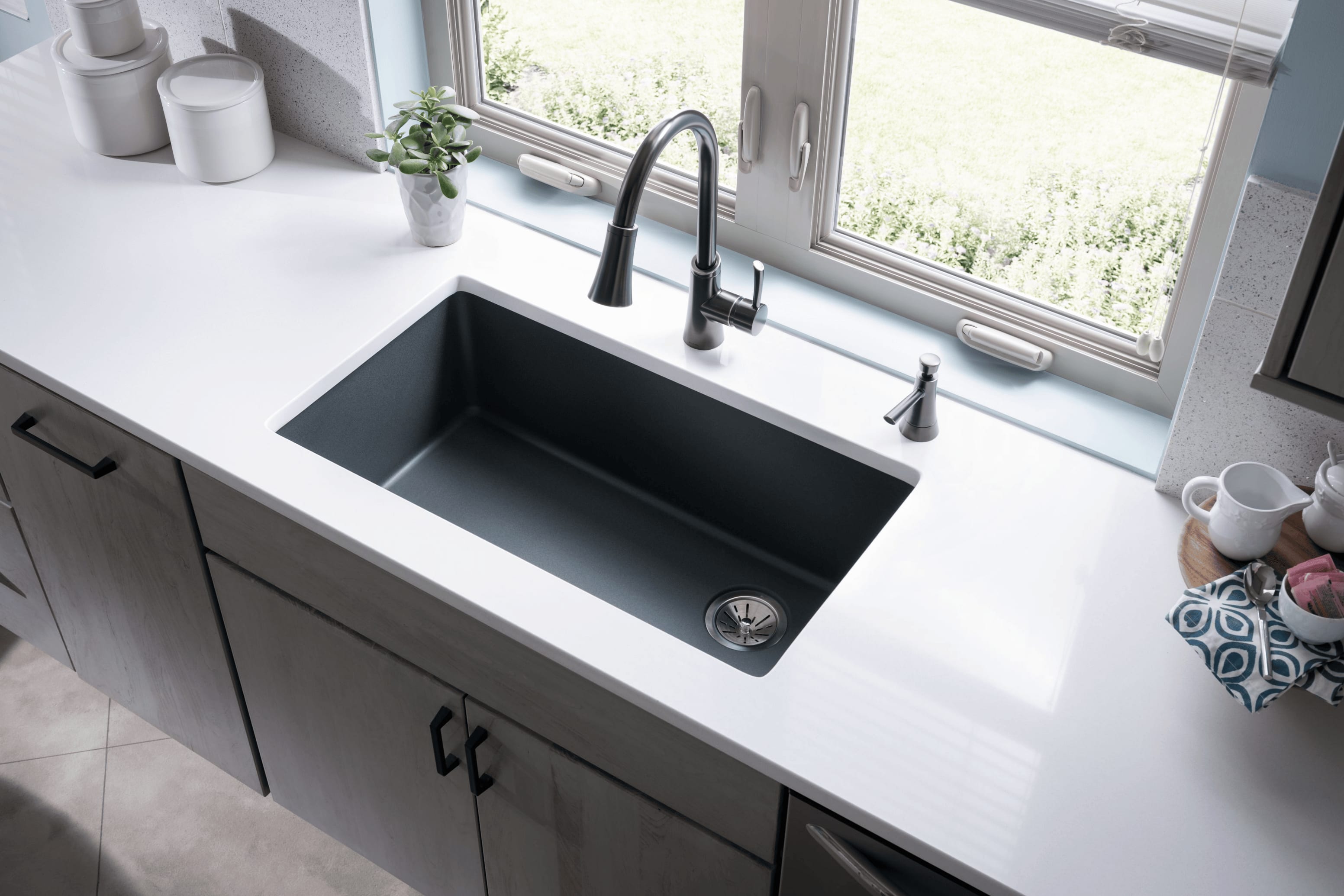
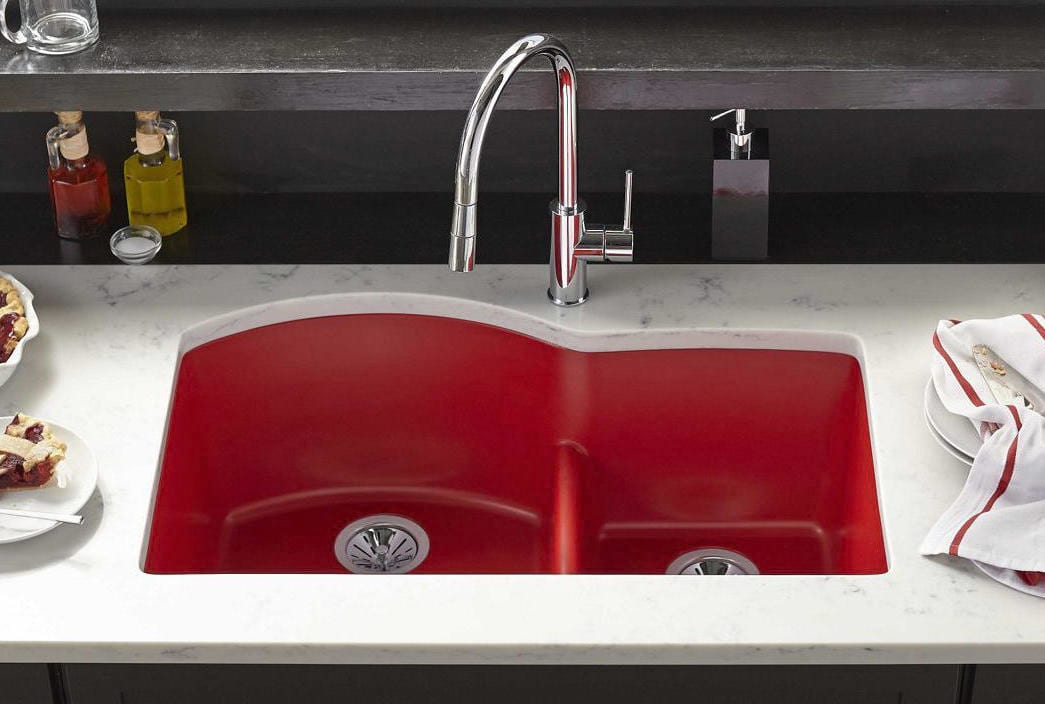
And if you needed any more reasons, it comes in awesome non-fading colors and finishes, too!
Cons of a quartz sink
Because quartz composite sinks are not the same as solid quartz stone sinks, they don’t deliver the same variation in pattern, shine (available in matte finish only), and color as natural stone sinks.
Additionally, quartz sinks can be hard on dropped dishes, so be careful when you wash your fragile glasses or china!
How much does a quartz sink cost?
Quartz composite sinks are highly affordable due to their manmade content. Prices vary by brand, but most quartz sinks range in price from under $200 to $600.
Are quartz sinks noisy?
Quartz sinks are actually quieter than stainless steel due to their natural soundproofing quality.
How are quartz sinks installed?
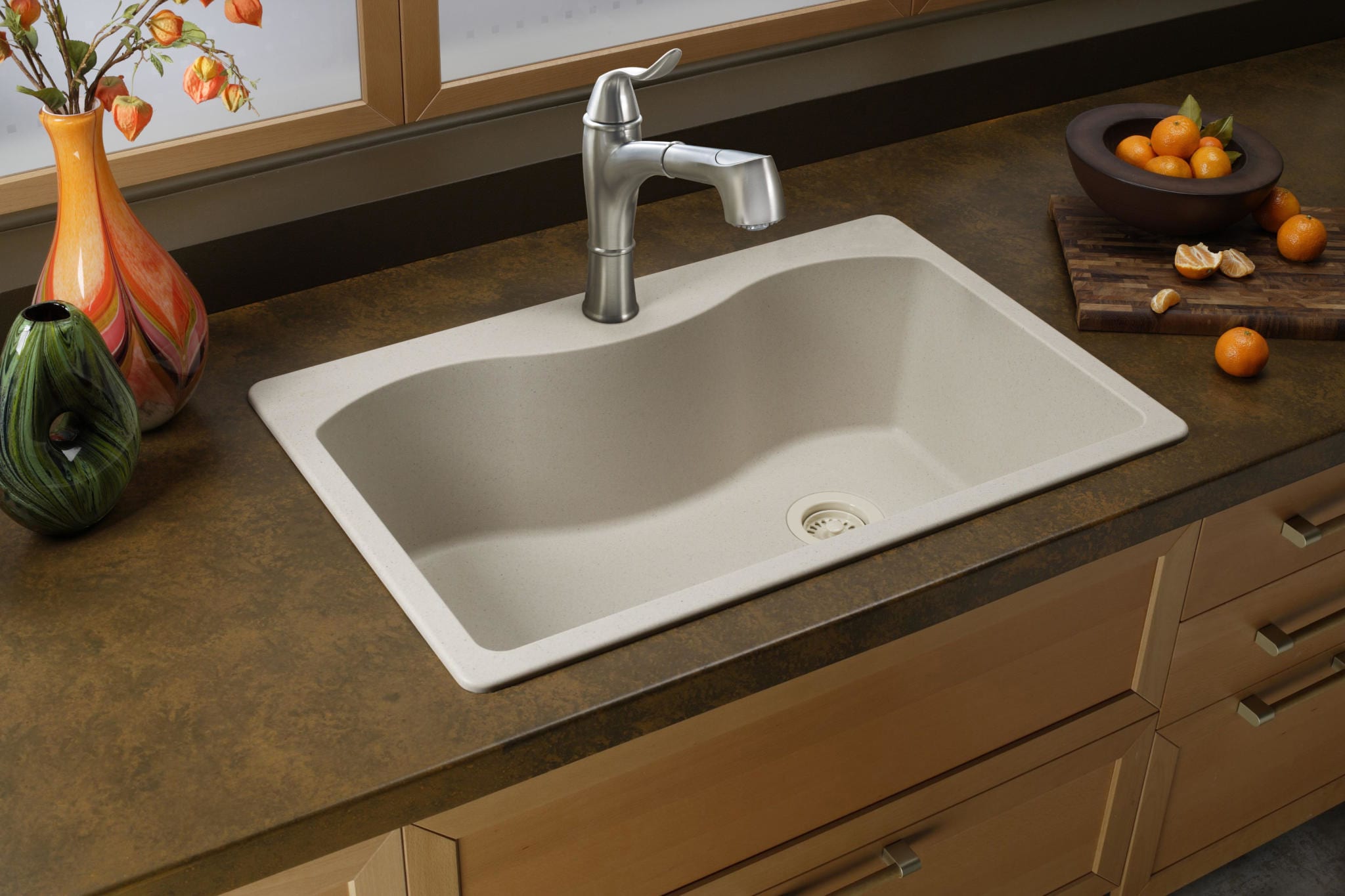
These sinks may be top-mounted or undermounted, with a wide array of options in shape, size, and bowl configuration (including single-bowl, double-bowl, 1-3/4 bowl, and multi-bowl sinks with low dividers).
Virtually every sink bowl shape – D-bowl, rectangular, square, round – is available in quartz composite.
Choose a bowl configuration that meets your needs. A small square or round sink can serve as a prep sink or decorative bar sink; choose a large single-bowl if you tend to use a lot of large cookware or bakeware. Multi-bowl sinks are convenient and practical for those who like to leave dishes to soak or prefer to prep over a sink bowl without dirty dishes in it; some feature a low divider, like Elkay’s Aqua Divide, which offers the advantages of both single-bowl and multi-bowl sinks.
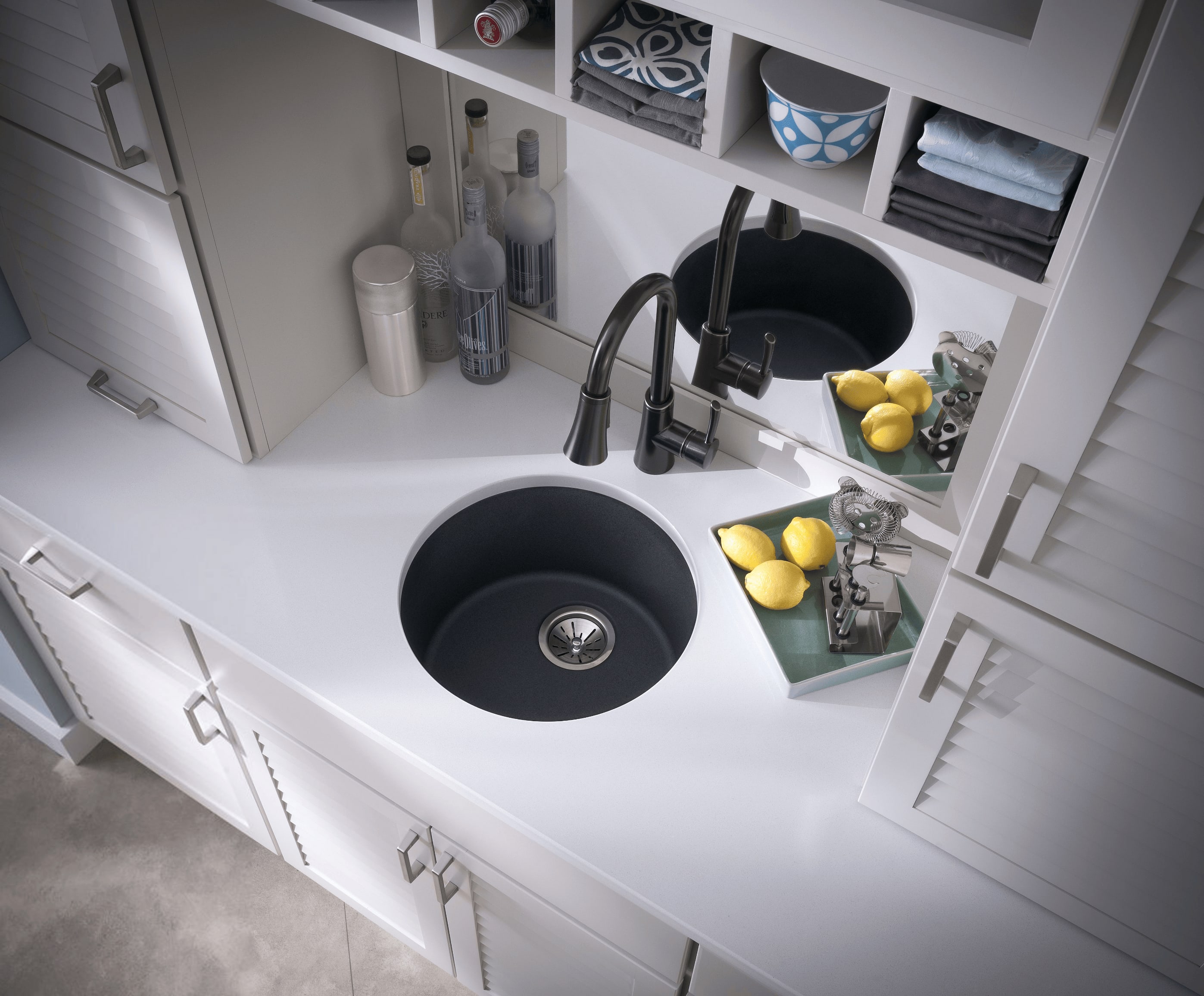
What is an integrated quartz sink?
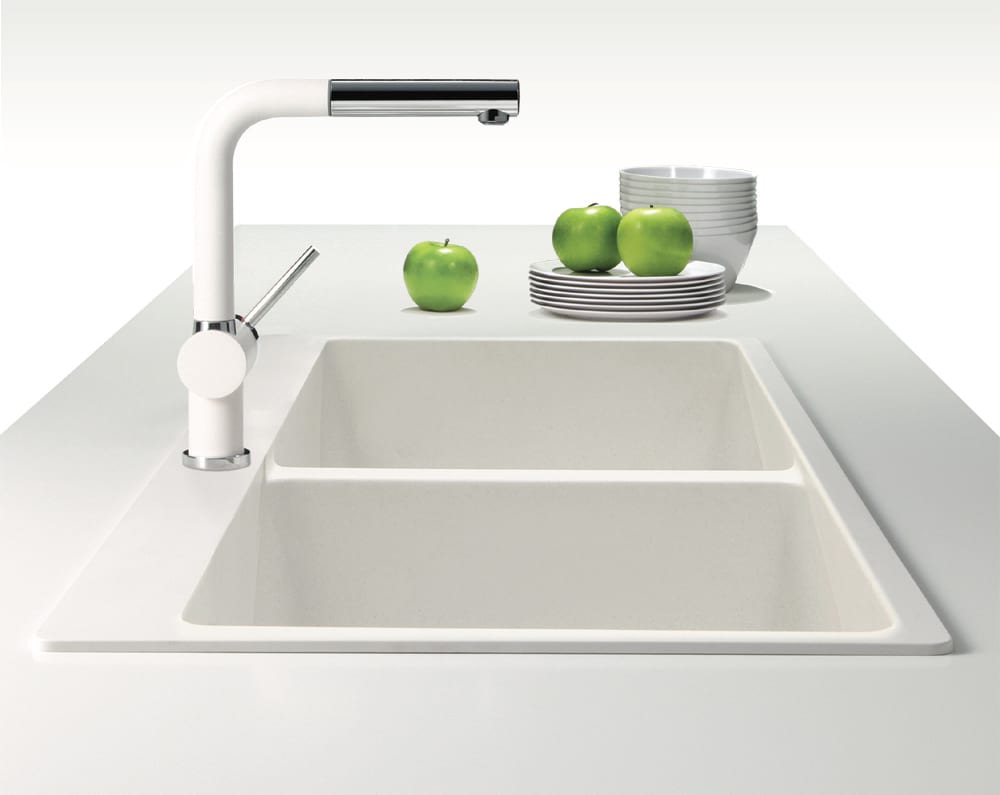
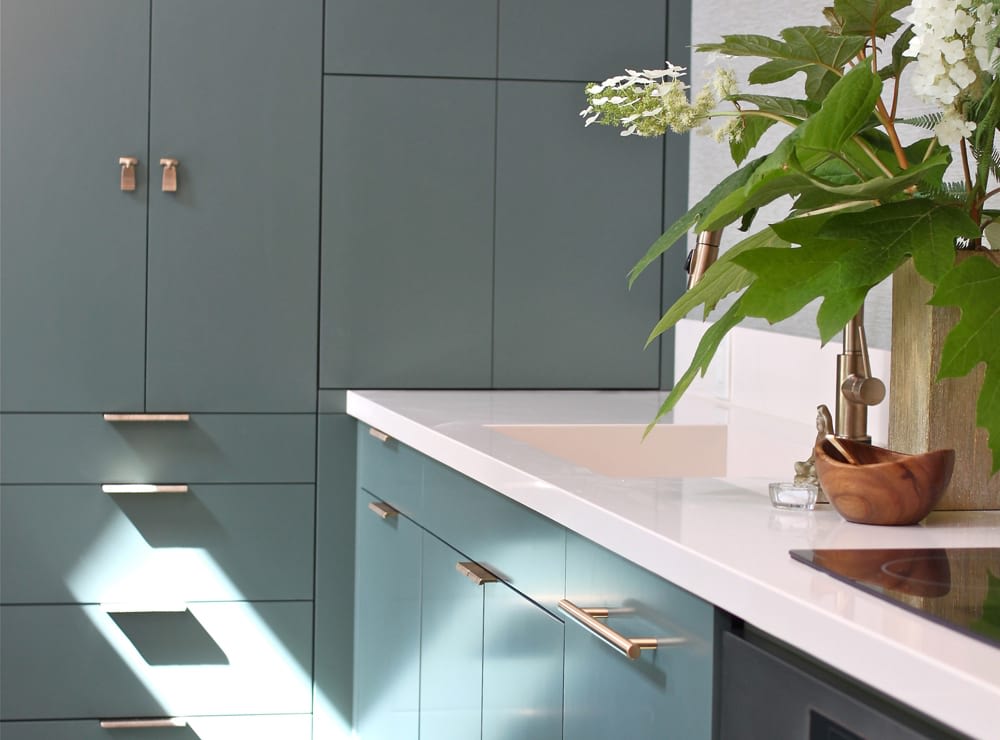
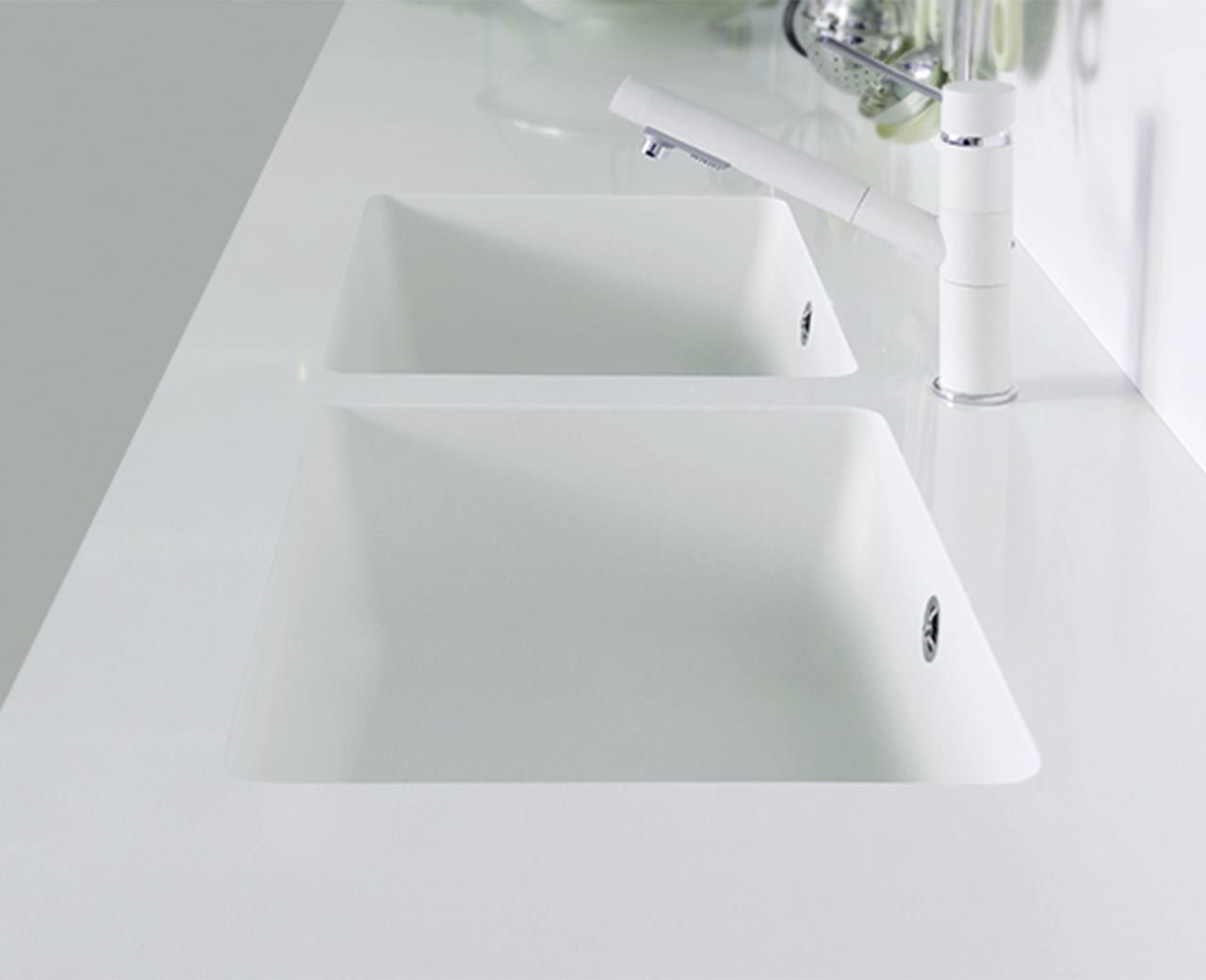
For a uniform, seamless look, some people choose an integrated sink made of the same quartz as their countertops. These sinks provide an exact color match to countertops, so there’s no need to match a sink to the counter; additionally, users care for the sink just as they care for the counter.
Integrated sinks provide another advantage: the transition from counter to sink is seamless, so users can sweep any counter debris straight into the sink without getting stuck in cracks or seams.
One disadvantage, though (besides for the lack of contrast, a matter of taste!): integrated sinks are custom-made and often correspondingly expensive.
Are quartz sinks durable?
Quartz composite is one of the most durable sink materials available! It’s smooth and nonporous, making it easy to clean, heat-resistant up to 535° F, and resistant to stains, scratches, dents, and chips. It’s also hygienic, with bacteria- and odor-resistant properties.
How to care for a quartz sink
Quartz kitchen sinks are fairly low-maintenance. Clean it regularly with a mild detergent, and deep-clean as necessary with a nylon brush and a cleaner like Bar Keeper’s Friend.
Rinse the sink after every use and wipe dry. Do not use abrasive cleaners or sponges or harsh cleaning agents like ammonia.
Quartz vs. granite sinks
Granite composite sinks are essentially identical to quartz composite sinks; both consist of a natural stone (granite or quartz) ground and mixed with acrylic resin.
What’s the best brand of quartz sinks?
Quality varies by brand. At Quality Bath, we highly recommend Elkay Quartz Classic and Quartz Luxe sinks as well as Houzer Quartztone sinks; Blanco’s patented Silgranit sinks feature rock-hard durability and superior cleanability in 8 colors.