How to Choose a Bathroom Vanity
Shop Bathroom Vanities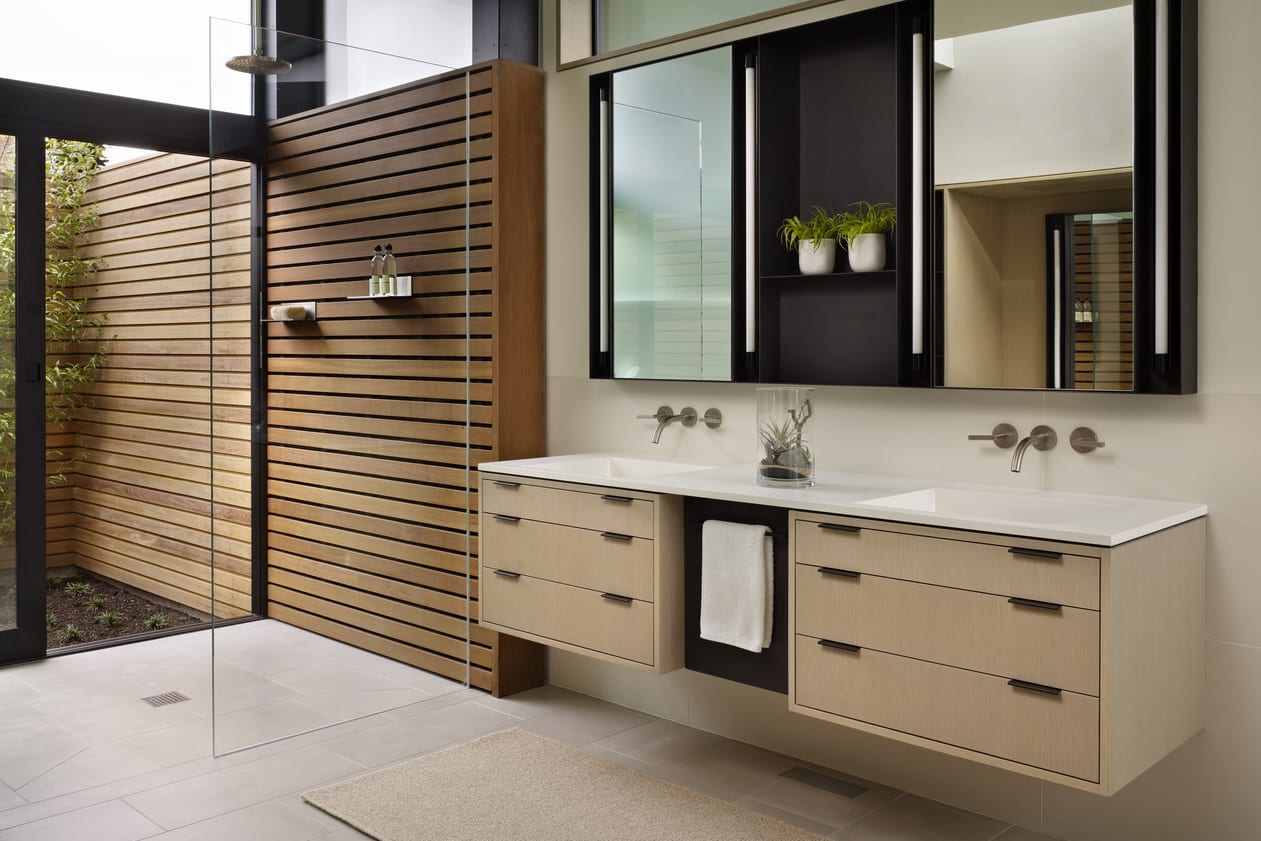
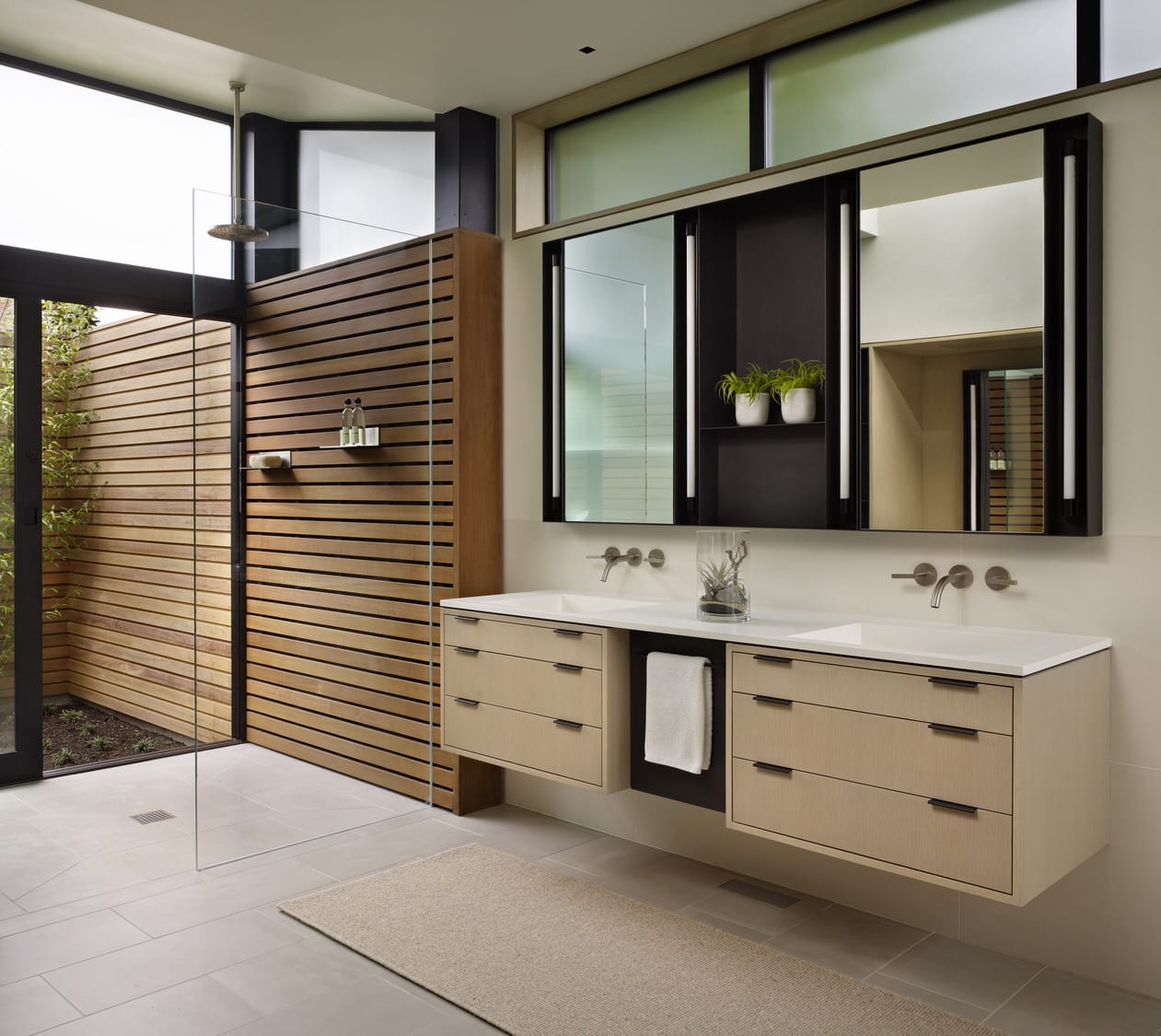
The bathroom vanity is the center of the room: a handwashing, toothbrushing, mirror-checking station complete with storage. Can’t pick just one? Here’s everything you need to know.
The bathroom vanity is used more than all other bathroom fixtures combined, and with an enormous range of sizes, finishes, and styles, it can become the focal point of the bathroom. You don’t need to go custom-made to find something appropriate for your bathroom, storage requirements, personal preferences, and budget. The abundance of options, however, can make selecting the right vanity a daunting task.
Consult this comprehensive bathroom vanity shopping guide to help you find the perfect piece for your bathroom.
Size
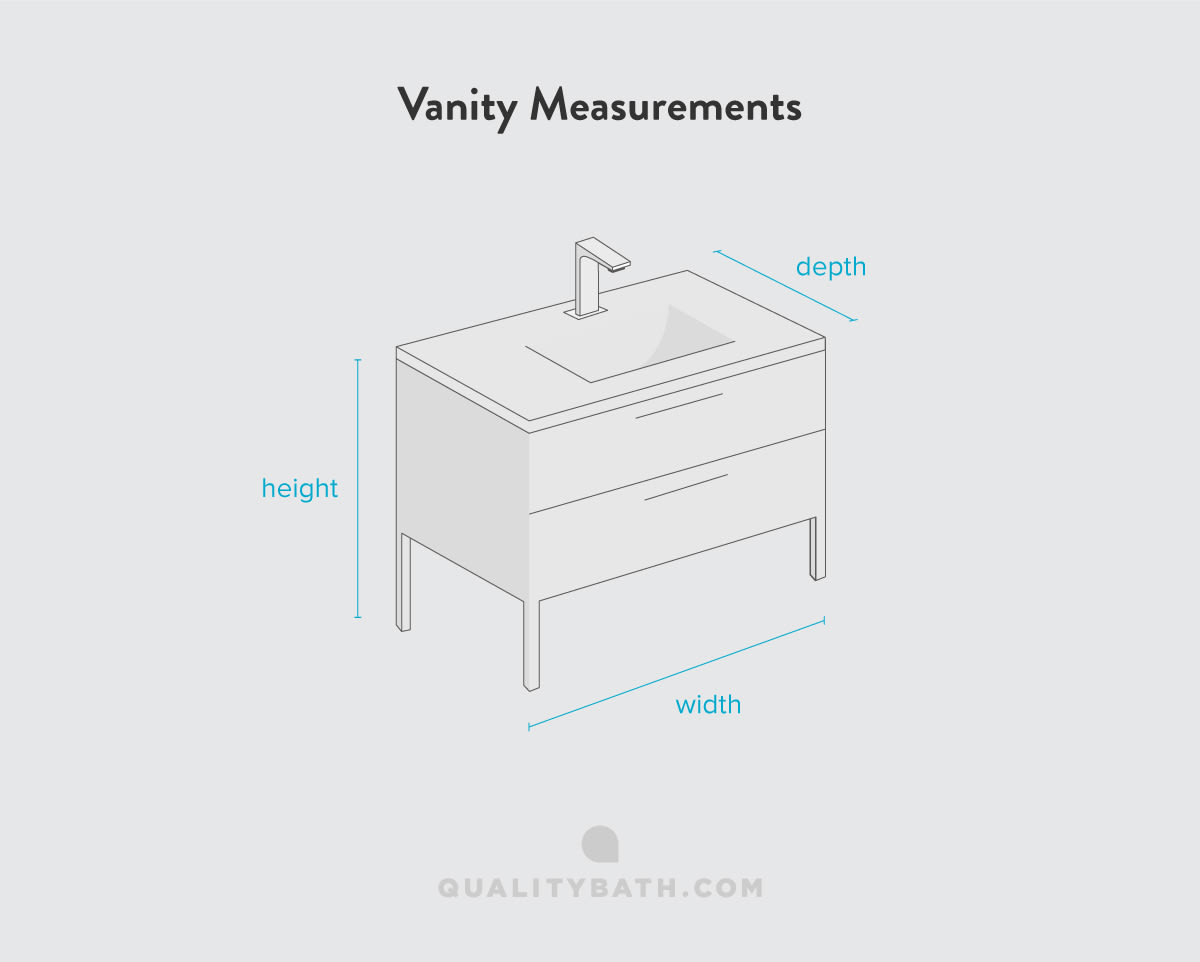
Whether you need a tiny vanity for a powder room or an oversized vanity for your extra-large dream bathroom, there’s a fixture for you. Vanity bases start at a minuscule 9-4/5″ and go up to over 100″. The most popular widths are 24″, 36″, 48″, 60″, and 72″, but vanities are available in virtually every size in between to fit into your space.
Typical vanity height is 32″ but modern sink styles allow for heights in the 34″-35-1/2″ range or higher; if you’re tall or short, take that into consideration as well. If you’ll need a filler piece to close any gaps between the vanity and wall, include those measurements in your decision process.
Most vanities are between 17″ and 24″ deep, though they can be deeper or more shallow. When selecting a vanity, be sure that you allow for ample depth and account for open drawers and door swing (add extra for protruding hardware).
Mount
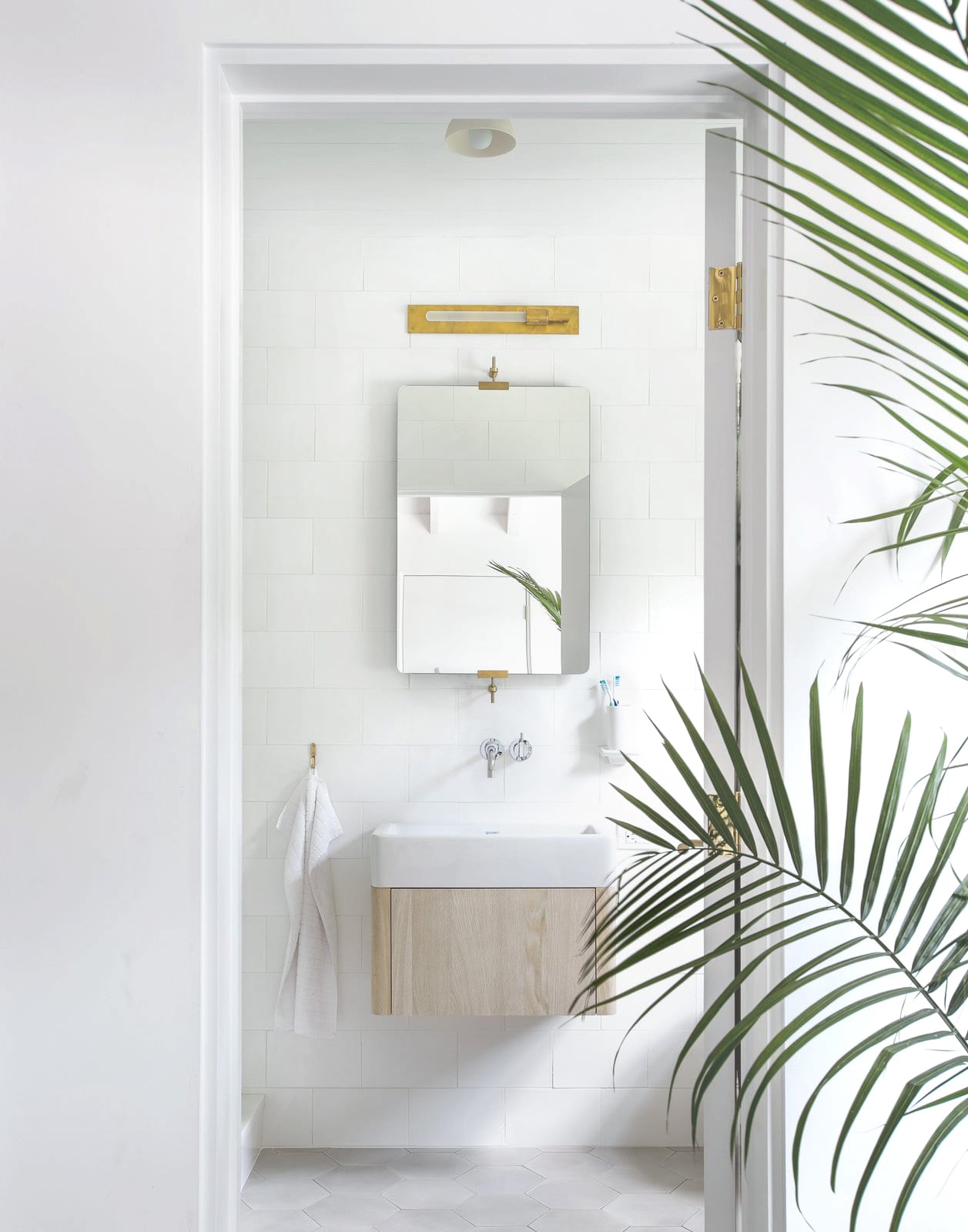
Traditionally, vanities – like furniture – stand on the floor, but you may prefer a wall-mount vanity. Wall-mounts allow for wheelchair access and lend a modern vibe to the bathroom; because they take up less space physically and visually, they’re often recommended for small bathrooms. (Always ensure that your wall can handle a wall-mount.) Floor-mount and freestanding vanities typically provide more storage space than a wall-mount; if you have an oddly-shaped or short-on-space bathroom, a corner vanity may be the solution to free up precious floor and wall space.
Sinks and counters
Many vanities include an option for a vanity top – a counter, sink, or both – at additional cost. Before purchasing a faucet (which may be included on some models), check the number of pre-drilled holes and their layout – centerset or widespread – to ensure that it will fit.
If you prefer to choose your own, the counter should measure 1″ wider and 1″ deeper than the cabinet. If you plan to add an undermount or semi-recessed sink, be sure that the vanity layout allows for the depth you want.
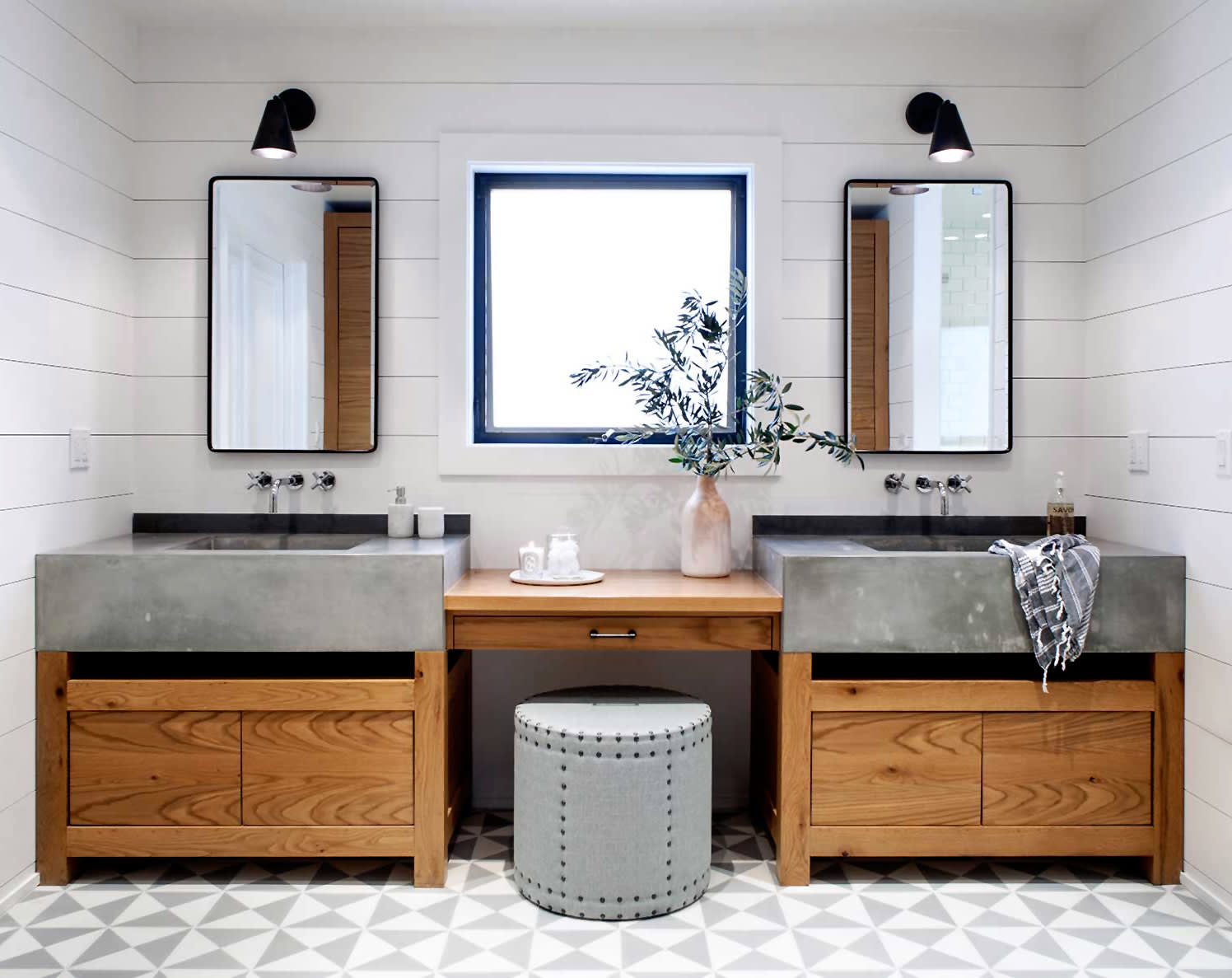
Vanities are available in single-bowl and double-bowl configurations; if you have two or more people sharing a bathroom, a double-sink vanity can speed the morning rush and minimize arguments over sink usage.
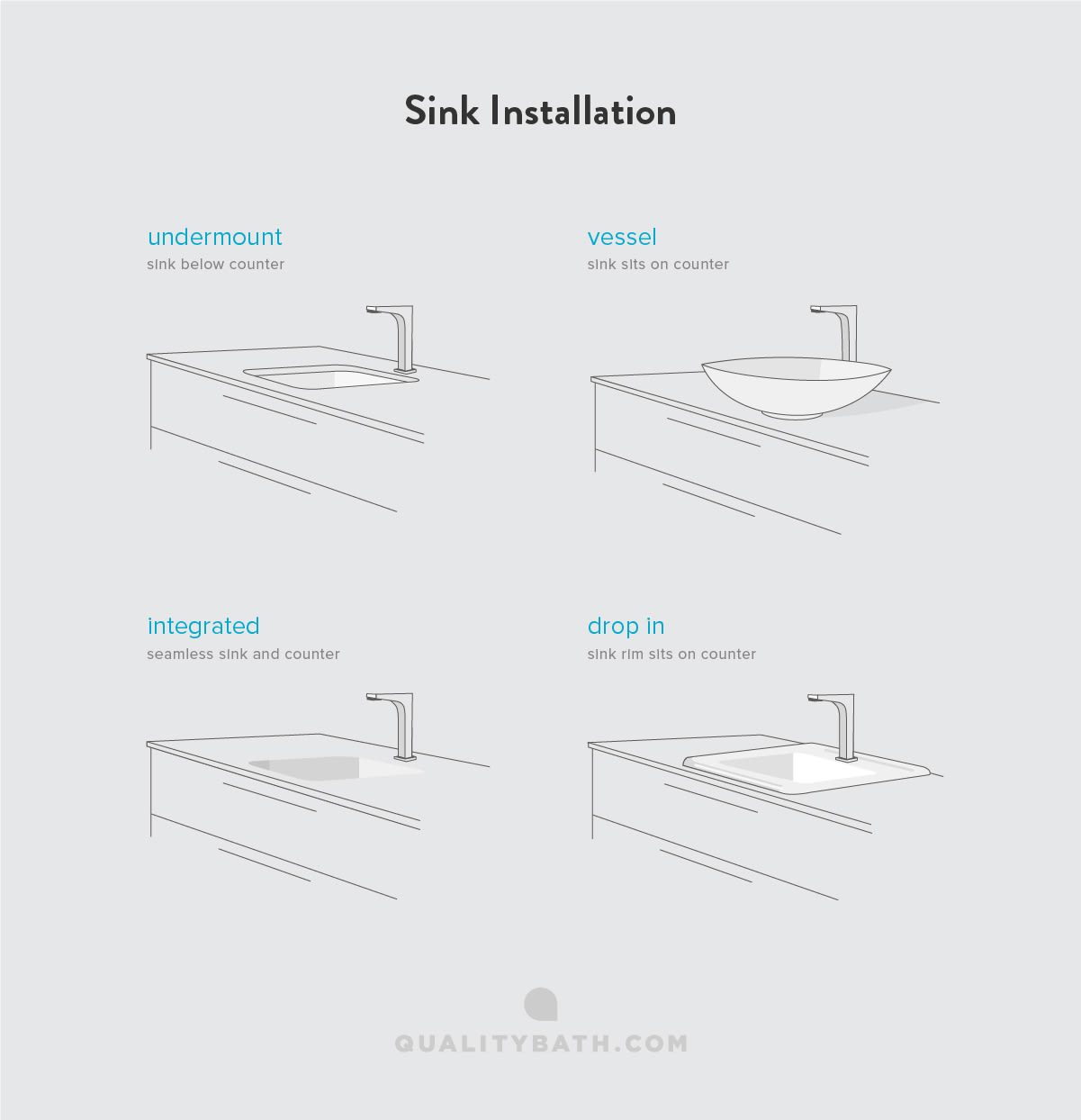
Sink shape and type is generally a matter of taste. Choose a style that best fits your habits and lifestyle:
- Vessel sink: an above-counter sink with dramatic visual impact; be sure to choose a faucet that is tall enough and projects far enough to clear the edge
- Undermount sink: mounted to the underside of the counter for a clean, seamless appearance; this style makes it easy to squeegee water and dirt straight off of the counter and into the sink
- Drop in sink: a classic style (AKA top-mount) sink with a rim that sits on top of the counter; a popular affordable choice, especially for replacement sinks
- Integrated sink: for a smooth, sleek appearance, opt for an integrated, one-piece sink and countertop
Consider the shape and size of the sink relative to the size of the countertop; take your countertop usage habits into account. Remember, the sink doesn’t have to be centered!
Storage
Your vanity can have any combination of drawers and cabinets; choose one that suits your preferences. If you’ll use it for smaller items, drawers will keep them neater; if you need it to store larger or stackable items, you’ll want more cabinets. Be realistic: assess your current storage and the items that you store (and intend to store) as part of your decision; experts advise adding about 20% more space than you think you need.
For a more open look, a console – with open shelving and possibly a drawer or two – is a popular choice, as long as you don’t need it for extensive storage (like in a powder room or guest bath).
If you require additional storage and don’t have enough room for a larger vanity, consider a coordinating linen tower or other storage cabinet.
Material and finish
The majority of vanities are made of wood, but the wood may be finished in various colors: white, gray, shades of brown, and black, as well as more unusual hues and even textures to give your bathroom some pep. Natural wood finishes showcase the grain of the wood, while painting and dark staining can camouflage it.
Choose a material that’s moisture-resistant, such as sealed and lacquered wood, laminate, or thermofoil. Consider the countertop material as well; some materials, like marble, are easily damaged by beauty products and heat, so check that your desired material will stand up to your daily routine.
If the included hardware is not to your liking, it’s easy to replace; don’t give up on a vanity you love because of the hardware that you don’t!
Style
The vanity isn’t purely functional; it’s largely decorative, too. Whatever the style of your bathroom, there’s a vanity to make it shine.
Traditional vanities, including antique-styled and rustic pieces, are generally made of furniture-style heavy or dark wood and may be carved, curved, or otherwise ornate. (A heavy or elaborate vanity usually is best in a large size and in a larger bathroom so as not to overwhelm the rest of the room.)
A modern vanity is sleek, often bold and glossy, and cleanly minimalist.
Transitional vanities are a compromise between modern and traditional: timeless, unfussy, and smooth.
Placement
Before deciding where to place your vanity, consider these factors:
- Door and drawer clearance (including vanity doors and drawers, bathroom door, and shower door)
- Foot traffic patterns (to ensure unimpeded flow, try mapping out the vanity size and shape with tape on the bathroom floor and walk around it to see if it works)
- Window placement
- Cleaning access
- Plumbing placement (if it will be situated far away from other fixtures, you may incur extra plumbing costs)
- Outlet placement
- Building codes: allow 18″ from the cabinet edge to the center of the toilet
Extra features
The vanity you choose may have a matching mirror or medicine cabinet, and most include features such as soft-close hinges to make usage more pleasant.