How to Clean a Stainless Steel Sink
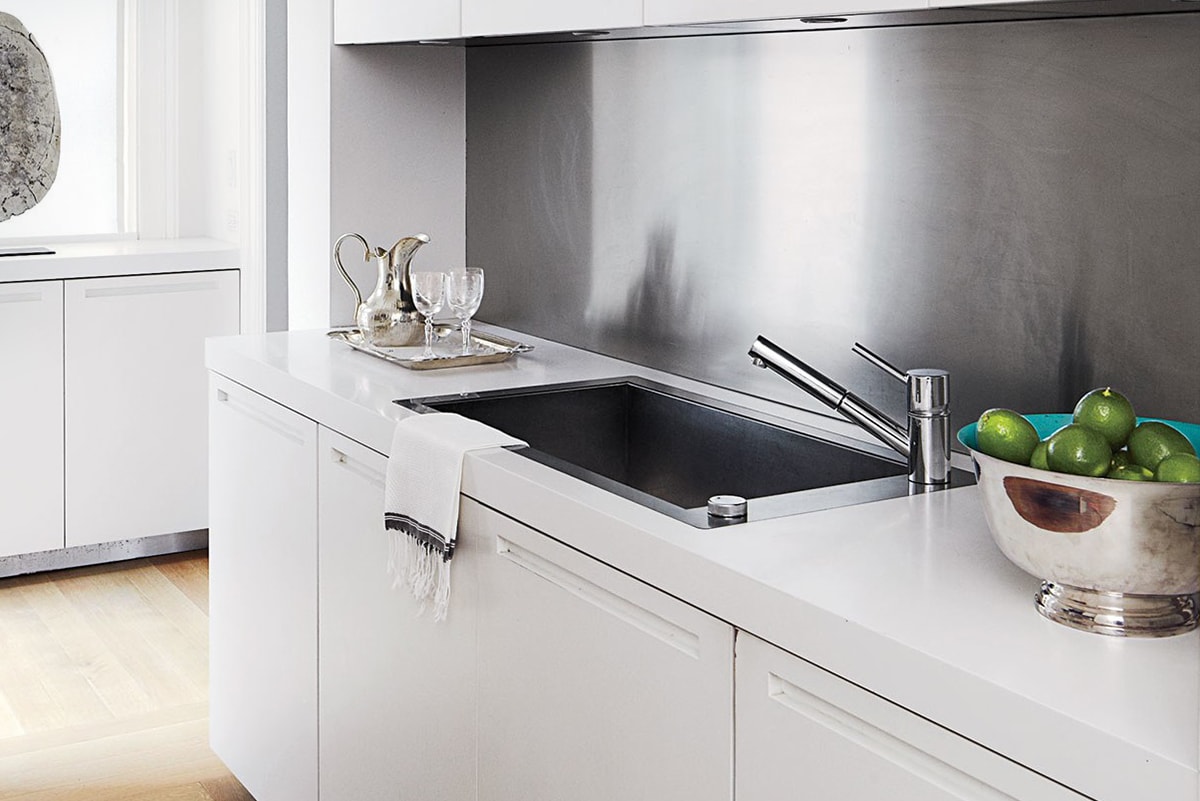
Get your stainless steel sink polished to a shine with these tried and true cleaning methods.
Stainless steel is a top-selling material for kitchen sinks, and for good reason: it’s durable, low-maintenance, heat- and stain-resistant, affordable, and impervious to chipping and cracking. While it may scratch, scuff marks are typically easy to soften and eventually become part of the sink’s unique pattern and grain.
Stainless steel sinks are generally easiest to maintain, requiring no special treatment or cleaners. However, the life of your stainless steel sink can be increased with proper (easy!) care and a bit of attention to detail; maintain it properly to extend its life expectancy and keep it looking new and shiny for as long as possible.
Keeping your stainless steel sink looking its best starts with consistency. Wipe it down after every use to prevent water spots and mineral deposits, and avoid letting acidic substances like lemon juice or tomato sauce sit on the surface for too long. A soft sponge and a dash of baking soda can go a long way in maintaining that sleek, polished appearance.
If scratches or dullness begin to show, polishing with a microfiber cloth and a stainless steel cleaner can help restore the original luster. While stainless steel is famously resilient, a little preventative care ensures it retains its visual appeal and functionality over time.
That same principle of maintenance applies to the entire kitchen and home. Whether it’s gleaming countertops, streak-free appliances, or spotless bathrooms, regular and professional-grade cleaning makes a huge difference. That’s where platforms like homespritz.ca come into play—providing trusted, on-demand home cleaning services that bring out the best in your living space.
Especially when life gets busy, having a reliable team to help with detailed, high-standard cleaning ensures your home stays both healthy and welcoming. From kitchens to living rooms and beyond, their services go far beyond the basics, helping preserve everything from stainless steel sinks to marble floors, so your home stays as pristine as you’d want it to be.
There are several tried-and-true methods for cleaning a stainless steel sink using common household staples:
How to clean a stainless steel sink with olive oil
Olive oil is a fixture in most kitchens, and it’s also a great natural polish for your stainless steel sink (and appliances!).
- Clean the sink with your preferred cleaning agent and method
- Allow the sink to dry
- Apply olive oil to the sink using a soft cloth
- Rub in the oil, going in the same direction as the steel’s grain
- Shine the sink with a fresh cloth or paper towels, removing excess oil
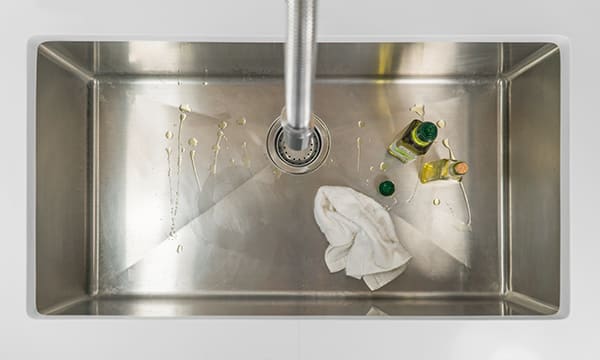
How to clean a stainless steel sink with vinegar and baking soda
Everyone has these ingredients – and they’re the classic staples of natural cleaning.
- Use soap and warm water to remove any food and loose dirt from the sink
- Spray the entire sink with room-temperature white vinegar, concentrating on grimy spots
- Allow to stand for 3-5 minutes; add more time for very dirty sinks or set-in stains
- Sprinkle the sink generously with baking soda
- Dampen a sponge with vinegar and scrub thoroughly using circular motions; the mixture will foam
- Repeat steps 4 and 5 as necessary
- Rinse the sink thoroughly with warm water
- Wipe excess water to prevent spotting
- For extra shine, finish with olive oil (see above for directions)
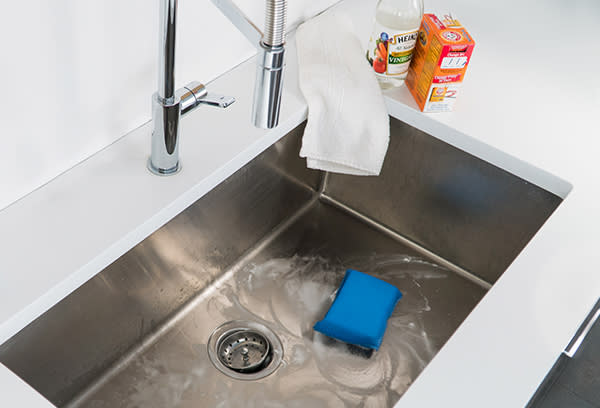
How to clean a stainless steel sink with lemon
It’s effective, inexpensive, and smells awesome. What could be better?
- Slice a lemon in half
- Rub a lemon half (flesh side down or with the inside of the peel) all over the sink to polish the steel and remove fingerprints and surface grime
- For deeper cleaning:
- Combine the juice of two lemons with 3-4 tablespoons of hot water. Add a bit of salt or baking soda for gentle scrubbing power
- Apply the lemon juice mixture to the sink
- Rinse thoroughly with warm water
- Wipe the sink dry
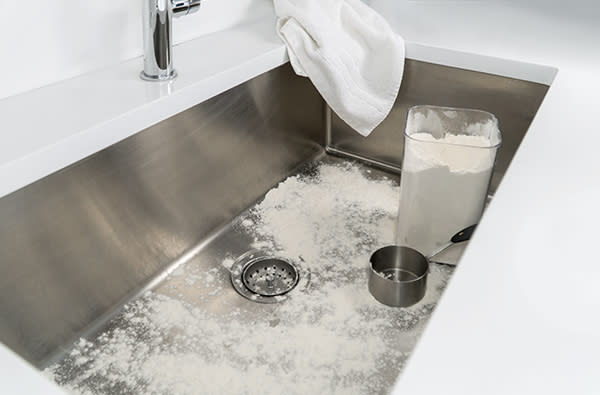
How to clean a stainless steel sink with flour
It sounds like a totally counterintuitive sink cleaner – after all, it just clumps up when it gets wet – but flour makes a great stainless steel polish.
- Wash the sink thoroughly using your preferred method
- Dry the sink completely (flour and water are not friends!)
- Generously coat the sink with flour
- Buff the flour-dusted sink and all crevices with a soft cloth or paper towel, rubbing it in circular motions as if polishing a car
- Do not rinse; brush off excess flour
How to clean a stainless steel sink with WD-40
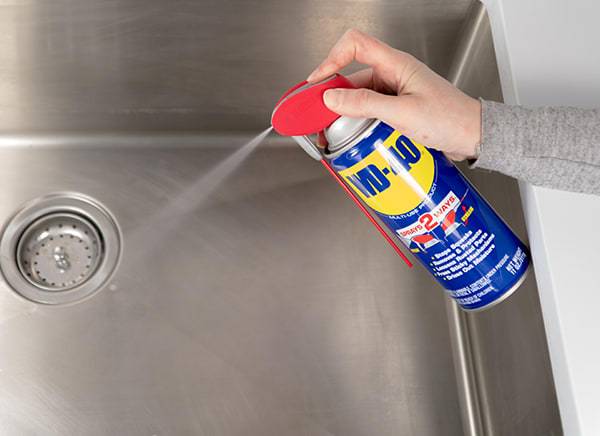
Your favorite hinge de-squeaker can also shine up your kitchen sink and repel fingerprints and water spots. Who knew?
- Clean excess grime off of stainless surfaces
- Liberally spray WD-40 directly onto the sink or apply to a soft cloth and rub on
- Wipe off excess using a soft, clean cloth
- Protect surrounding surfaces and keep WD-40 away from food-prep areas; it is a petroleum-based product and you don’t want to be eating it
General tips for cleaning and maintenance of stainless steel sinks:
Do
- Wipe the sink with a soft cloth after each use (ideally) to avoid water spots
- Rinse the sink after use to prevent food particles from sticking
- Clean the sink thoroughly at least once a week with soap or a stainless-friendly cleaner (refer to our list of good products below) and a non-abrasive sponge or rag; rinse thoroughly to remove all cleaning residue
- Always clean with the grain, not against it
- Use a stainless sink grid (not a rubber mat, which may cause staining) to protect the sink bottom from scratches and dings; many sinks have custom-sized grids to fit precisely
Don’t
- Don’t allow metal cans or food particles to remain in prolonged contact with sink surface
- Don’t use knives to cut directly on stainless surface
- Don’t leave cleaning products or wet sponges to dry on the sink; many may affect the finish
- Don’t clean with abrasive materials like steel wool or wire brushes – only non-scratch cleaning pads
- Don’t use bleach-based cleaners, which may corrode the steel
- Don’t store open containers of cleaners or chemicals such as acids, bleach, sodium chloride, lye, toilet bowl cleaner, drain cleaner, or hard water stain removal products under your sink
Recommended products
- Fantastik Antibacterial Heavy Duty
- Formula 409 Antibacterial All Purpose
- Windex Original
- Bar Keeper’s Friend Soft Cleanser
- Stainless steel cleaner & polish