How to Decorate Around a Piano
With its sensuous curves and inherent elegance, a piano has the power to turn a nice room into a gorgeous one. Up your home’s wow factor with strategic design and placement to highlight your piano.
It’s one of the largest and arguably most elegant musical instrument, characteristics that make the piano a classic in sophisticated, stately homes. Whether you’re a true virtuoso, a beginner musician, or just a lover of culture, there’s a chance you’d love to have a piano in your home.
Trouble is, unless you have space for a dedicated music room or area, the piano’s sheer size and lack of portability makes it hard to fit one in – size-wise and decor-wise. Never fear; if yours is a simple upright or elegant baby grand, spinet or console, antique or brand new, we’ll help you work it into your home.
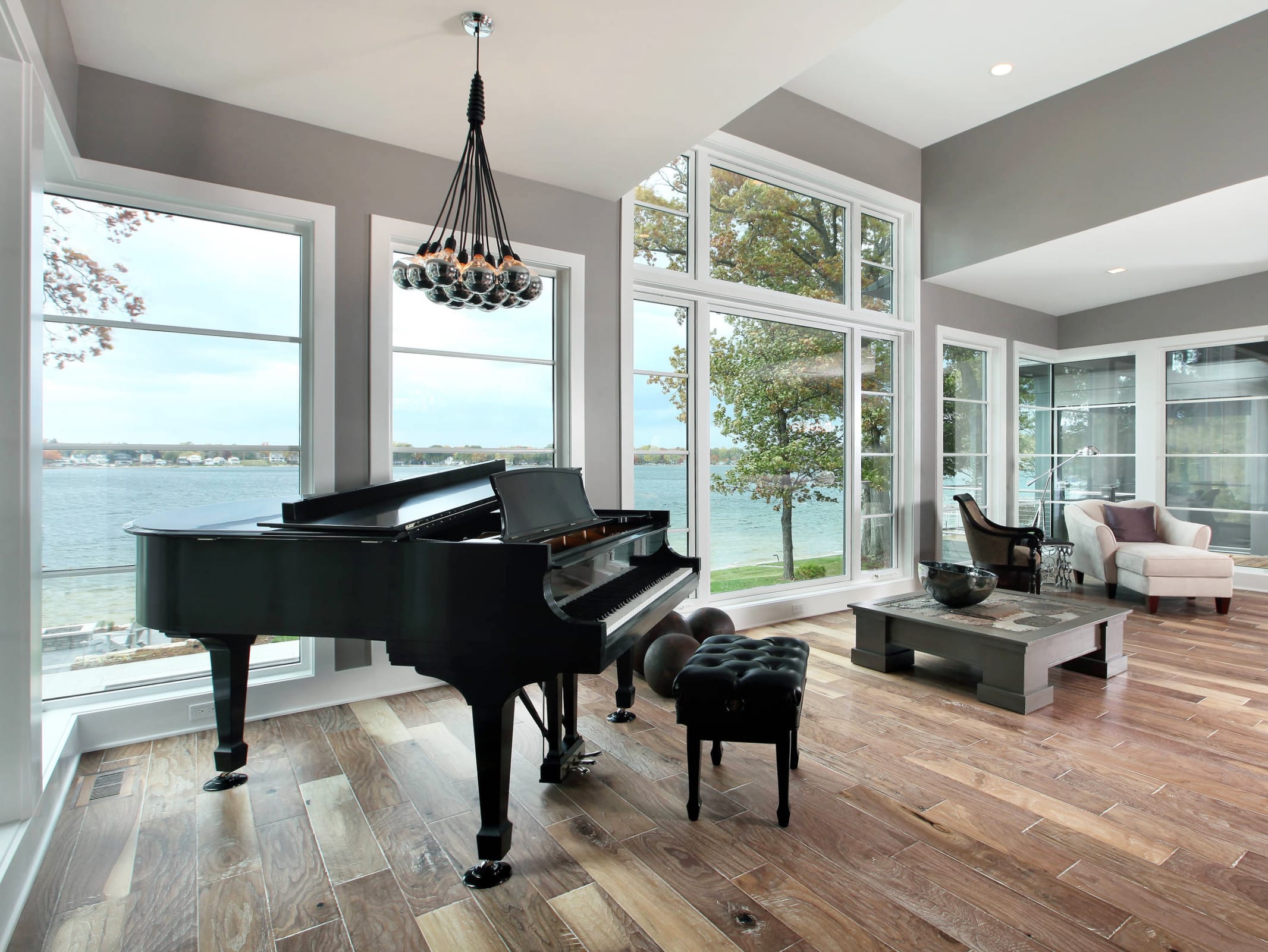
Thanks to modern insulation, pianos don’t need to be kept away from exterior walls as advised in the past. Just be sure to situate it away from drafty windows or doors, vents, active fireplaces, or prolonged direct sun in order to protect the instrument. Wherever you decide to put it, be sure that your piano is lit properly to allow for sheet music reading. Aim for natural light and install adequate, focused light fixtures.
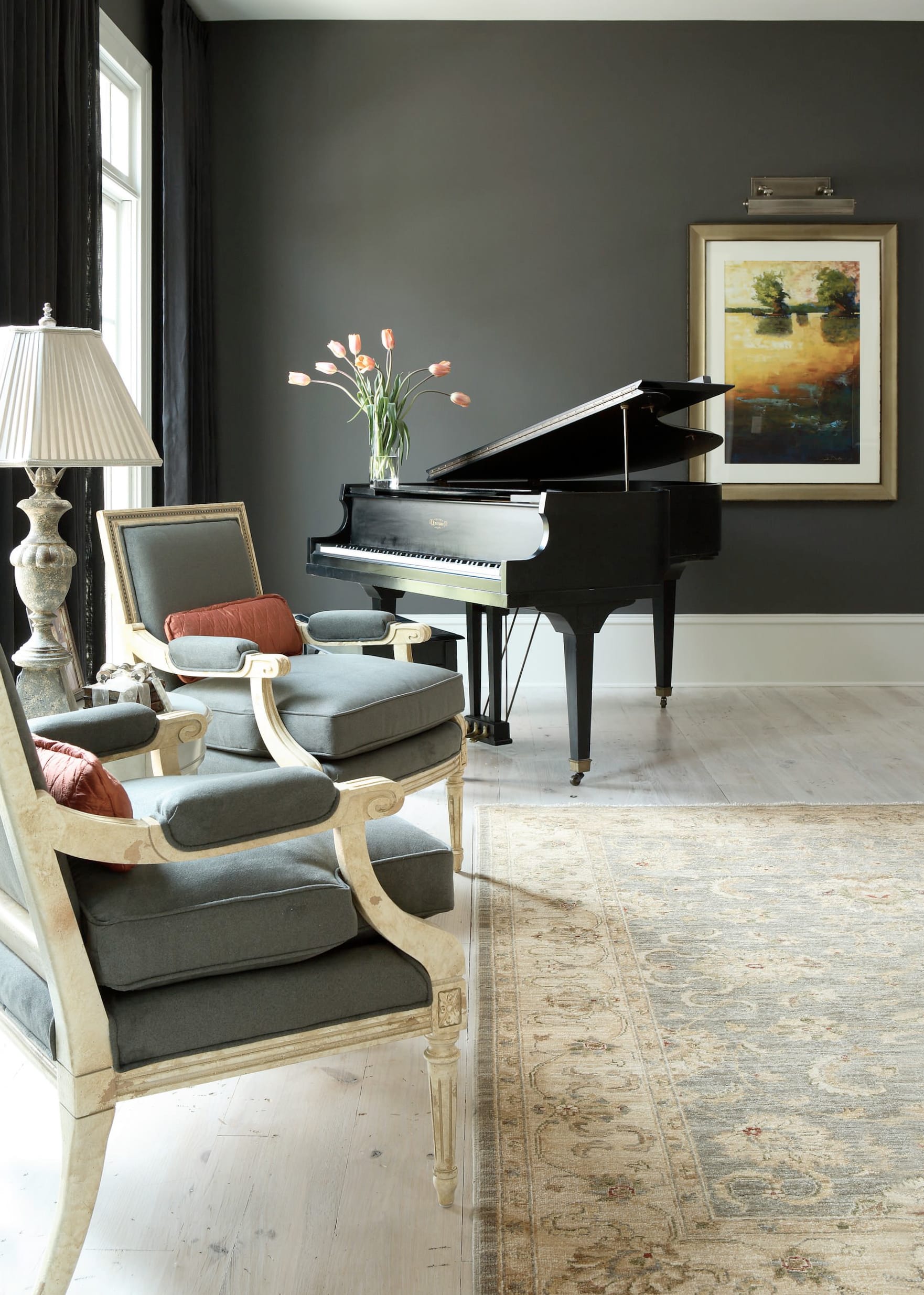
Pianos are not meant to be ignored or to blend in; they’re designed to make a statement, albeit a classy one. Don’t try to make it disappear or, worse, become another photo-cluttered surface (it’s distracting, messy, dust-attracting, and the sound quality suffers). You may place relevant accessories atop it, but sparingly – and only if it adds to, rather than detracts from, the effect that the piano creates.
Keep the surrounding decor simple. Choose art and decor carefully and place design elements strategically to draw attention to the piano, making it a focal point.
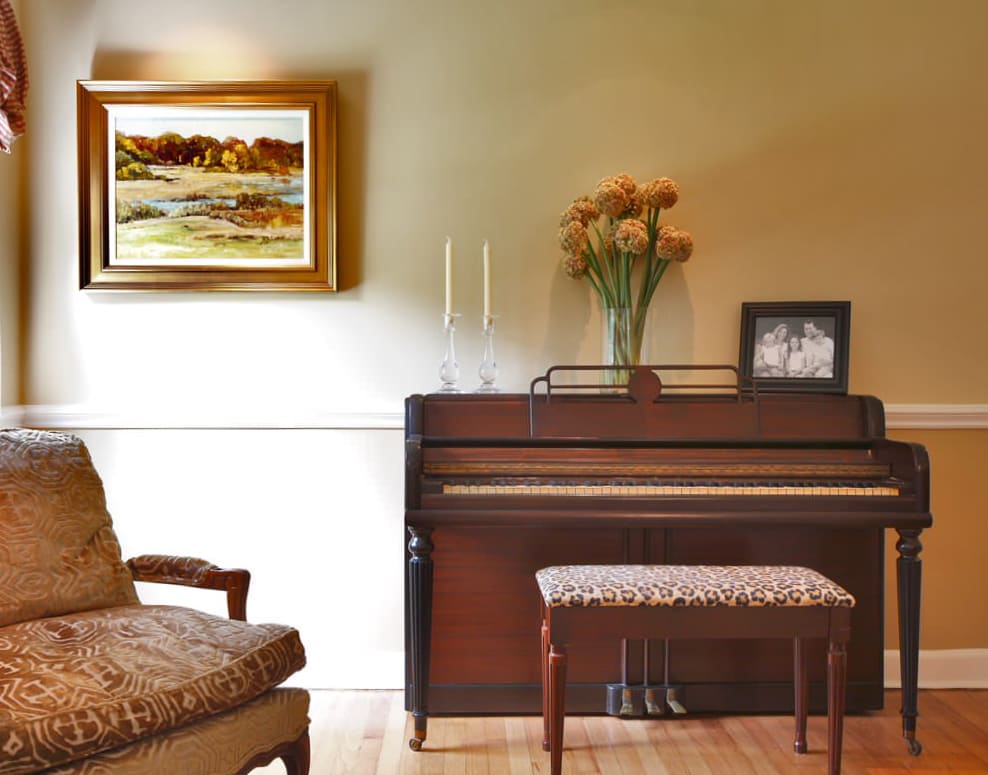
If possible, coordinate the finish, shape, and style of the decor and the piano to make a flawlessly dramatic design statement.
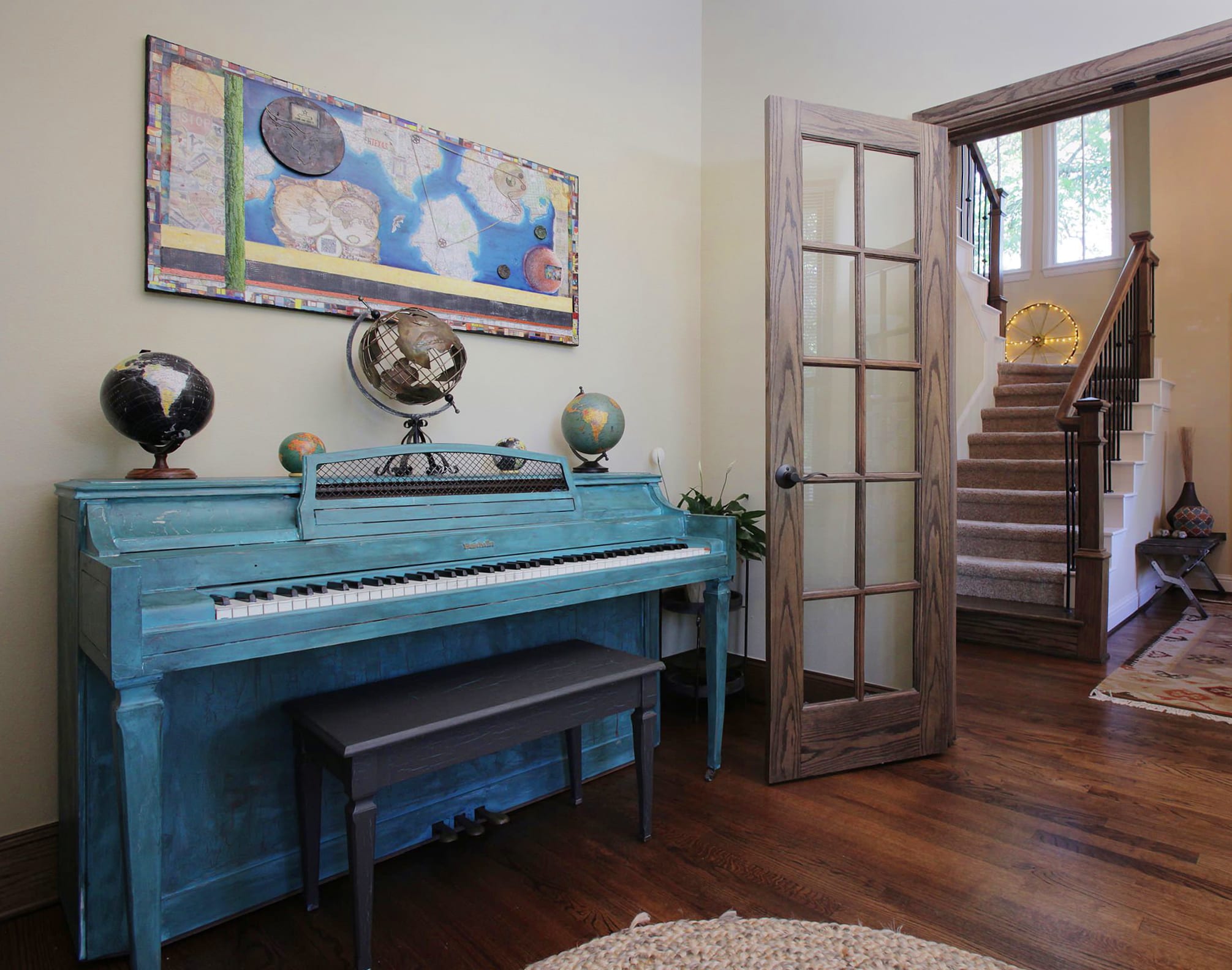
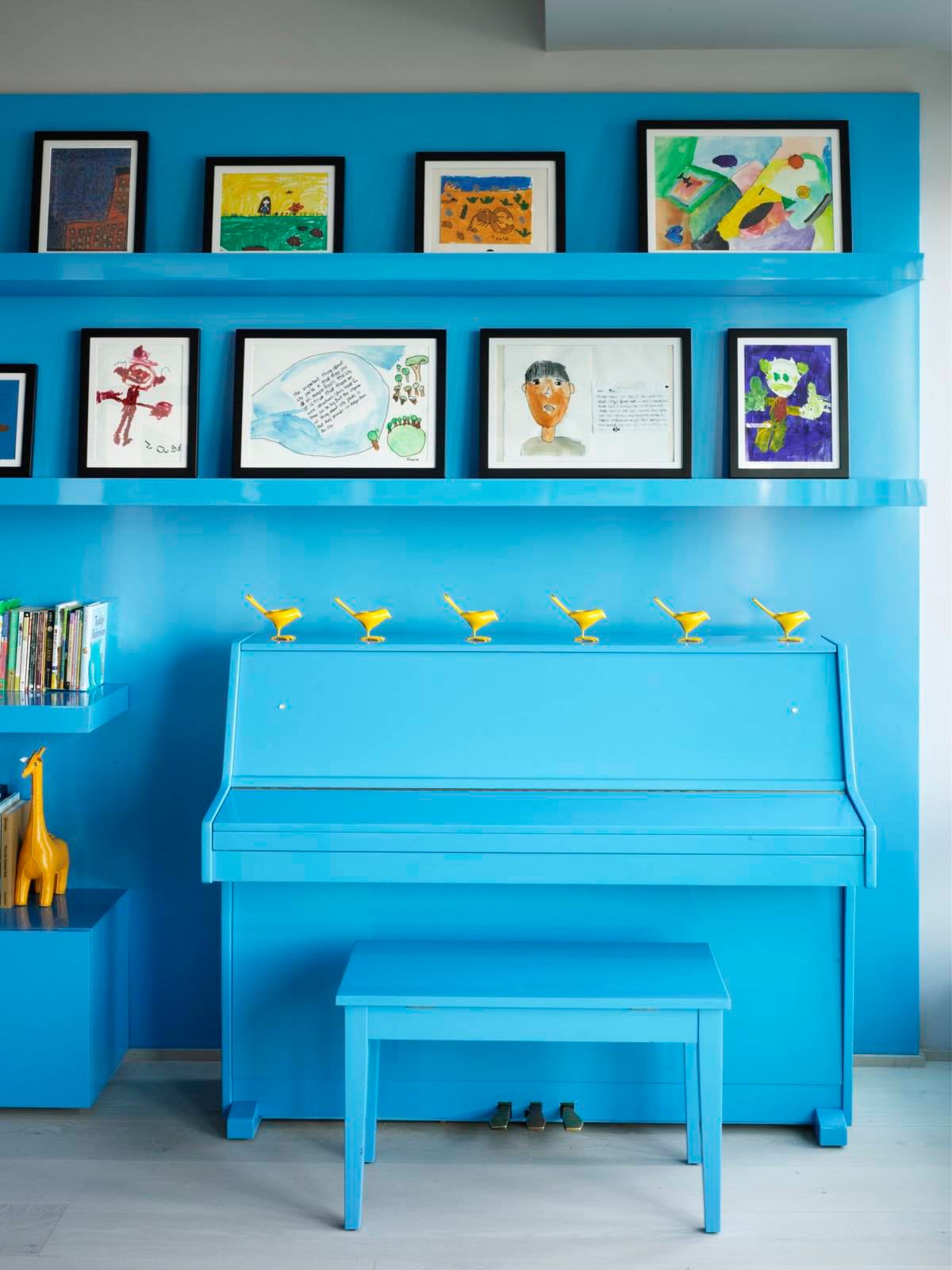
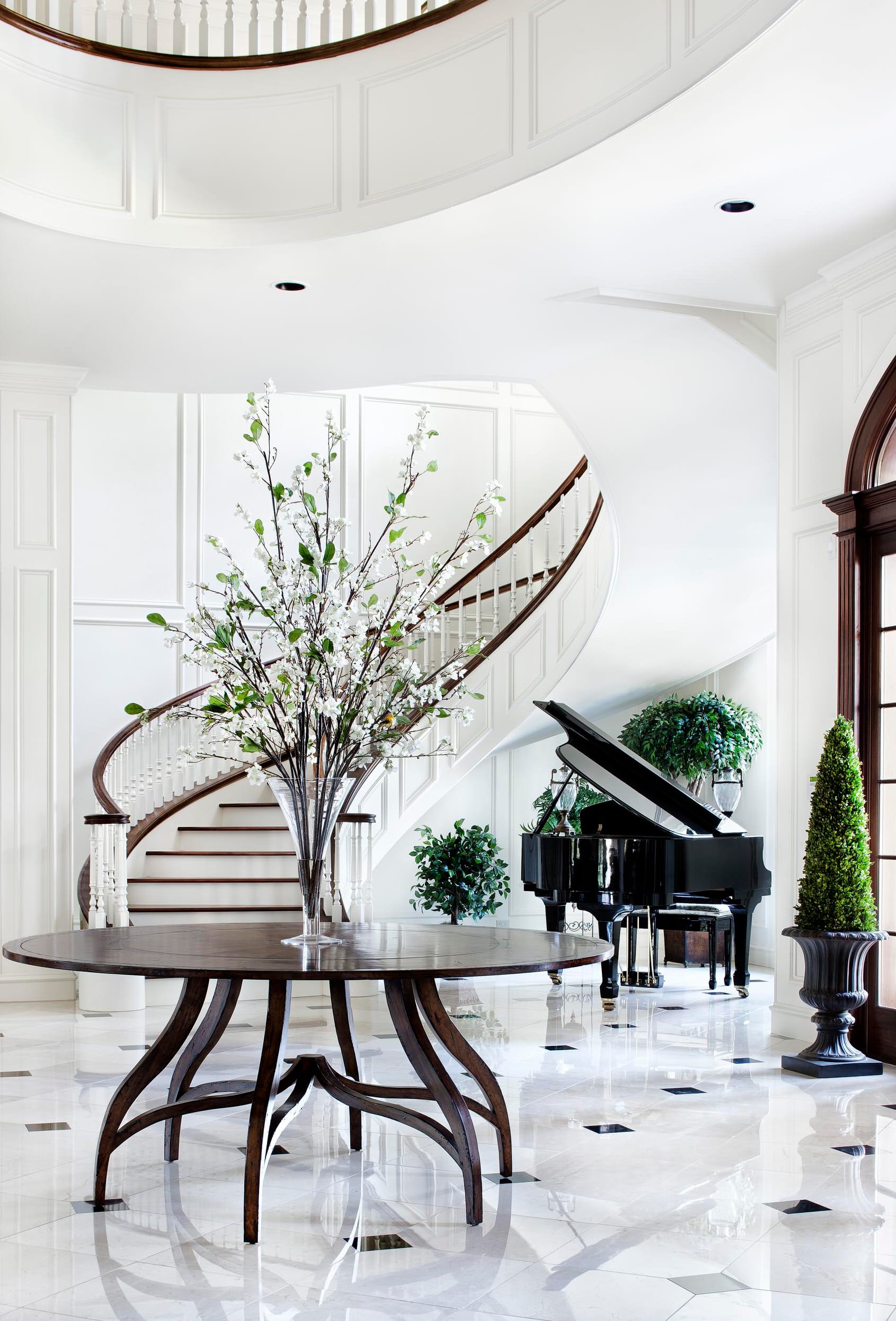
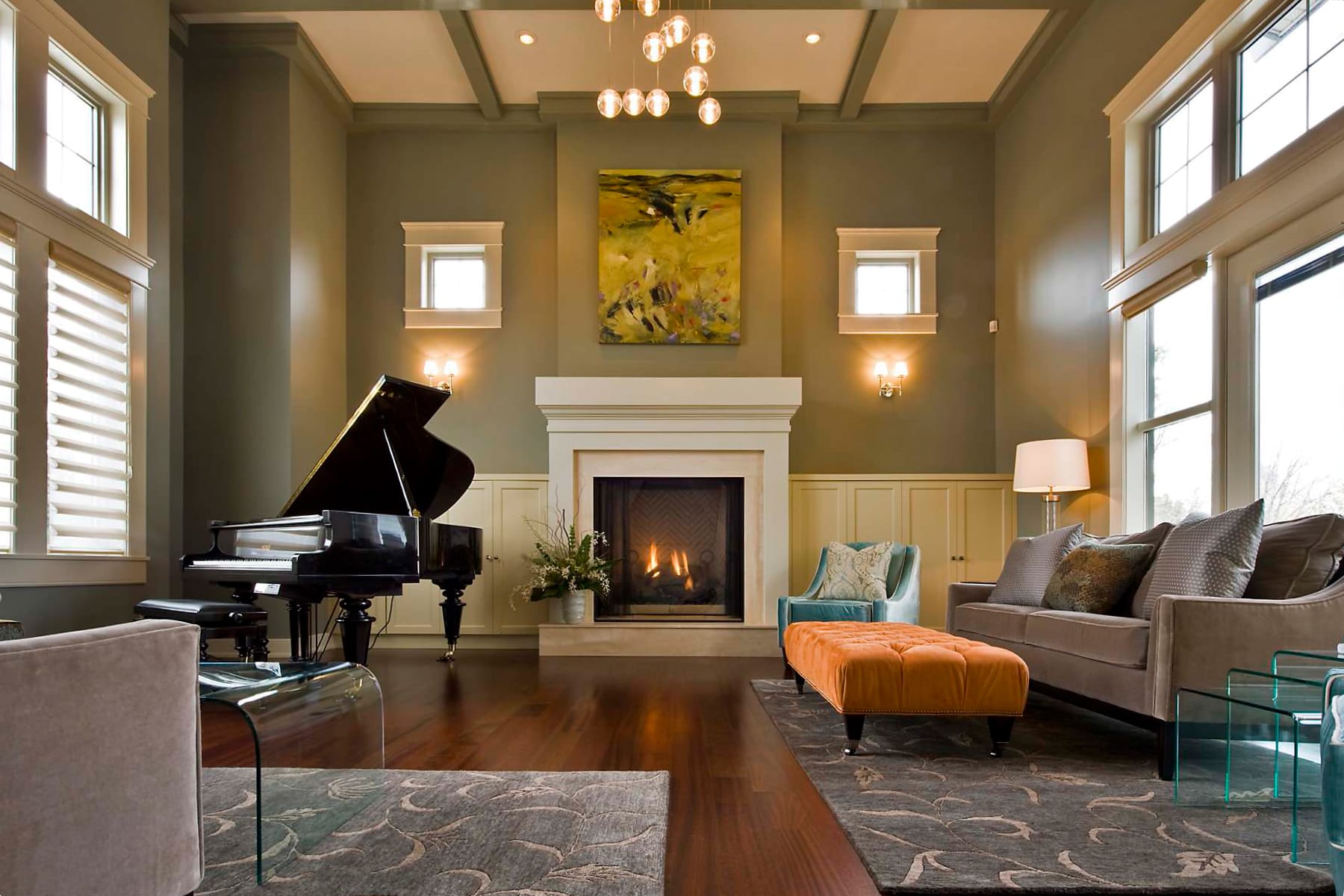
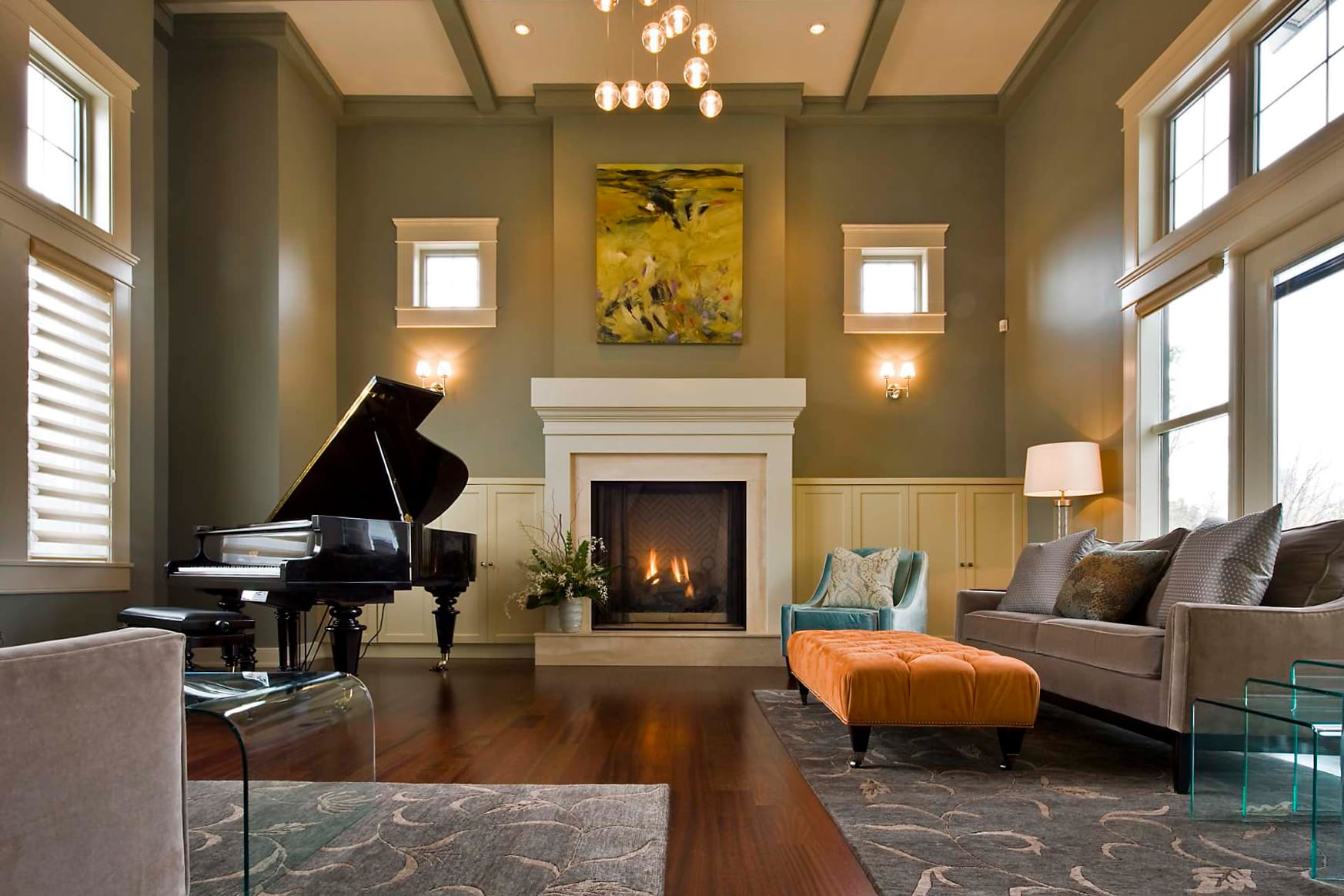
Use your piano to draw different elements of the room together. Here, the black lacquer of the piano pops up in various spaces around the room. Rockefeller Kempel Architects create a cozy gathering space with the warm brown wood of the piano echoed in the wall paneling and ceiling.
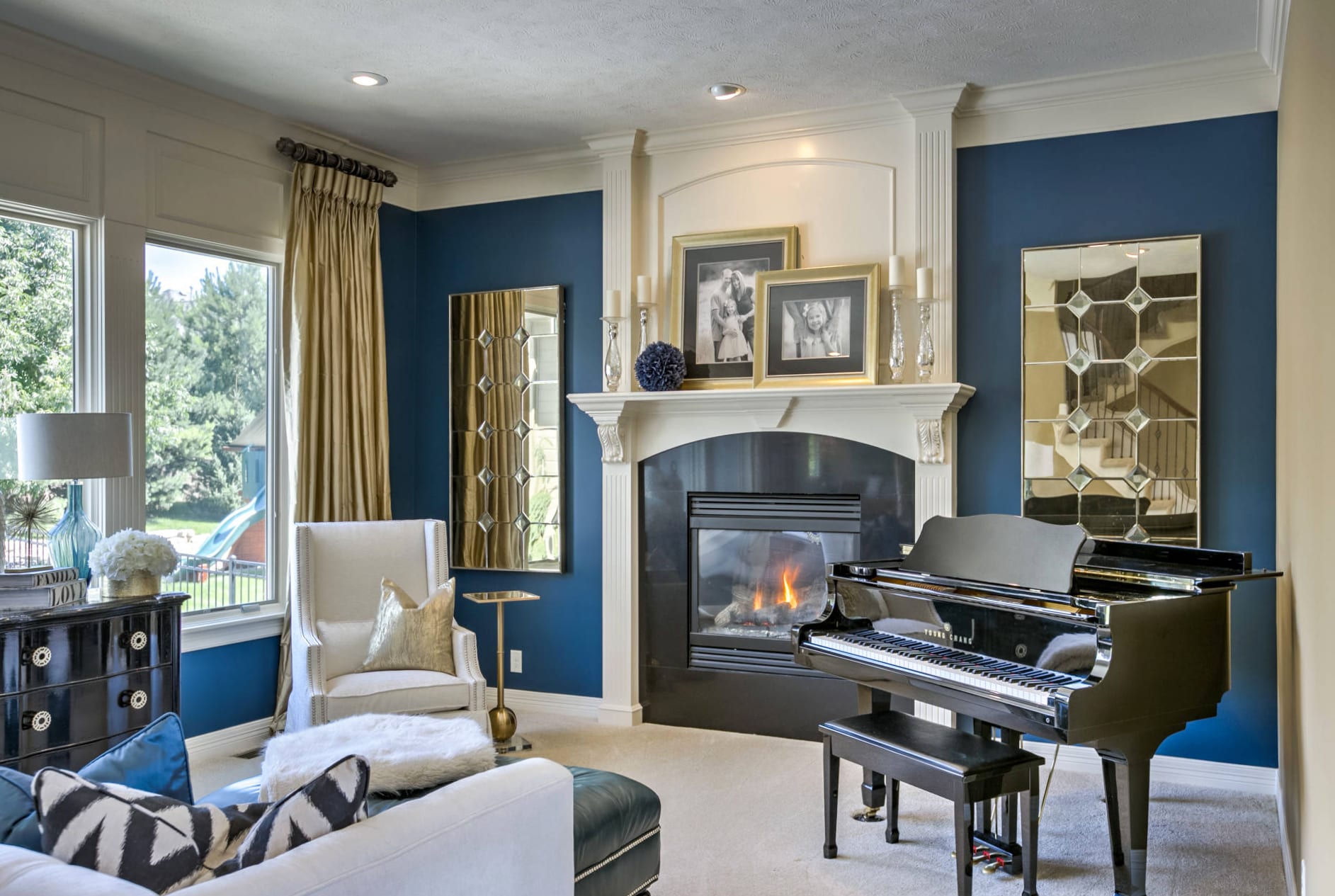

Find a home for your piano in areas that are not typical piano locations: corners, entries, staircase curves, even landings. You can tuck it into one of those dead or odd-shaped spaces that you’ve been unable to fill until now, or even consider giving up a seldom-used closet.
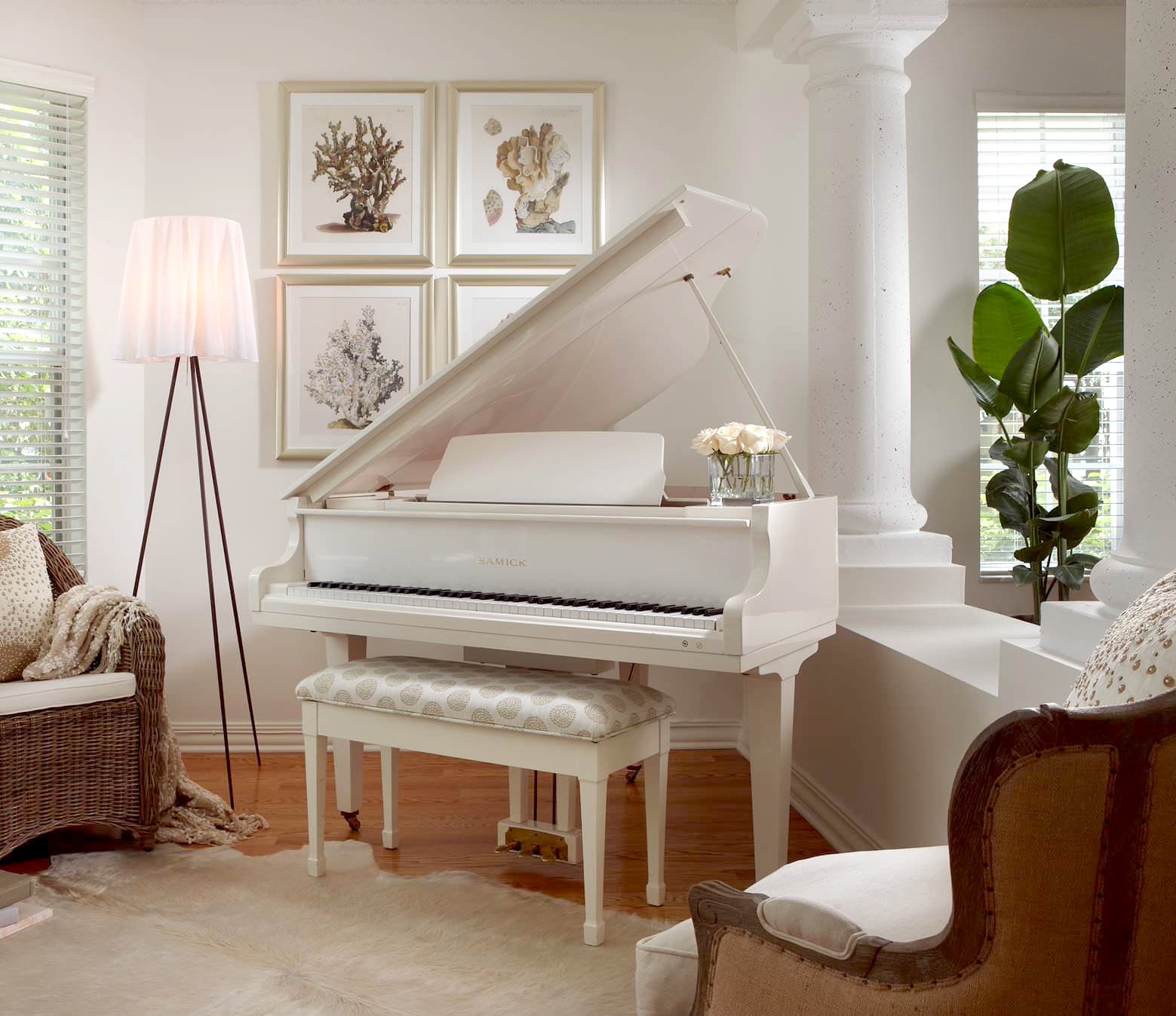
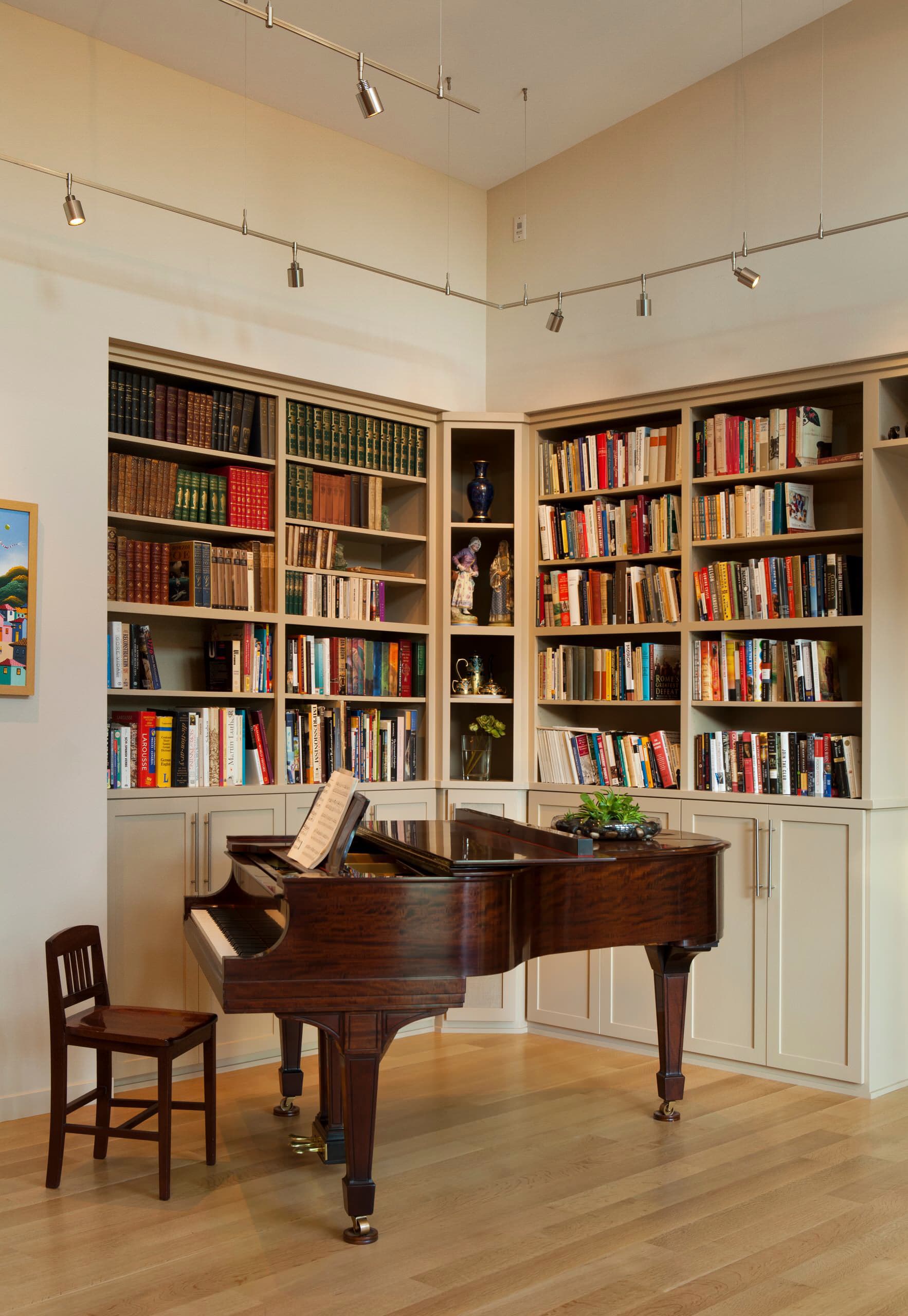
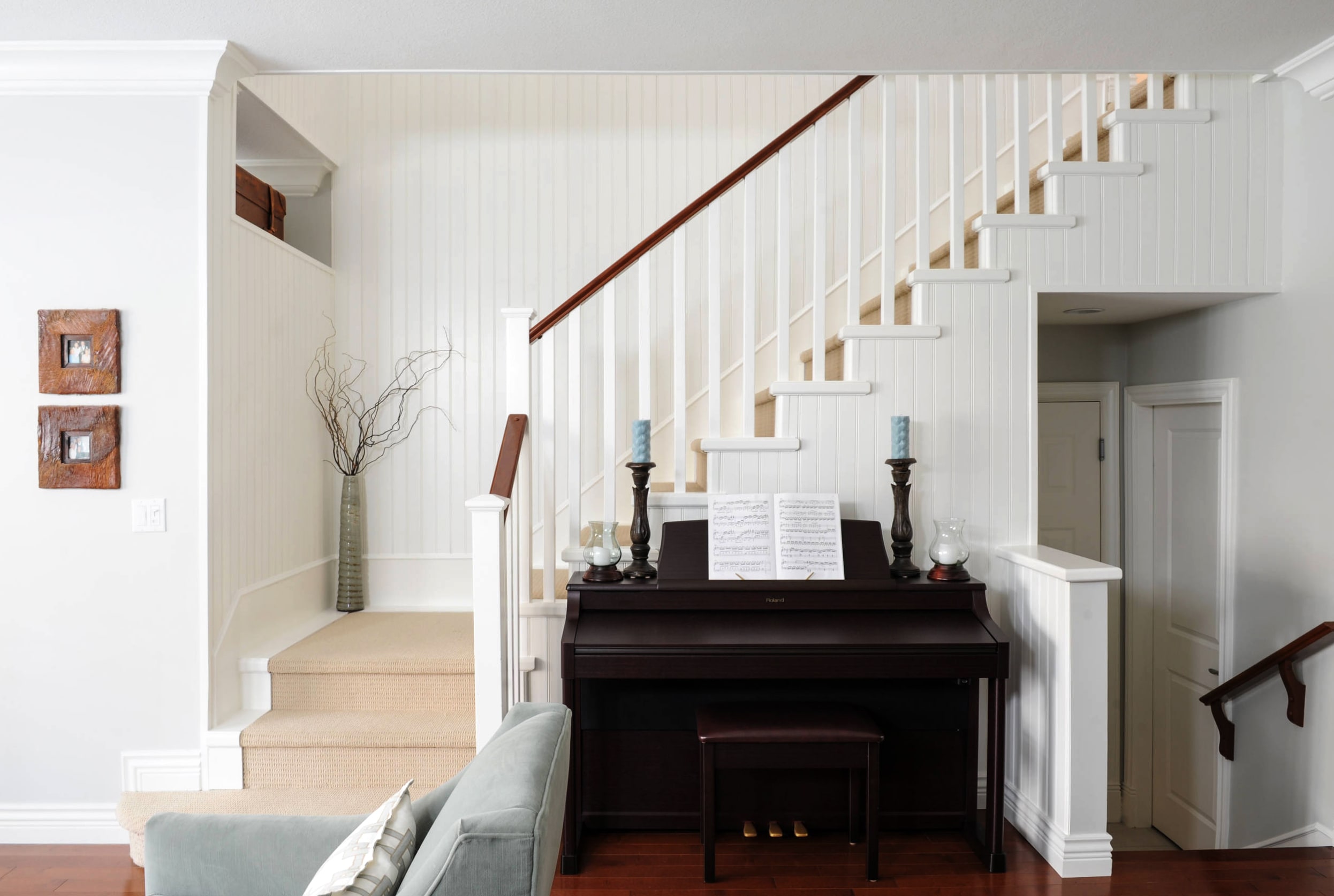
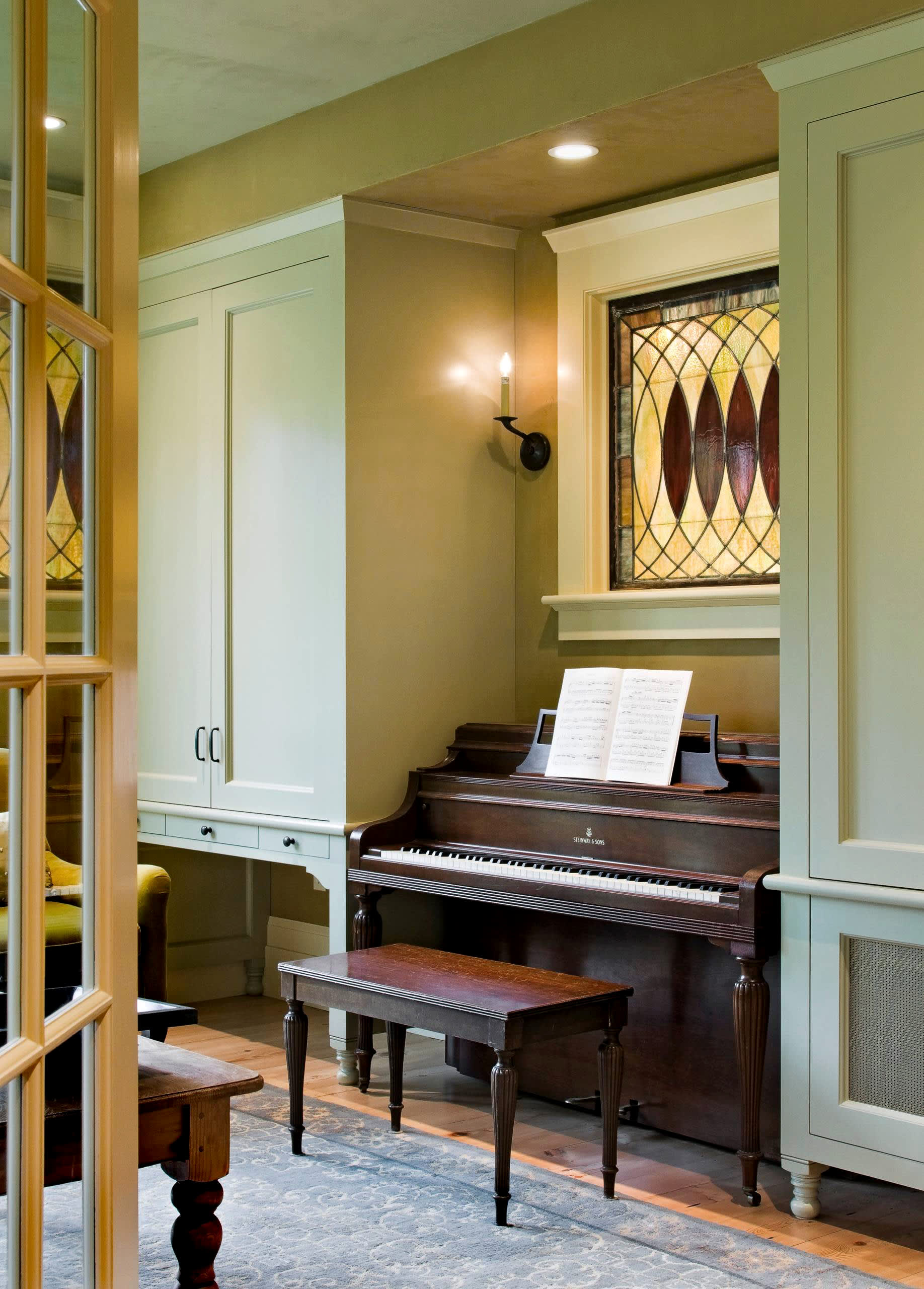
If your home boasts a “useless” nook or niche somewhere, even better! (Bonus points if you decorate the niche to draw attention to the instrument.)

No nook? Create one! If you plan on building in shelves or cabinetry, leave some space for music.
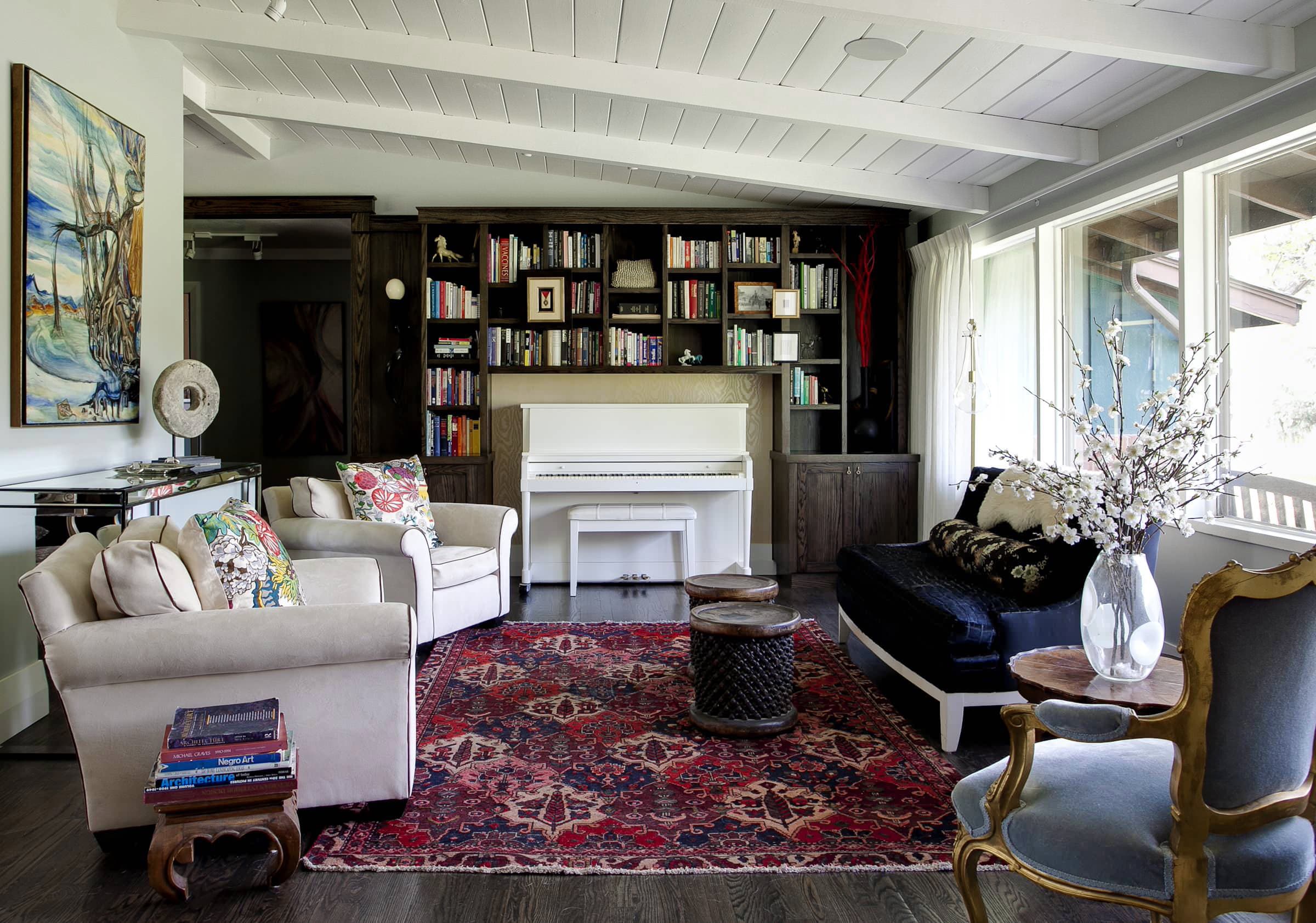
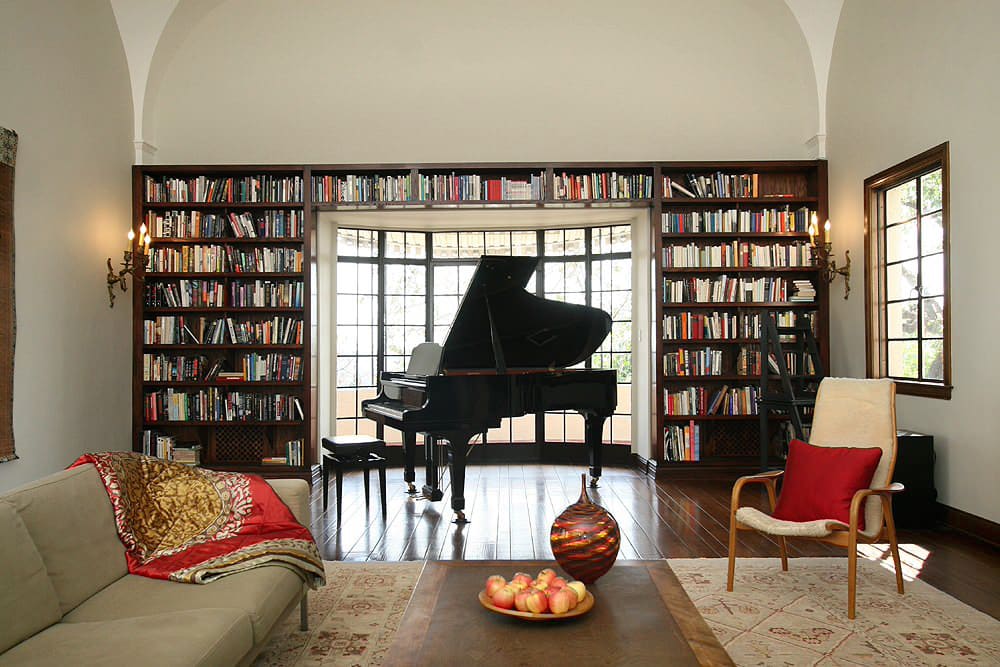
If you happen to have a large space or even a room to dedicate to your piano, go for that baby grand you’ve always wanted. The possibilities are practically endless.