Five Features of Fabulous Outdoor Kitchens
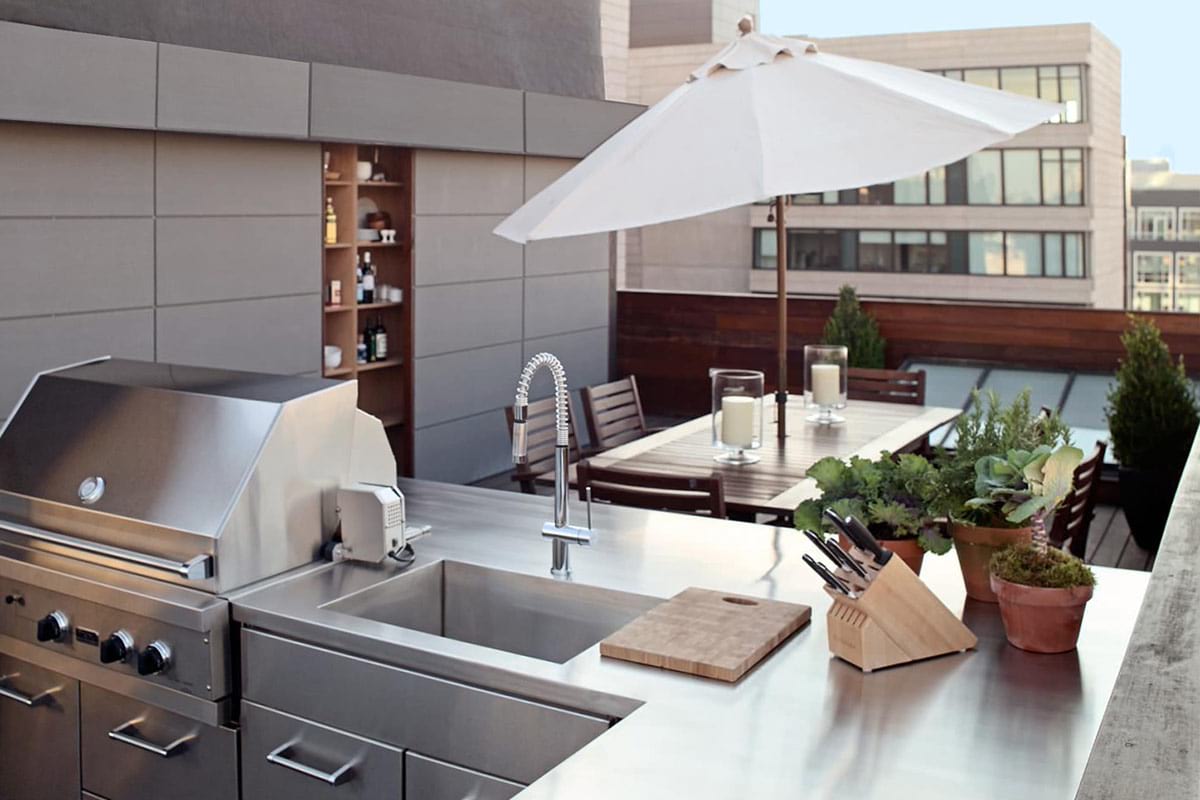
From backyard BBQ to sophisticated soiree, summer dining is way better with an awesome outdoor kitchen. Here's how to design yours to kick your grill into high gear.
We got you psyched to build an epic outdoor kitchen with 12 inspiring outdoor kitchen pictures; now it’s time to get into the nitty-gritty details to make sure yours is just right. Every outdoor kitchen, regardless of size, scope, and sophistication, should have these five features:
Smart design
A well-thought-out design is the most important feature of every outdoor kitchen. Consult with a professional for best results; he or she will be able to advise you of the best placement, materials, and other considerations when planning your kitchen.
Most importantly, consider existing landscape, hardscape, outdoor facilities (including pools and leisure areas), and cooking habits as you plan. You’ll need to run electric, gas, and water lines to your kitchen, so their existing locations are crucial in the situating of your kitchen. The ground will need to be stable (no marshy areas); if you plan on building atop a deck or patio, check its stability and weight-bearing capabilities before proceeding.
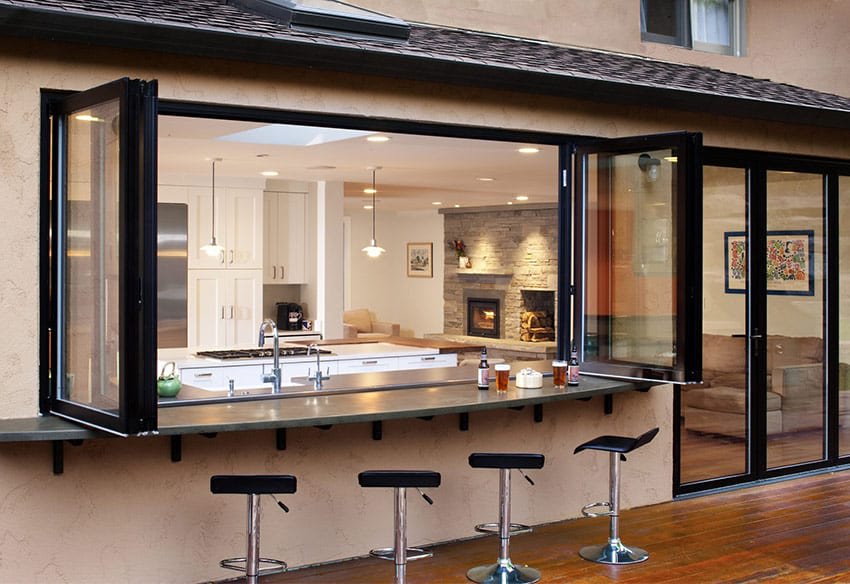
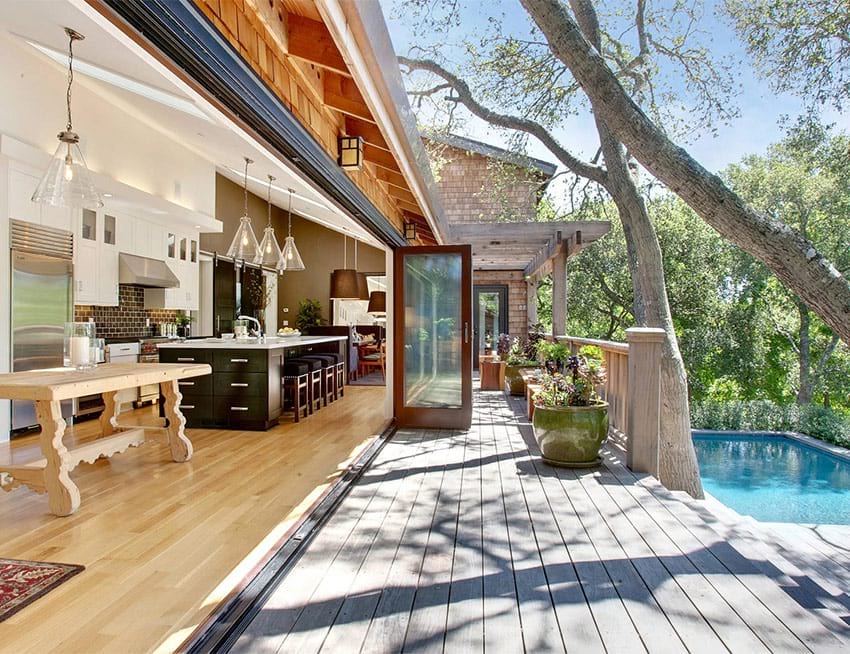
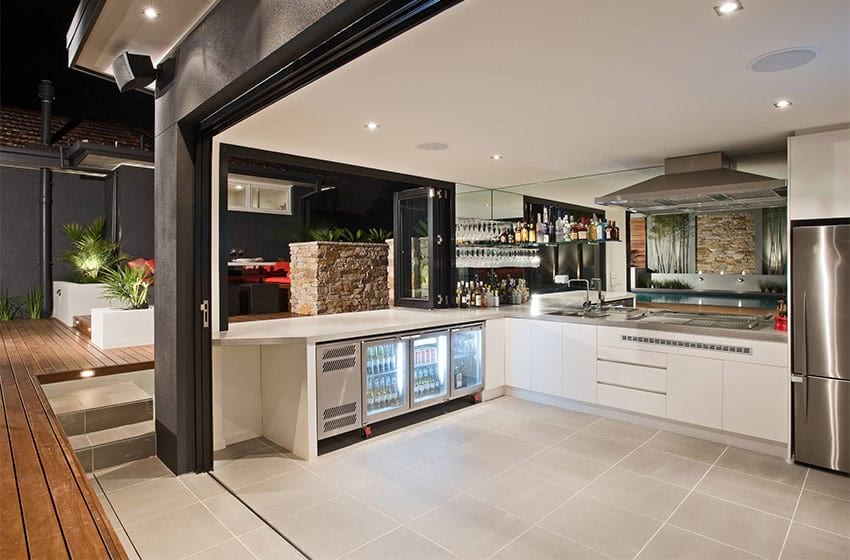
Aim for indoor/outdoor continuity; your outdoor kitchen should flow with the adjoining indoor space. Ideally, the outside kitchen should be situated near its inside counterpart for practical purposes (food storage, cleanup) and aesthetic reasons alike. You don’t need to have matching, uninterrupted countertops (though it would be nice) – even a simple inside/outside pass-through window will make your life so much easier, especially if outdoor cooking elements are limited.
Be sure that your kitchen is easily accessible for comfort and ease of use. While you may have everything you need in your outdoor kitchen, you don’t want to traipse in and out over long distances to get to and from the house.
Awesome seating
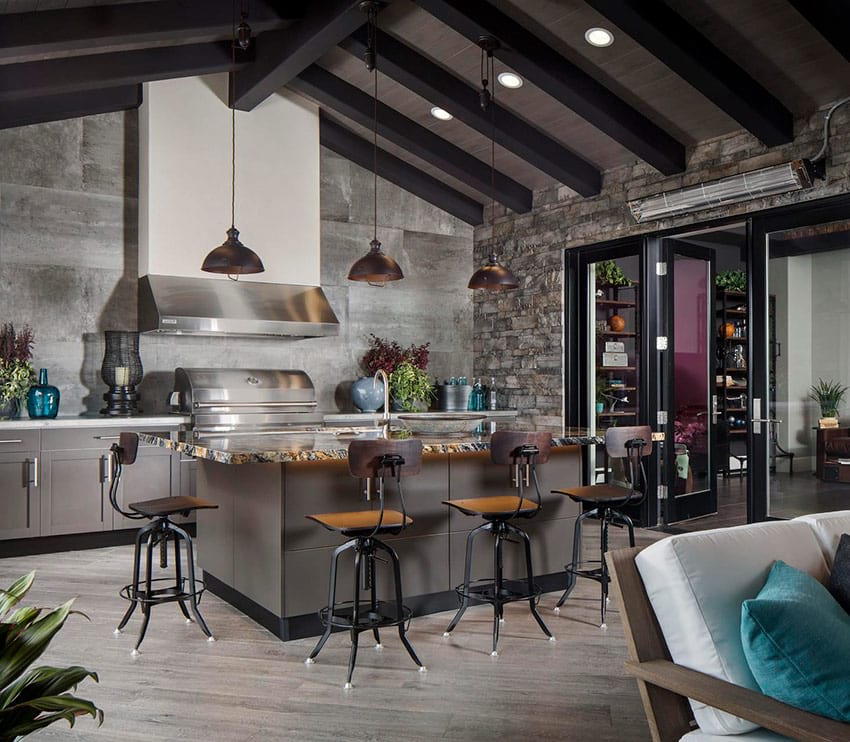
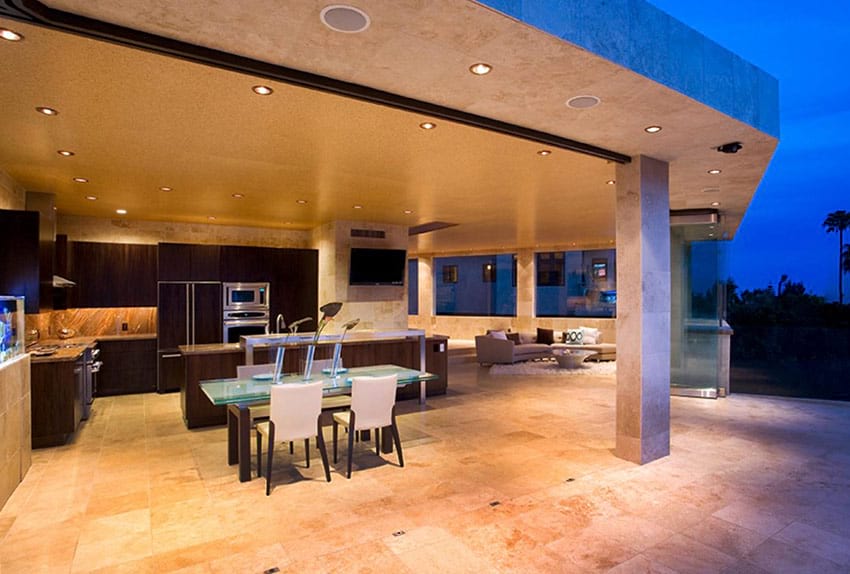
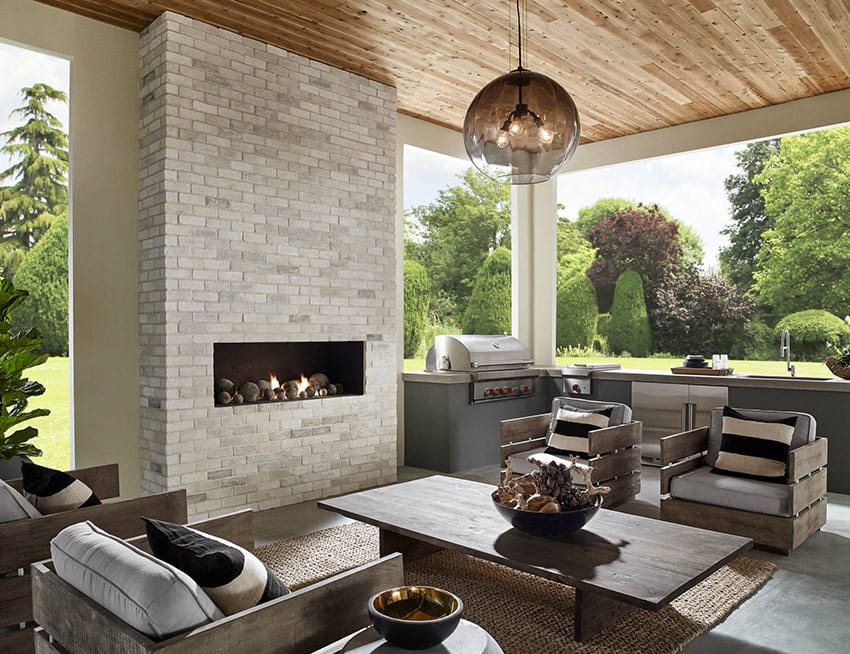
What good is a party with nowhere to sit? Stop parking your guests on the damp grass and a couple of rusty folding chairs; make sure you have a comfortable spot to park yourself on while you enjoy the food.
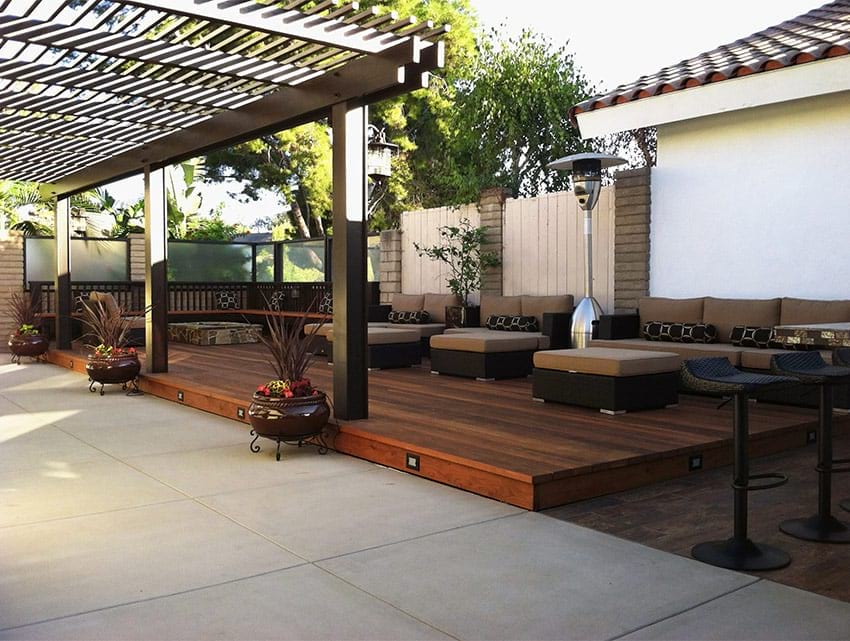
Depending on your layout and the extent of your entertaining, your seating arrangement can vary widely. Some arrangements to try:
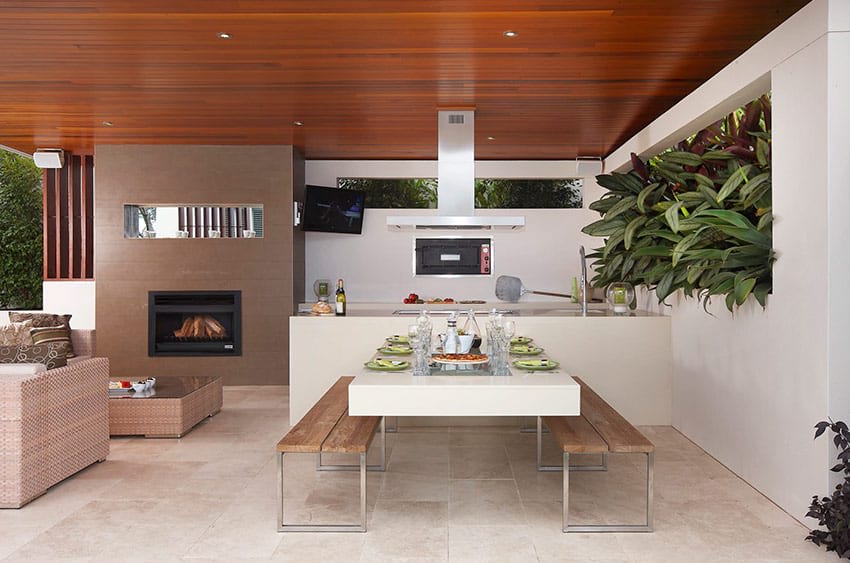
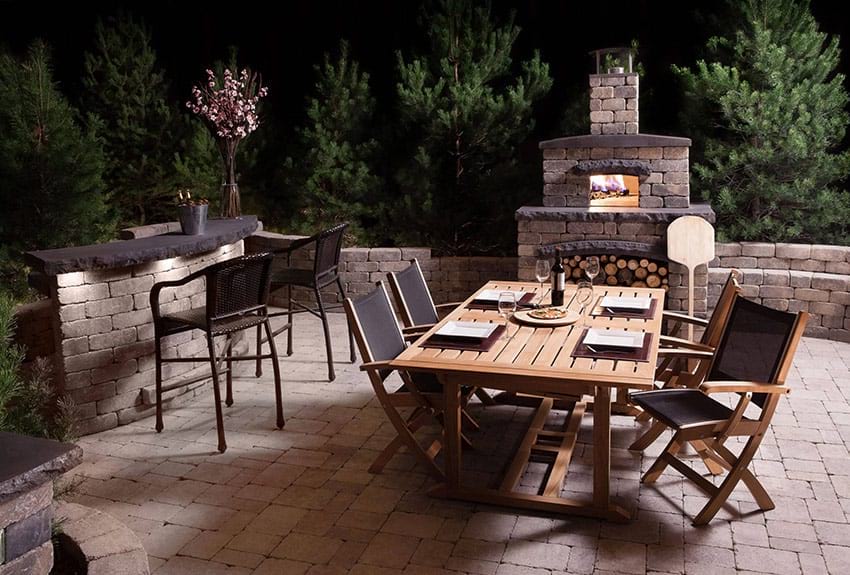
- Classic table and chairs (or benches).
- Lounge chairs or padded armchairs with adjacent tables or ottomans.
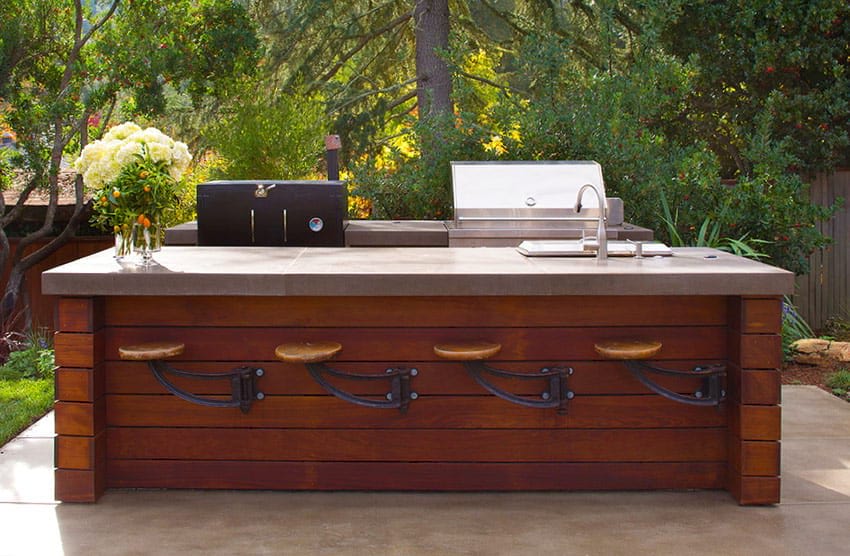
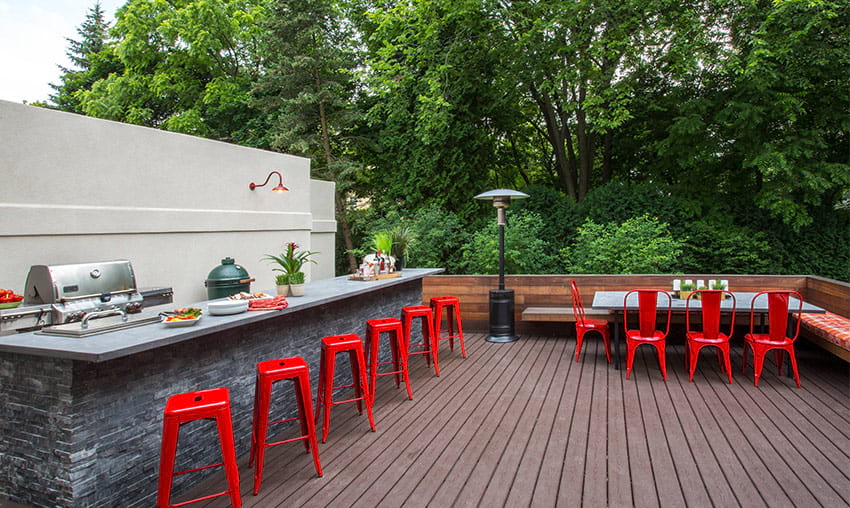
- Bar stools.
- A combination of several seating options.
Any seating can be casual or formal, depending on style; be sure to choose chairs that reflect your party style (prim dinner parties? Skip the funky-shaped yard sale chairs. Shorts-and-bare-feet BBQs? Don’t spend it fretting about the ketchup on your upholstered armchairs).
To make your seating area extra-comfy, consider heating and cooling systems to extend the seasons in which you can use your kitchen. Freestanding patio heaters and fans provide pockets of warm and cool air, depending on the weather; more sophisticated systems can keep you comfortable all year round.
Harmony with the landscape
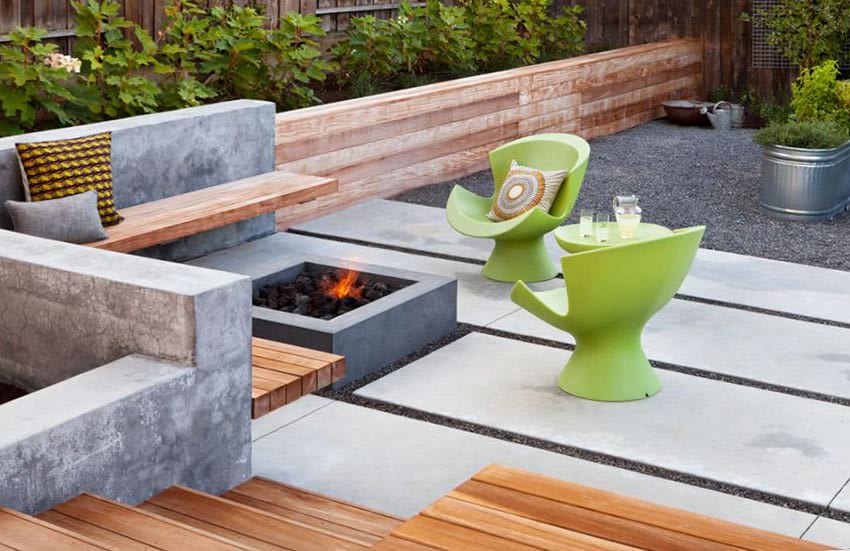
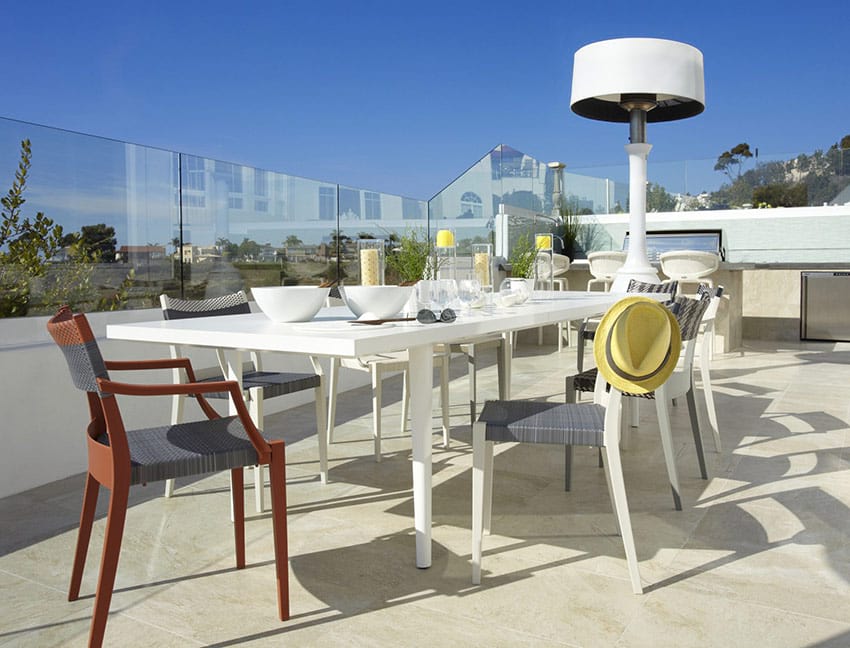
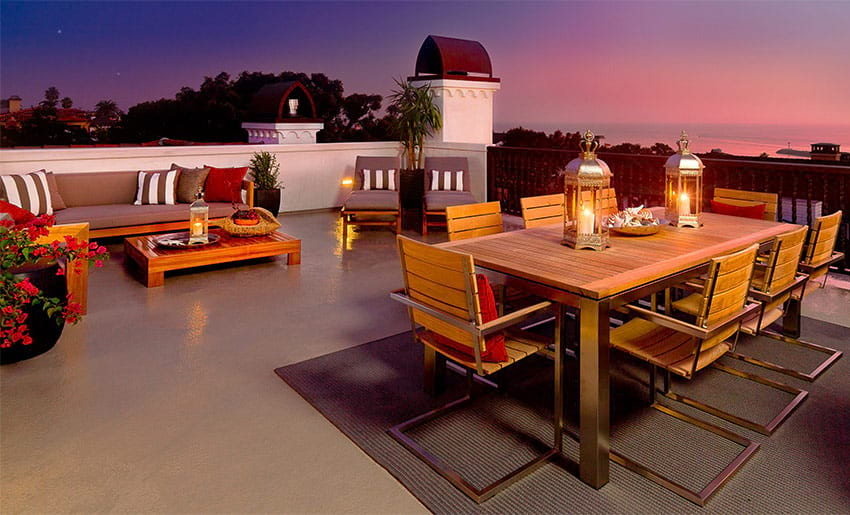
Forest? Good. Waterfront? Good. Cityscape? That’s good too. Take your surroundings – and your view – into account when you decorate your outdoor kitchen. They should complement one another, not fight for attention. That’s not to say that your kitchen should blend with the landscape; just ensure that they’re balanced.
If you have a fabulous view, leave the top of your kitchen open (or as open as possible) so as not to obscure the view. Check that your projected kitchen location does not block the view or other valuable features of your home or yard from the inside of your house; you don’t want that outdoor kitchen to ruin that perfect view of the ocean (or trees, or birds, or sunrise… you get the idea) that you enjoy every morning with your coffee!
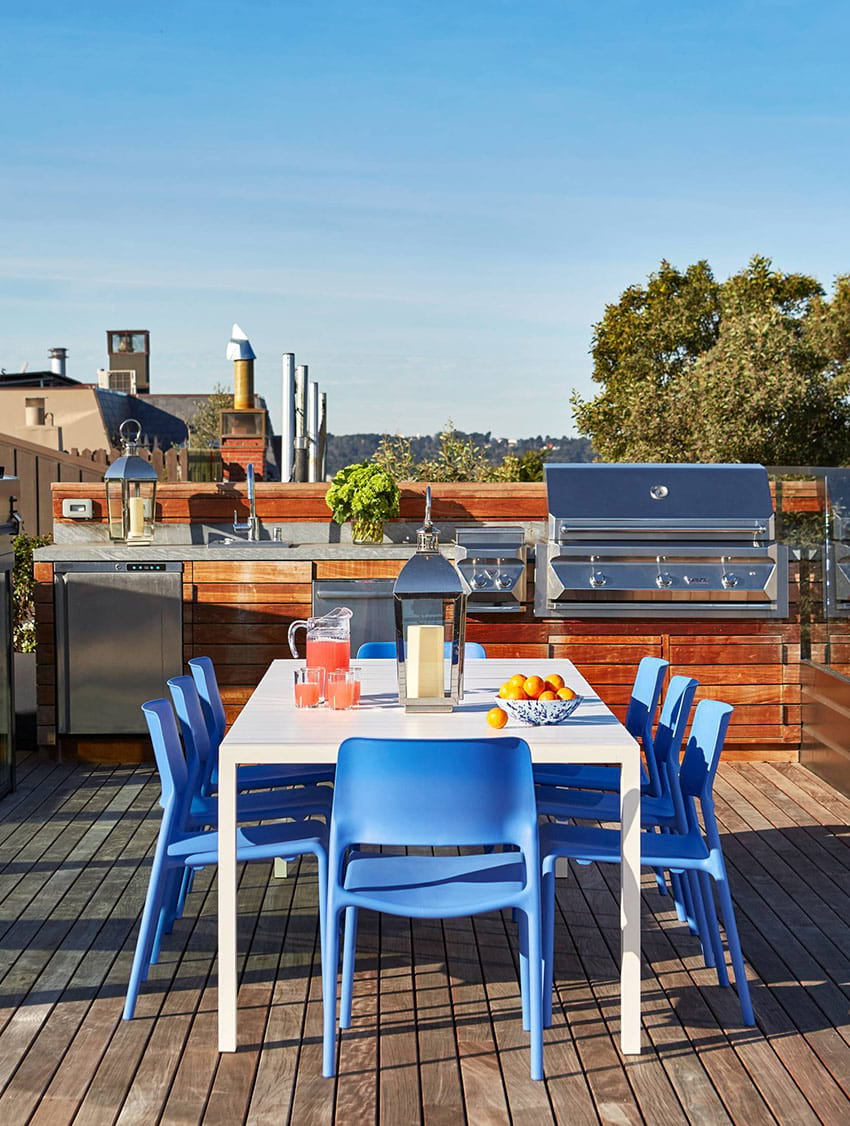
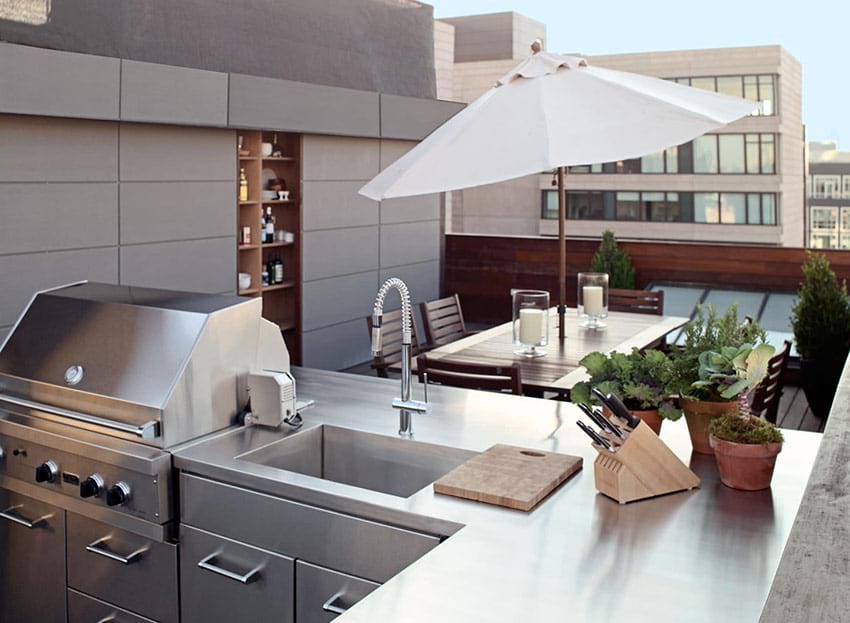
Protection from the elements
Outdoor kitchens are obviously subject to much more wear and tear than indoor kitchens. Keep yours protected by a sturdy stationary or retractable cover of some sort (like an awning), and check it regularly to make sure it’s still adequate. If you want to keep it open (or don’t want to invest in a covered space), get covers for all costly equipment (grill, nice lawn chairs, etc.). Pergolas and bamboo roofs are nice to look at and produce lovely dappled shade, but they won’t protect patio kitchens from summer downpours.
Some materials hold up better to the elements than others – keep that in mind when perfecting your backyard kitchen designs. Choose waterproof, weatherproof materials whenever possible.
- Counters: granite, concrete, brick, flagstone, and glazed ceramic tile (may crack in cold weather; recommended for warm climates) are good options for outdoor kitchens. Soft stone is less durable, and quartz and recycled glass may not withstand outdoor use.
- Cabinets: high-quality stainless steel, marine-grade polymer, and teak are popular and versatile choices.
- Flooring: like counters, the best flooring options are concrete, natural stone, and tile (textured to prevent slipping). Be sure that your flooring choice is fire-resistant, grease-resistant, stain-resistant, and weather-resistant for best results; check that your floor can support the weight of the appliances and fixtures that you plan to install.
- Sinks and faucets: a hardwearing material is best for an outdoor kitchen sink; a high-quality stainless steel sink is the top pick for most homeowners, though fireclay is a popular outdoor sink option too. Not every faucet is suited for outdoor use; choose a durable kitchen faucet with solid metal construction, not plastic, and with rust- and corrosion-resistant materials like stainless steel and chromium oxide. If you live in a cold climate, we recommend winterizing (removing all removable parts and bleeding the pipes before freezing weather sets in) – remember, outdoor fixtures will freeze faster than indoor fixtures.
Spend some time outside before deciding on your layout. You’ll discover where and when the sun is brightest, the wind strongest, and the rain wettest. Especially important is the wind direction: you don’t want your seating area downwind from the grill (unless you enjoy stinging eyes and lungs from the smoke). If the smoke will be an issue, invest in a good vent hood to keep most of it from blowing into your face.
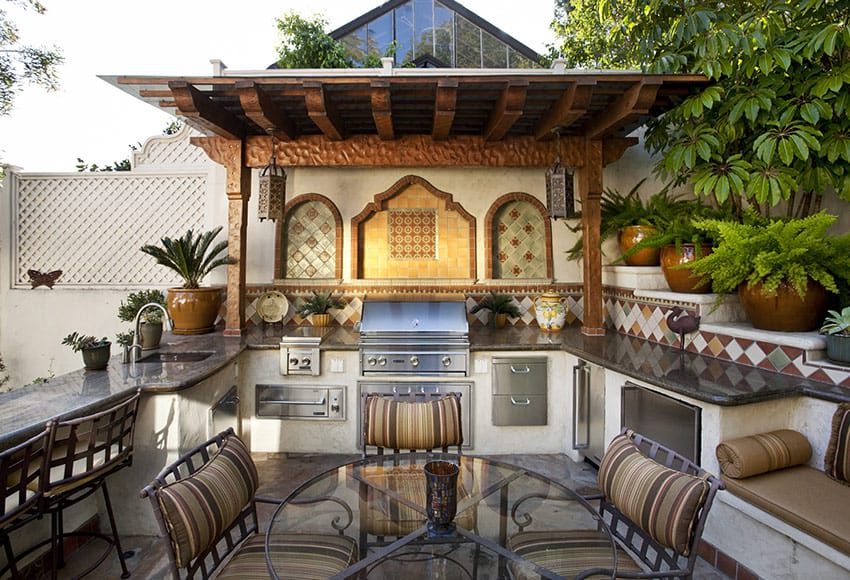
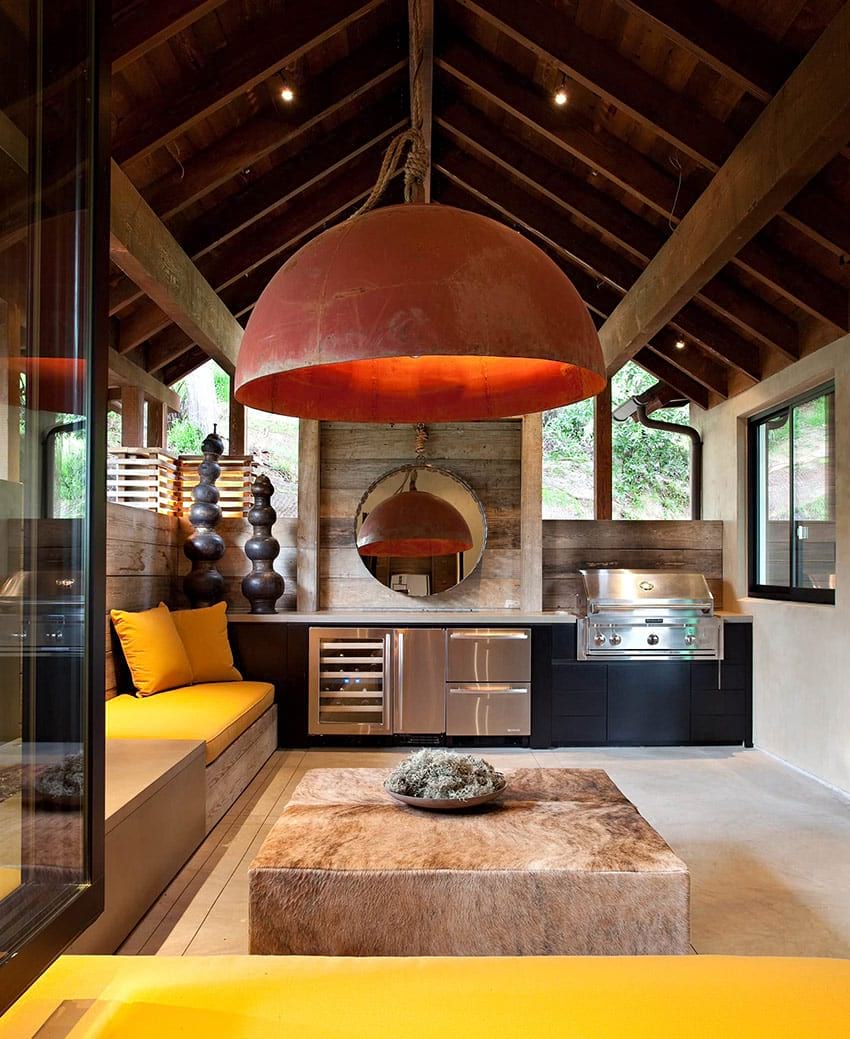
Function, safety, and convenience
This one’s the most important. Keep the outdoor kitchen near the house so that you can run in and out as needed, make sure to install the sink near the cooking stations, and keep all necessary tools and gadgets handy. Plus, the house provides protection for the kitchen and it’s less expensive to run utility lines to it. Having everything you need nearby truly makes the difference between a perfect medium-rare steak and a charcoal briquette.
Designate areas or cabinets for outdoor cooking tools so that you don’t have to bring them in and out constantly.
Include plenty of counter space – you don’t want to balance those trays of hot dogs on a chair or on the ground (where the dog and the ants will get to it). You’ll want at least a foot of space on one side of the grill and two feet on the other, plus at least 18 inches on either side of the sink.
Though the traditional “kitchen triangle” is considered outdated by many, in an outdoor kitchen – that may be smaller than a regular kitchen – it’s recommended for smooth workflow. Keep the sink, grill or oven, and fridge (or other food storage) within reach of each other for ease of use.
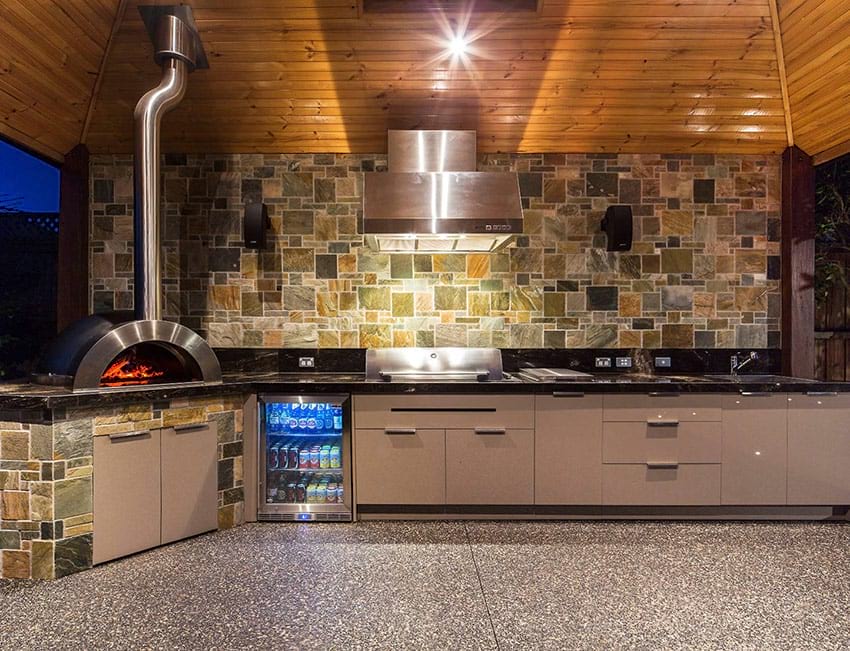
At minimum, you’ll need a grill or other cooking appliance of some sort. While there are no one-size-fits-all must-have fixtures, great appliances will make your outdoor cooking experience enjoyable and easy. Pick the fixtures that suit your cooking style, splurge on the ones you really want, and fire up that grill!
- Grill: as the focal point of most outdoor kitchens – and the most frequently used – the grill requires your attention more than any other fixture. Consider running a gas line directly to the grill; if that’s not possible, always have a backup tank of propane. Don’t compromise here!
- Outdoor sink: who wants to haul dirty dishes back and forth to the house all night? Plus, you can use it as an ice bucket when all those dishes are cleared out.
- Outdoor refrigerator or beverage cooler: for keeping those drinks cold when there are dishes in the sink. Oh, and the raw food, too.
- Outdoor oven: for the food that you don’t want to cook on the grill.
- Outdoor dishwasher: how awesome is that?
- Outdoor rotisserie: if you want to reenact My Big Fat Greek Wedding, without the whole lamb on a primitive spit.
- Outdoor pizza oven: for those nights that you’re just not in the mood of meat.
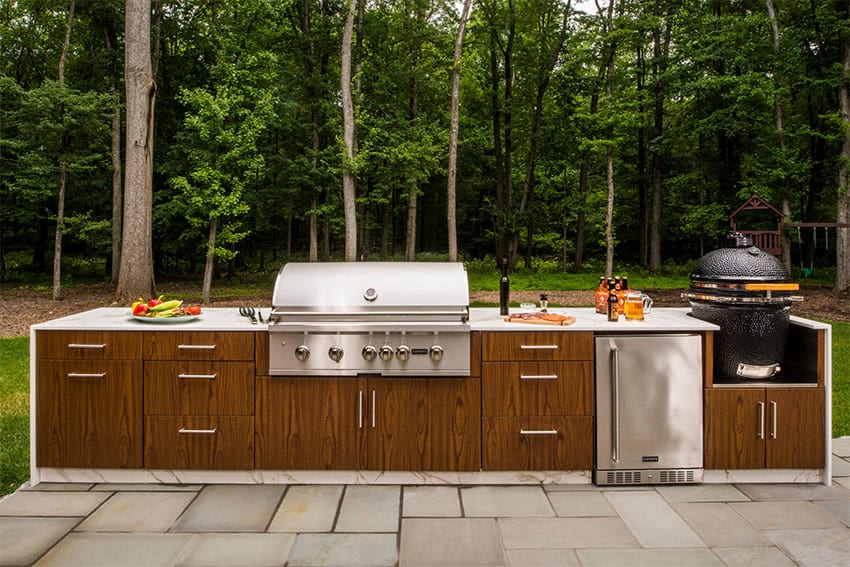
Safety first, of course – ensure that your outdoor adventures are injury-proof.
- Install slip-proof flooring.
- Keep the grill at least 10 feet from combustible materials (trees, wooden furnishings, decks).
- Have a working fire extinguisher within reach at all times.
- Check the gas line periodically to prevent leaks.
- Use only electric items that are UL-approved for outdoor use: fans, lights, cords, speakers, and GFCI outlets. Place the outdoor kitchen on its own GFCI circuit board indoors for ease of access.
- Hire professionals for all electric, gas, and plumbing work; design a safe, legal, and practical plan before building.
- Check all local building codes and zoning requirements to ensure that you’re at a legal distance from the property line and everything is safely installed.
- Obtain all necessary permits (you may not need a building permit, but you’ll probably need one for electrical and plumbing work).
Are you – and your kitchen – ready for the first grand BBQ of the summer?