Form, Meet Function: Pot Fillers
Shop Pot Fillers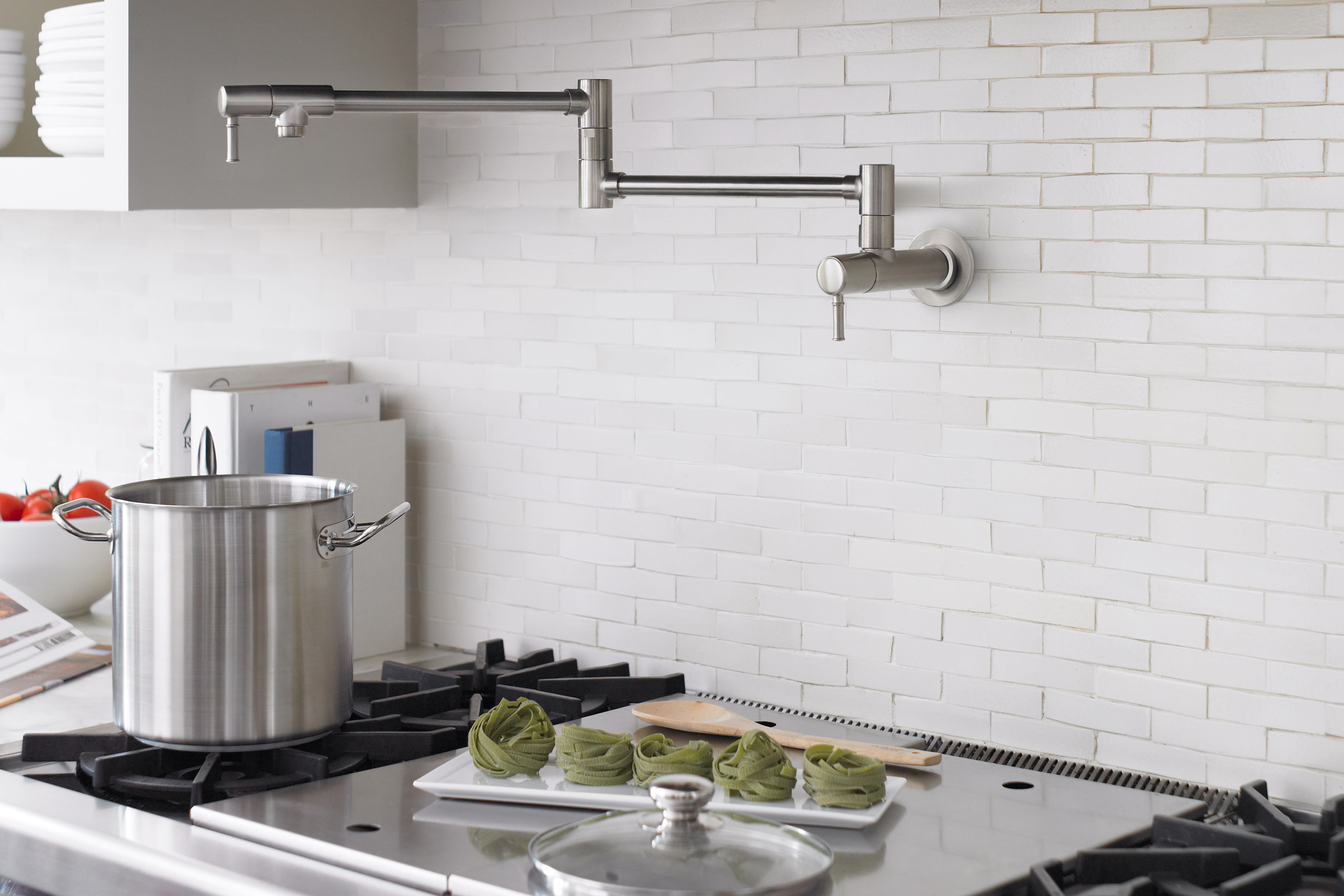
The pot filler was a design sensation when it hit the market; now its popularity is declining. Find out everything you need to know before you choose to install a pot filler.
Whether your signature dish is a complex cream of mushroom soup or mac ‘n cheese from a box, there’s one chore you would rather do without when cooking: lugging a full pot of water to the stove. First there’s the logistics of actually filling the pot, then lifting it out of the sink or off of the counter, then the actual schlepping to the stove with water sloshing about.
There’s one handy kitchen fixture that can change the way you cook: the pot filler.
What is a pot filler?
Pot fillers are simply kitchen faucets that are mounted in close proximity to the stove. Place your empty pot atop the burner, then fill it with water. The only lugging you’ll have to do is with dishes that need to be drained (like pasta), but at least you’ll cut down on the trips back and forth!
Consider this: a gallon of water weighs approximately 8 pounds. Your average stockpot, when filled, can weigh upwards of 40 pounds!
Mount
The stereotypical pot filler is wall-mounted with a jointed swiveling arm that extends to reach your pots and folds back against the wall when not in use.
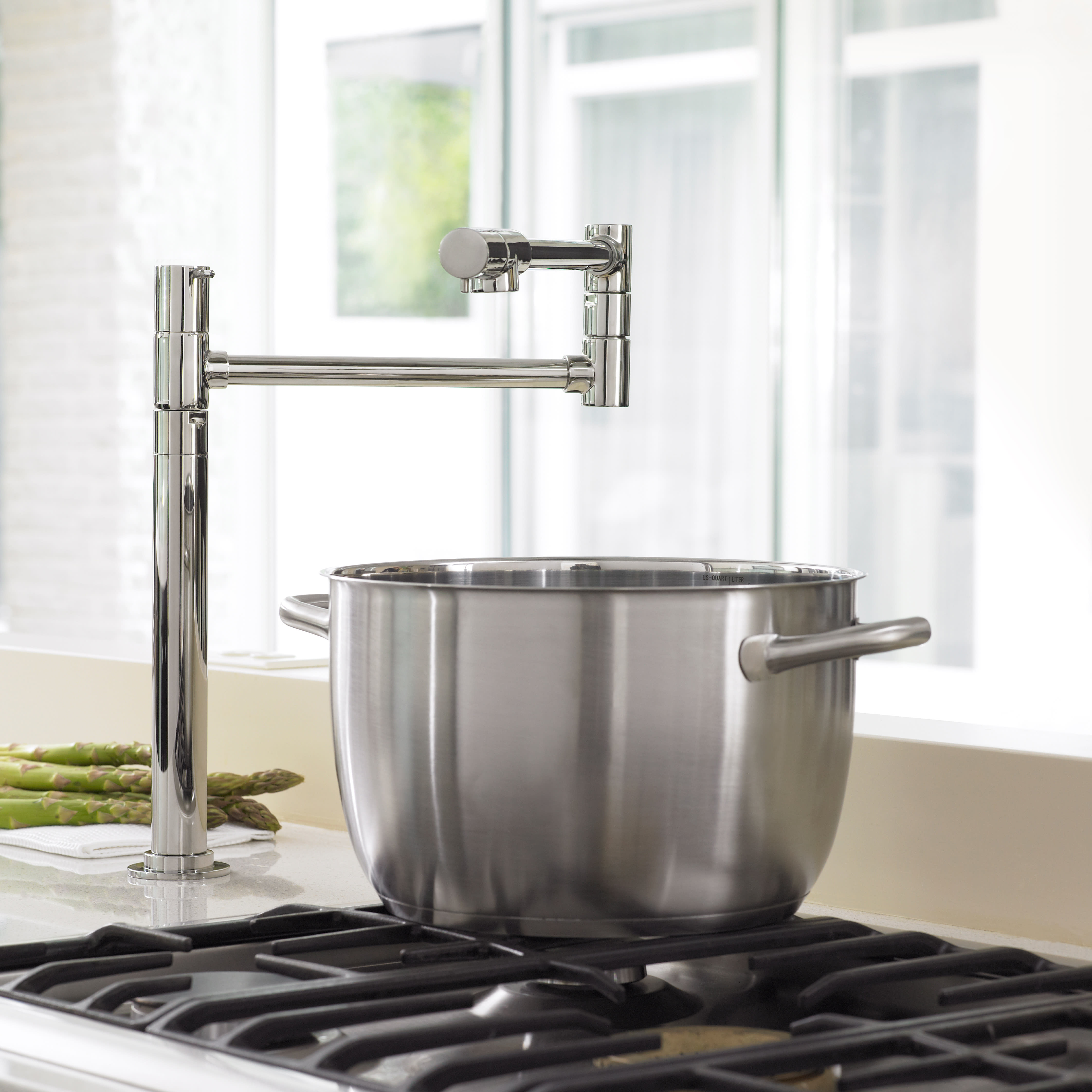
What if your stove is on an island or under a window, or you can’t run a water line through the wall? Don’t resign yourself to a lifetime of cross-kitchen pot-toting. Simply opt for a deck (counter) mounted pot filler and reap the benefits. Some models even feature a 360° swivel range!
Style
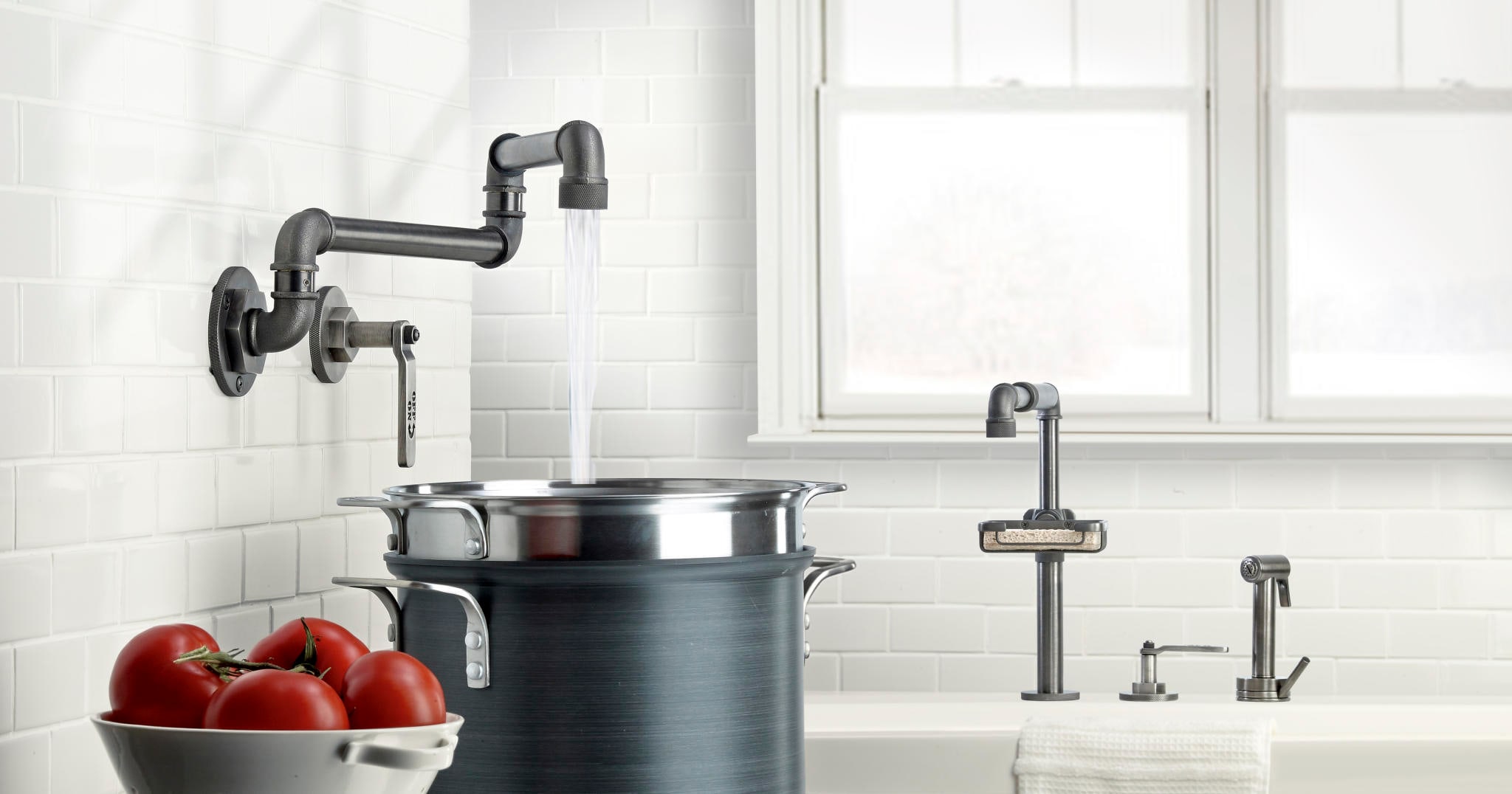
While the conventional pot filler is traditionally styled, many break that stereotype. You may choose from simpler silhouettes, steampunk-inspired designs, clean, modern lines, and numerous unusual shapes and configurations to fit into any kitchen design.
Installation and plumbing
Installing a pot filler is typically a quick and easy process. Your plumber will need a cold water supply pipe in the wall behind the stove; be sure to measure your tallest pot before deciding on height placement (and consider your own height and arm length; you’ll need to be able to reach it easily or it’s useless!).
Choose a pot filler with two shutoff valves for backup; don’t rely on a single shutoff valve when the faucet doesn’t have a drain underneath it – a leaky valve could spell disaster!
Love it or hate it?
Pot fillers tend to evoke strong opinions on both ends. Some can’t live without them, others rue the day they were invented. Consider the pros and cons before you settle into the Love or Hate camp.
Pros of pot fillers
- Convenient: eliminates the need to carry heavy pots or kettles; reduces spills
- Ideal height for filling tall pots or other vessels that may not fit under the kitchen faucet
- Discreet and stylish; folds against the wall when not in use
- Second faucet is handy for multiple cooks in one kitchen
- Many models have higher flow rates than the standard kitchen faucet for fast filling
- Quick, easy installation
Cons of pot fillers
- Can be accidentally turned on when cooking
- No drain, so any drips or leaks must be wiped up
- Requires extra plumbing (at additional cost)
- Potential leaks can ruin expensive appliances
- Prone to grease splatters; difficult to clean
- Pot must still be carried to the sink for draining
- Typically provides only cold water
- May not be frequently used by the casual chef
What’s your opinion?