How to Choose a Towel Warmer
Shop Towel Warmers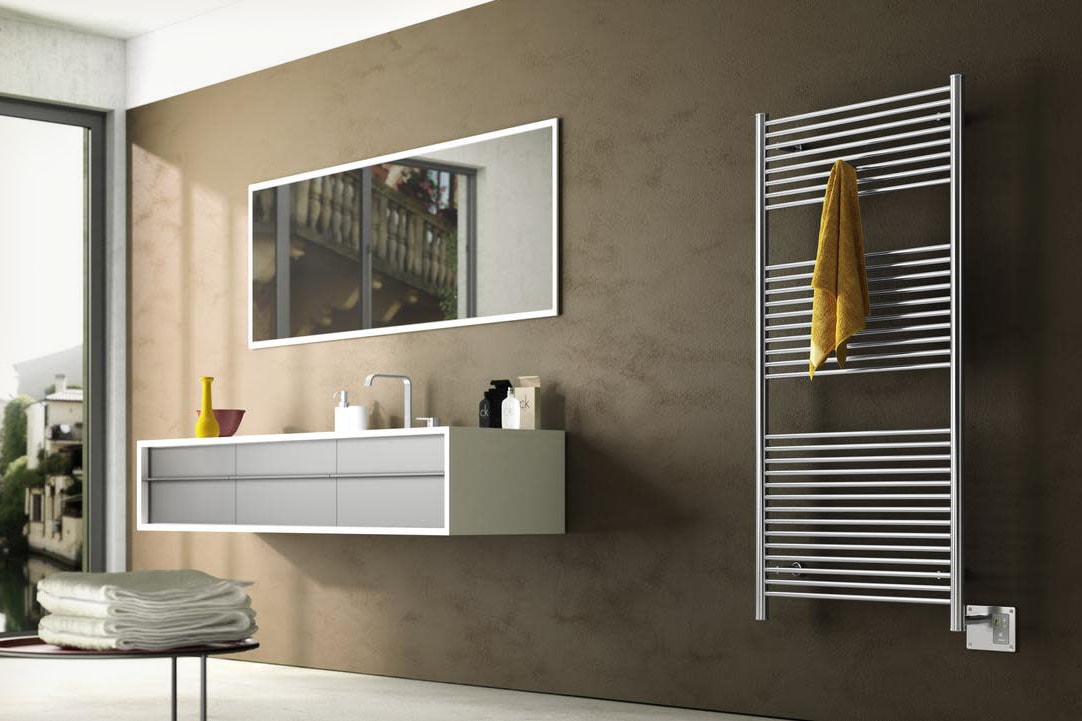
Never dread getting out of the shower again! Here’s everything you need to know about buying a towel warmer.
The last thing you want to do after enjoying a nice, hot shower is step out into the unwelcoming chilly air. The solution: a towel warmer. Imagine wrapping yourself up in a cozy heated towel – it’s a small but powerful (and affordable) luxury that will pay off shower after shower.
A heated towel rail is great for keeping those towels warm, and it offers other advantages, too. It’s an extra heat source for your bathroom and it dries your towels faster, reducing mildew.
Towel warmers are available in an array of sizes, types, mounts, and styles. Here’s your quick guide to warmly-ever-after!
Installation: Hydronic vs. Electric
The two main types of towel warmers are determined by installation type: hydronic and electric.
A hydronic towel warmer runs on hot water to provide heat, much like a radiator. Water from the existing hot water or radiant heat system runs through the rails of the warmer to provide even, energy-efficient heat. (On some models, a mixture of water and other substances like glycol is heated by an internal heating element to warm the bars.)
Pros of hydronic towel warmers
- Extremely energy efficient
- No visible wires
- Does not need to be installed near an outlet
- Uses existing plumbing
- Heating element can be replaced in case of damage
Cons of hydronic towel warmers
- More complicated installation; plumber’s assistance required
- Plumbing may need to be rerouted (or installation confined to areas with existing plumbing)
- May take longer to heat up
- Cannot be moved once installed
- May only be used when the boiler or radiator is in use
You may want to choose a hydronic towel rack if you are remodeling your bathroom.
An electric towel warmer uses electricity – approximately the same amount as two standard light bulbs – to heat the towels. It may be plugged in or hardwired.
Pros of electric towel warmers
- Easy installation – simply plug in and use
- Portable (unless wall- or floor-mounted)
- Low energy consumption
- Heats quickly
Cons of electric towel warmers
- Visible wiring (on plug-in models)
- Electrician required for hardwired models
- Heating element cannot be replaced; entire model must be replaced if element dies
You may want to choose an electric towel rack if you prefer a freestanding model or do not want to install the warmer permanently.
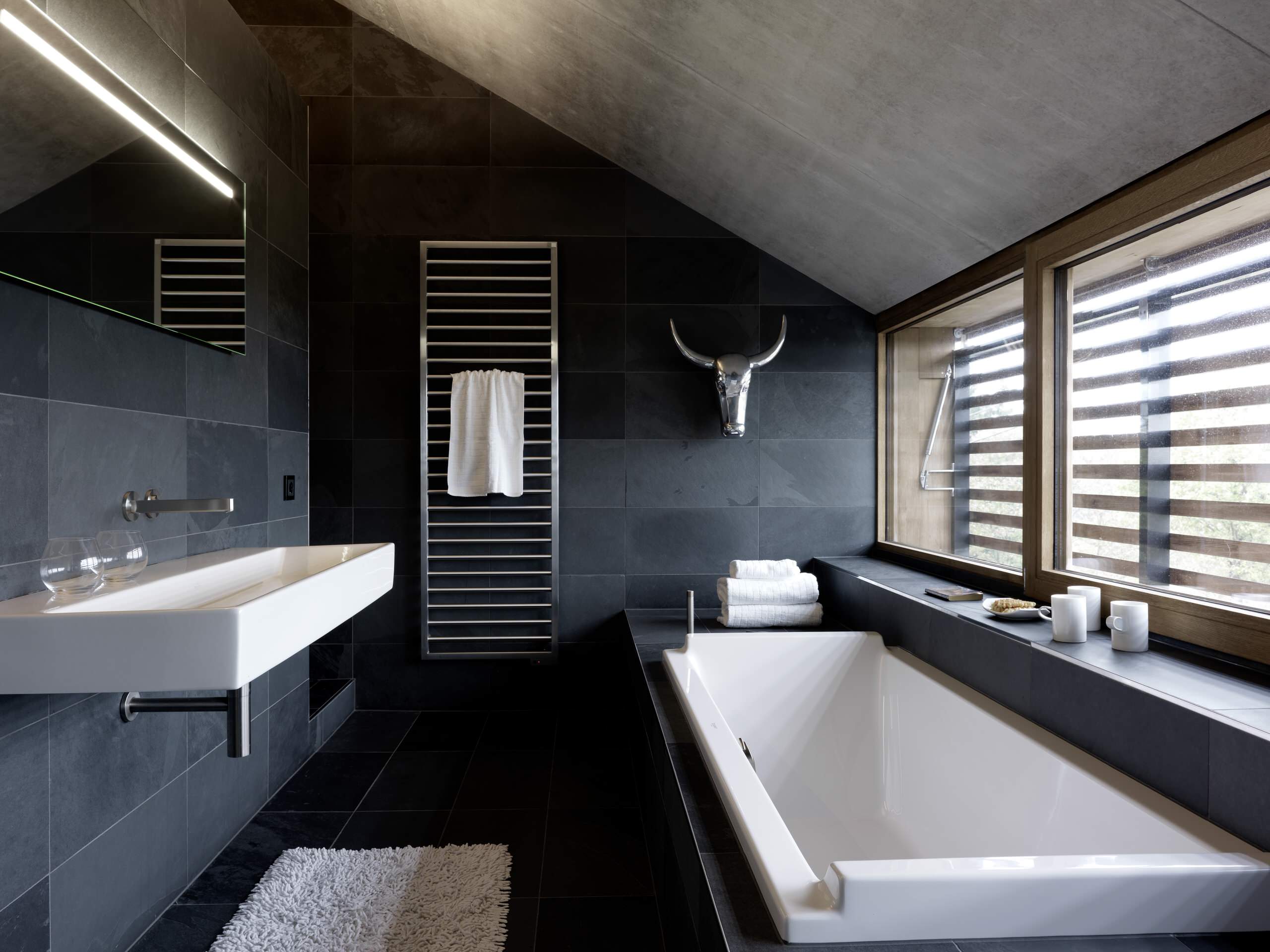
Mount: Wall-mounted, Floor-mounted, or Freestanding
The way you mount your towel warmer is purely a matter of preference. Choose from wall-mounted, floor-mounted, or freestanding depending on your bathroom’s layout and your personal needs.
- Freestanding: best for flexibility. If you want to be able to move the warmer across the bathroom or from room to room (or even outdoors!), opt for a freestanding model.
- Wall-mount: best for freeing up floor space. Corner mounts are available for bathrooms with limited wall space.
- Floor-mount: best for freestanding tubs and for uneven walls (such as those that are tiled partway).
Freestanding warmers (which are always electric) do not require any installation, while mounted warmers need to be hung (generally a simple DIY process).
You don’t need to limit yourself, however; many models may be mounted on either the wall or the floor, so look for one you love and decide on the mount later.
Plus, you can install a towel warmer in other rooms besides the bathroom! Consider adding one to your mudroom or laundry room to dry swimwear and wet outerwear.
Style and Size
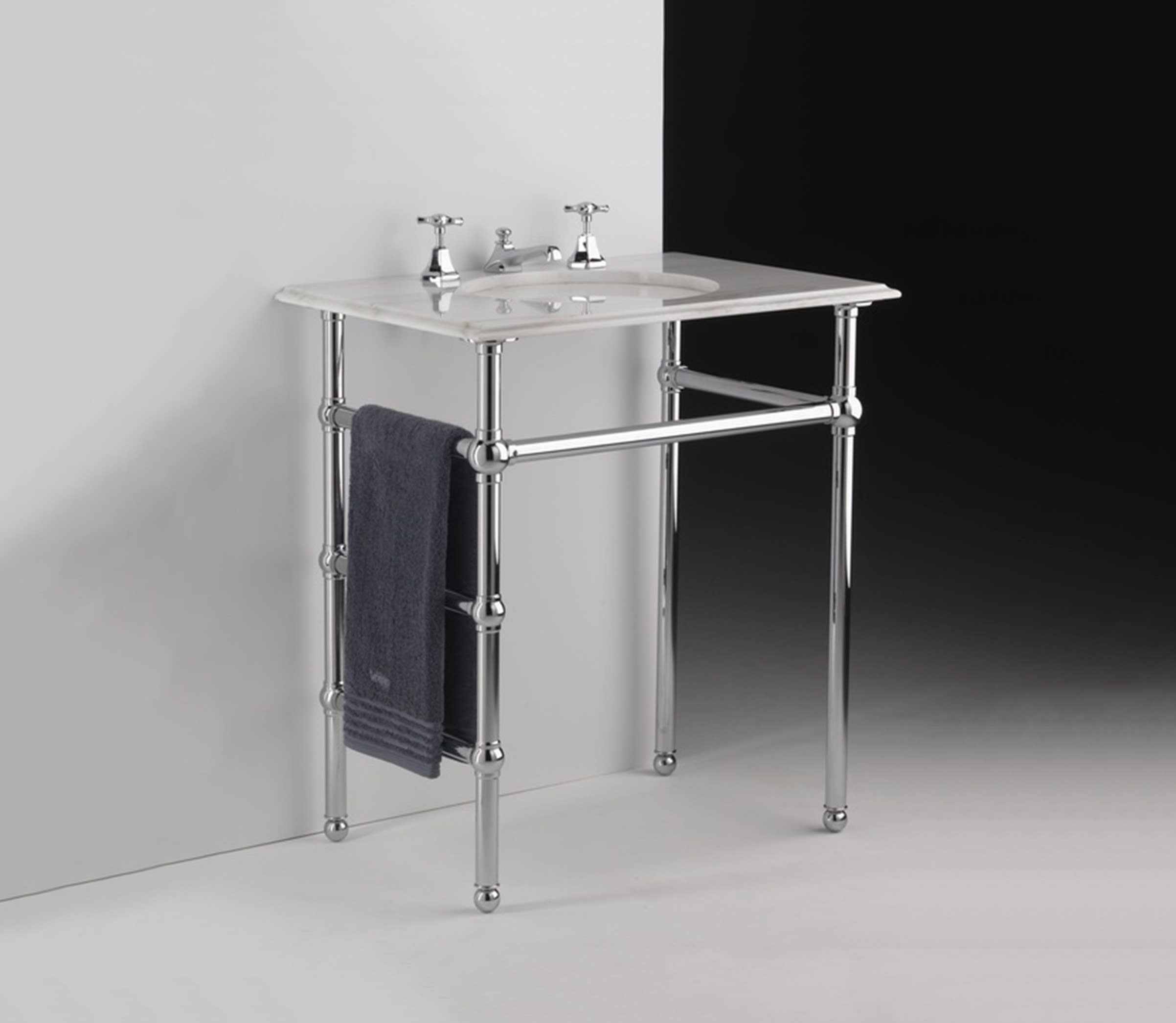
Towel warmers are available in a huge range of styles to suit everyone’s taste – modern, traditional, whimsical – and in sizes to fit every bathroom.
Consider the number of towels that you will hang on the warmer. If you’ll use it for just one towel, pick a smaller model; if it will be used in a family bathroom, opt for a larger multi-rack warmer that can hold more towels.
Extra Features
Every towel warmer is equipped with safety features like thermostats and automatic shut-off to prevent the unit from getting too hot, protecting users from burns. Many also feature extras such as:
- Timers, for the punctual among us – set it to warm your towels at your usual shower time or to turn on automatically when you come back from your vacation
- Built-in switches, though manufacturers often recommend leaving the unit running constantly
- Heated shelves for a hotel-like experience
- Robe hook or additional hanging rack that is not heated but keeps robes and smaller towels close to the heat source and lightly warmed
Many warmers have adjustable temperature settings so that you can choose how hot you want your towel. Keep in mind that warmers do take time to warm up (the length of time varies by warmer), so hang your towel in a way that maximizes contact with the bars to get it as warm as possible during your shower.
Price
Most towel warmers are very affordable, making them an excellent low-cost (yet luxurious) gift for yourself or someone you love. Warmer prices start under $130 but can cost thousands for specialized and designer models. There’s one for every budget!