Stainless Steel Sinks: Everything You Need to Know
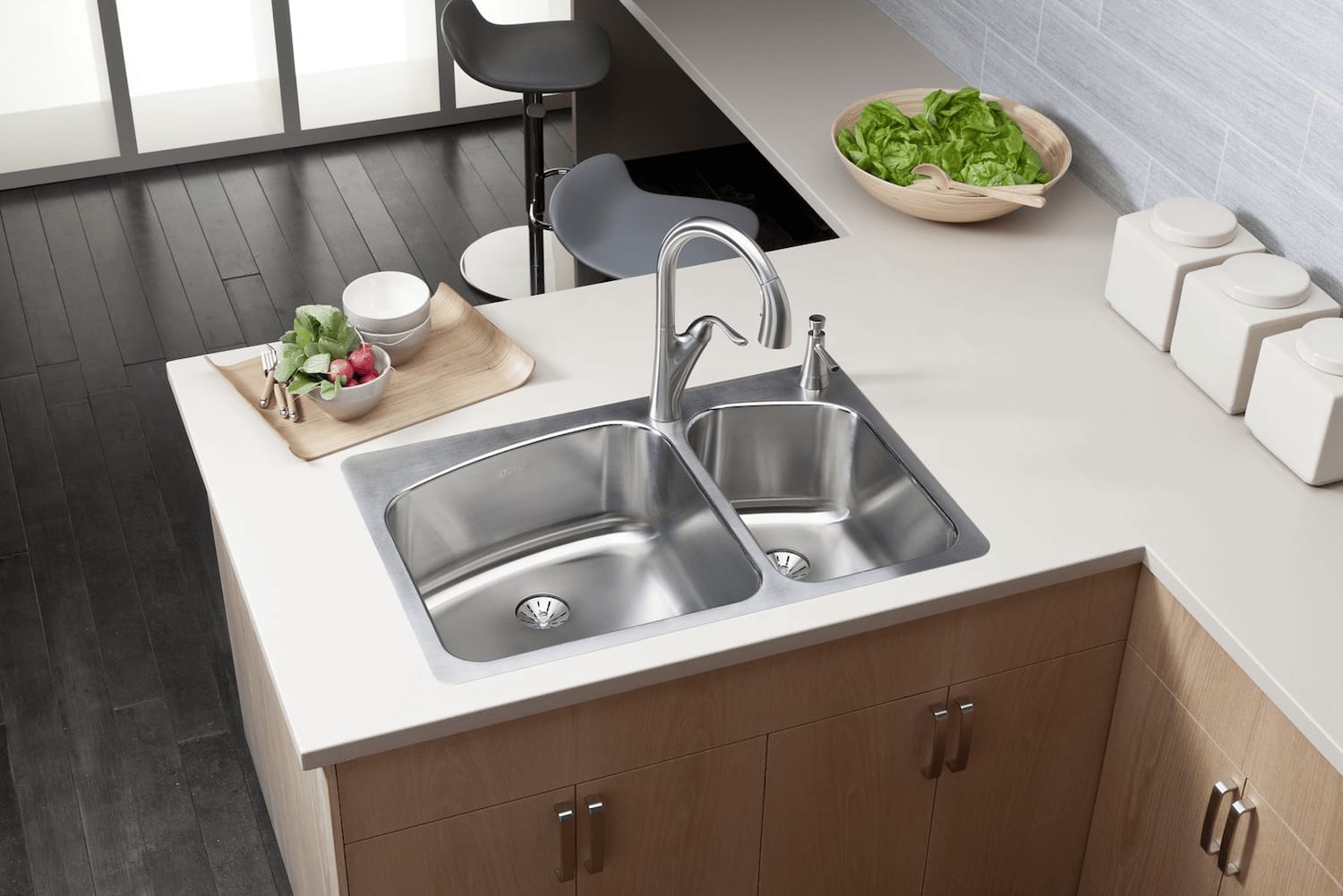
There's a reason (several of them, actually) that stainless steel sinks are highly popular. Here's everything you need to know about these kitchen multitaskers so that you can make the right decision.
It’s the most popular sink material in homes and commercial kitchens alike, and for very good reason: stainless steel sinks are durable, low-maintenance, heat- and stain-resistant, affordable, and impervious to chipping and cracking.
If you’re considering a stainless steel sink, read this guide first to answer all of the questions and clarify the terminology that comes along with these awesome sinks.
Pros and cons of stainless steel sinks
Like every sink material, stainless steel has its advantages and disadvantages.
Pros of stainless steel:
- Durable
- Easy to maintain
- Long life expectancy
- Heat- and stain-resistant
- Affordable
- Does not chip or crack
- Antibacterial properties; easy to disinfect
- Wide variety of options
- Eco-friendly: recyclable; many are made of recycled materials
Cons of stainless steel:
- May scratch or dent
- Prone to water spots without proper care
- Limited color options
Terminology
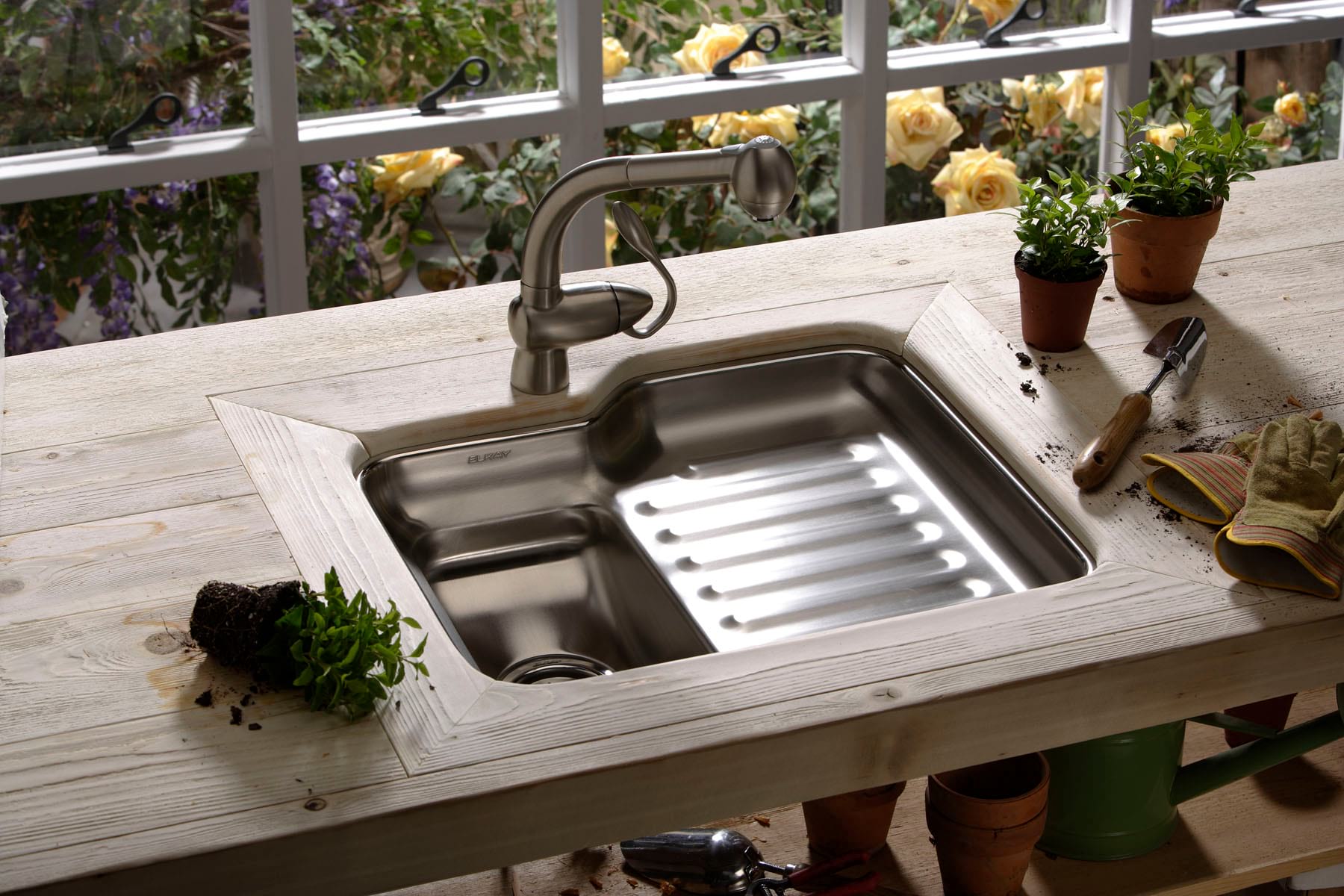
To help you decode your sink, we’ve translated common stainless steel terms into layperson-friendly explanations so that you can compare sinks and know what you’re getting.
What is stainless steel gauge?
The word “gauge” in relation to stainless steel refers to the thickness of the steel. Most stainless steel sinks use 16 to 22 gauge steel. The lower the number, the thicker the steel. For comparison’s sake, 16-gauge steel is .0625″ thick, while 22-gauge steel is .0313″ – less than half!
A sink with a lower gauge is more durable and has a much better life expectancy. Thinner sinks are more prone to denting and damage and will echo when you wash your dishes. 16- or 18-gauge sinks use the highest-quality steel.
What is stainless steel grade?
Stainless steel’s grade shows the percentage of chromium and nickel contained in the steel. 18/8 stainless, for example, contains 18% chromium and 8% nickel, an excellent ratio for stain resistance. The higher the grade numbers, the better the steel.
What is a stainless sink series?
The sink’s series is intertwined with its grade. Look for 300 series stainless steel; 304 is the most widely used, with 18/8 grade. Another common series is 316, also known as surgical grade or Marine grade, with 18/10 grade stainless steel.
Trick of the trade: hold a magnet to the sink. If it sticks, it’s not 300 series.
What is the sink’s radius?
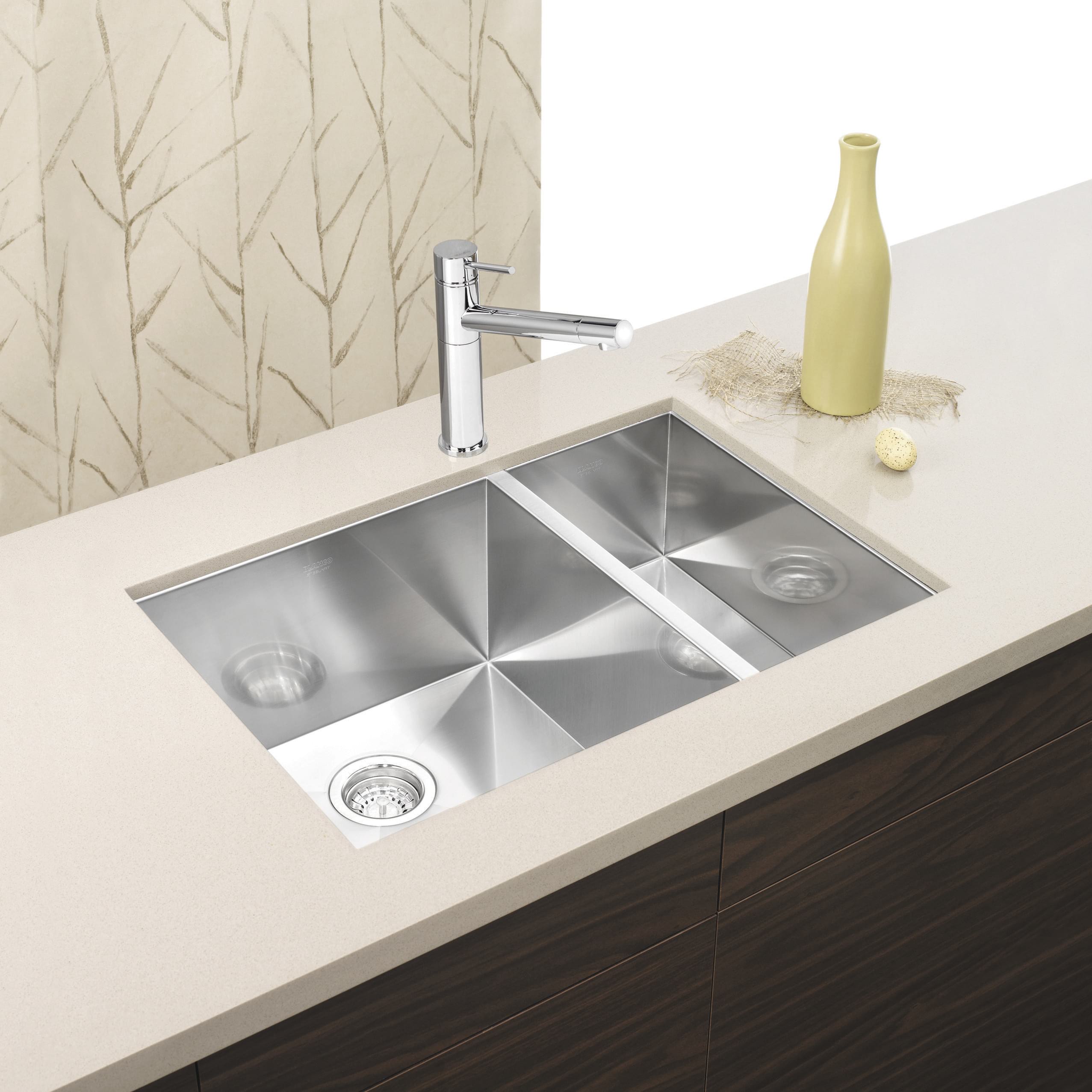
This refers to the sink’s interior angles. A zero-radius sink has 90-degree angles in all corners for a sharp, modern appearance. These angles can be difficult to clean; a good alternative is a sink with a small radius (i.e. 1/2″ radius), which has flat walls and gives a squared-off impression, though the corners are slightly more curved for easier access.
To illustrate, a zero-radius sink looks like this:

While a 1-3/4″ radius sink looks like this:
Stamped vs. folded stainless steel
When you see “stamped” or “folded” on a sink, that tells you how the sink was formed. Stainless sinks are created using two different methods:
- Stamping, in which the steel is heated and shaped using a mold, or
- Folding, when a sheet of steel is cut at the corners, then folded and fused to form the walls of the sink. Folded sinks are considered better quality due to uniform thickness throughout the entire sink, something that may be compromised when the steel is stretched for stamping.
See how the stamping process works here:
How are stainless steel sinks configured?
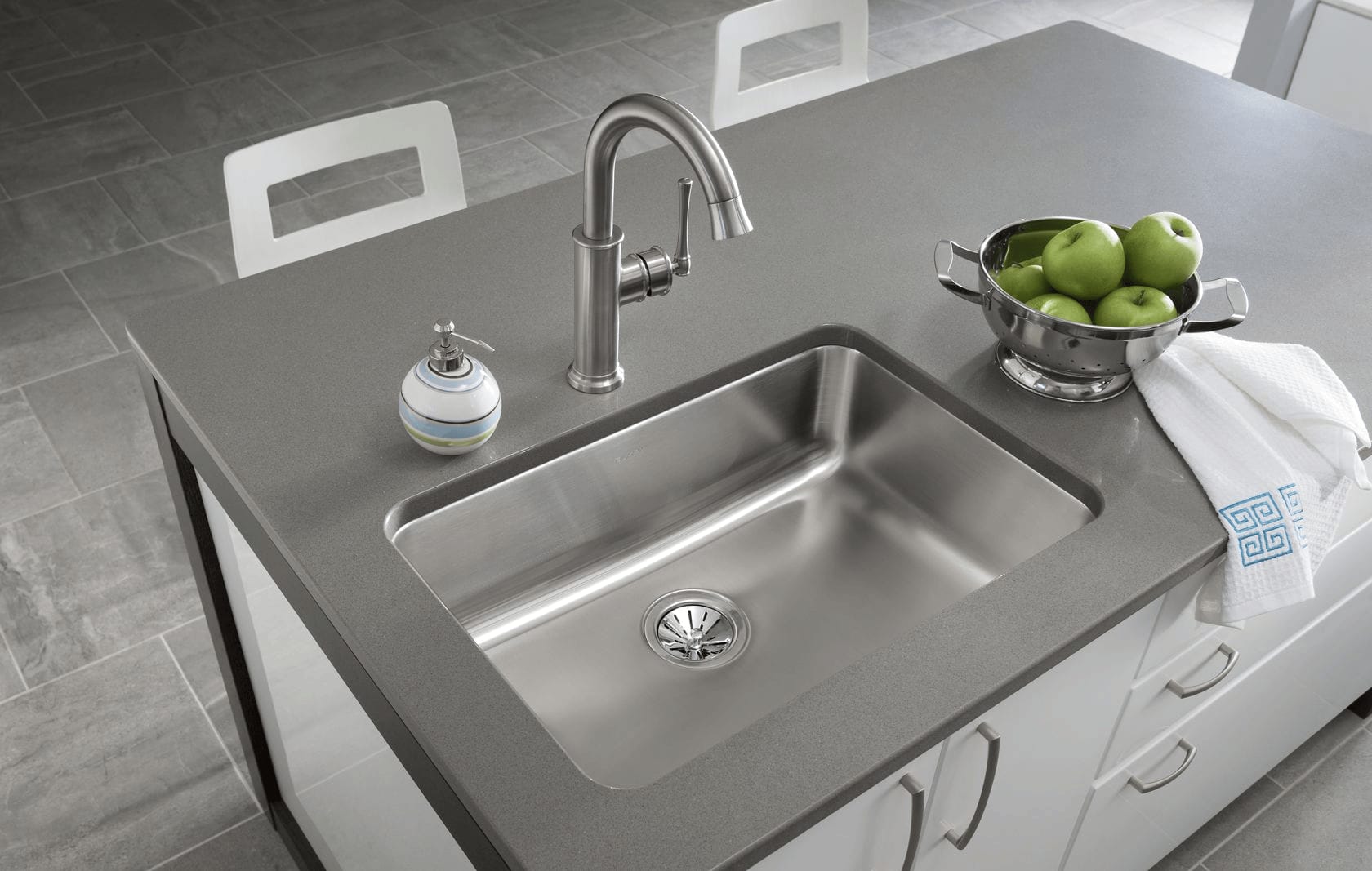
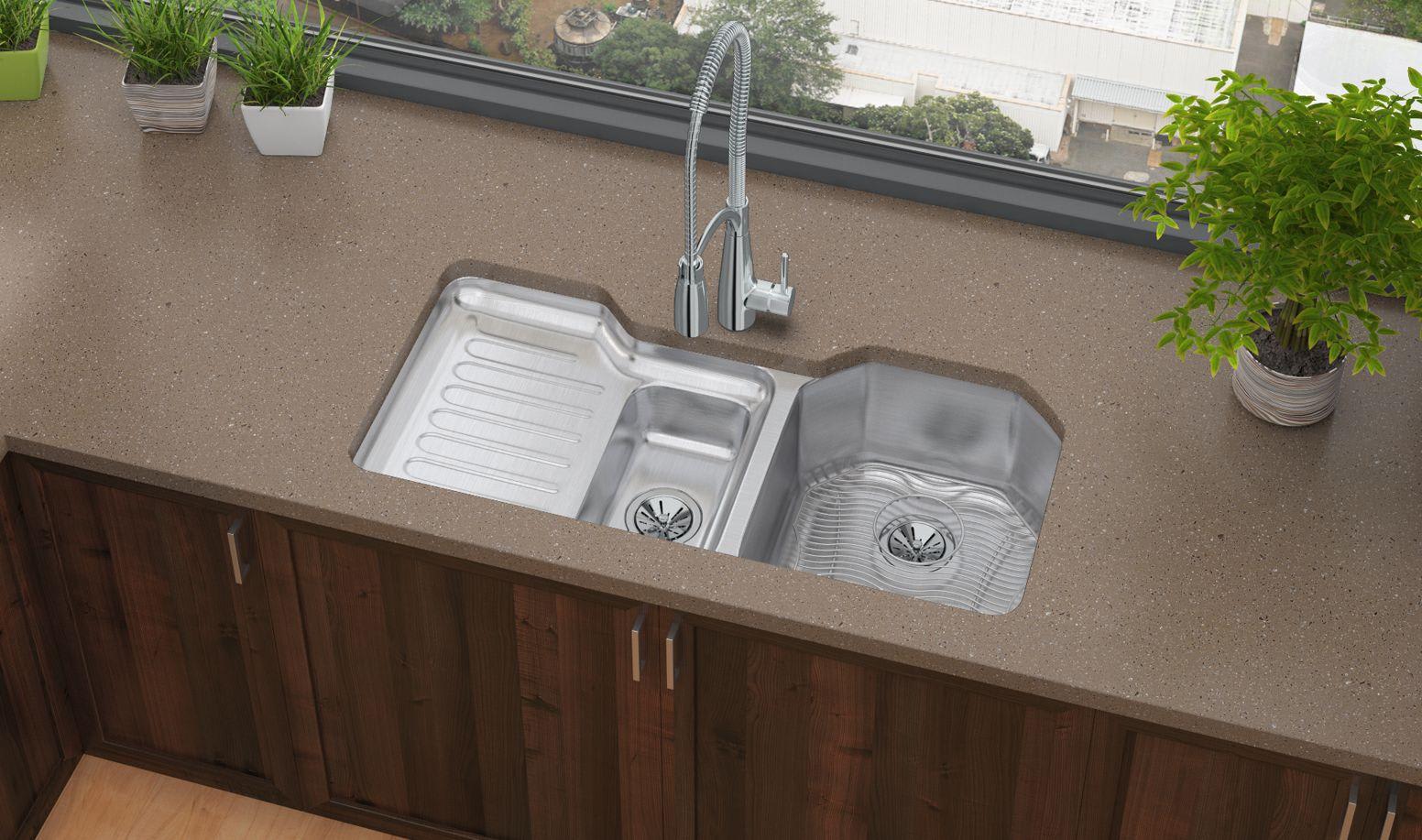
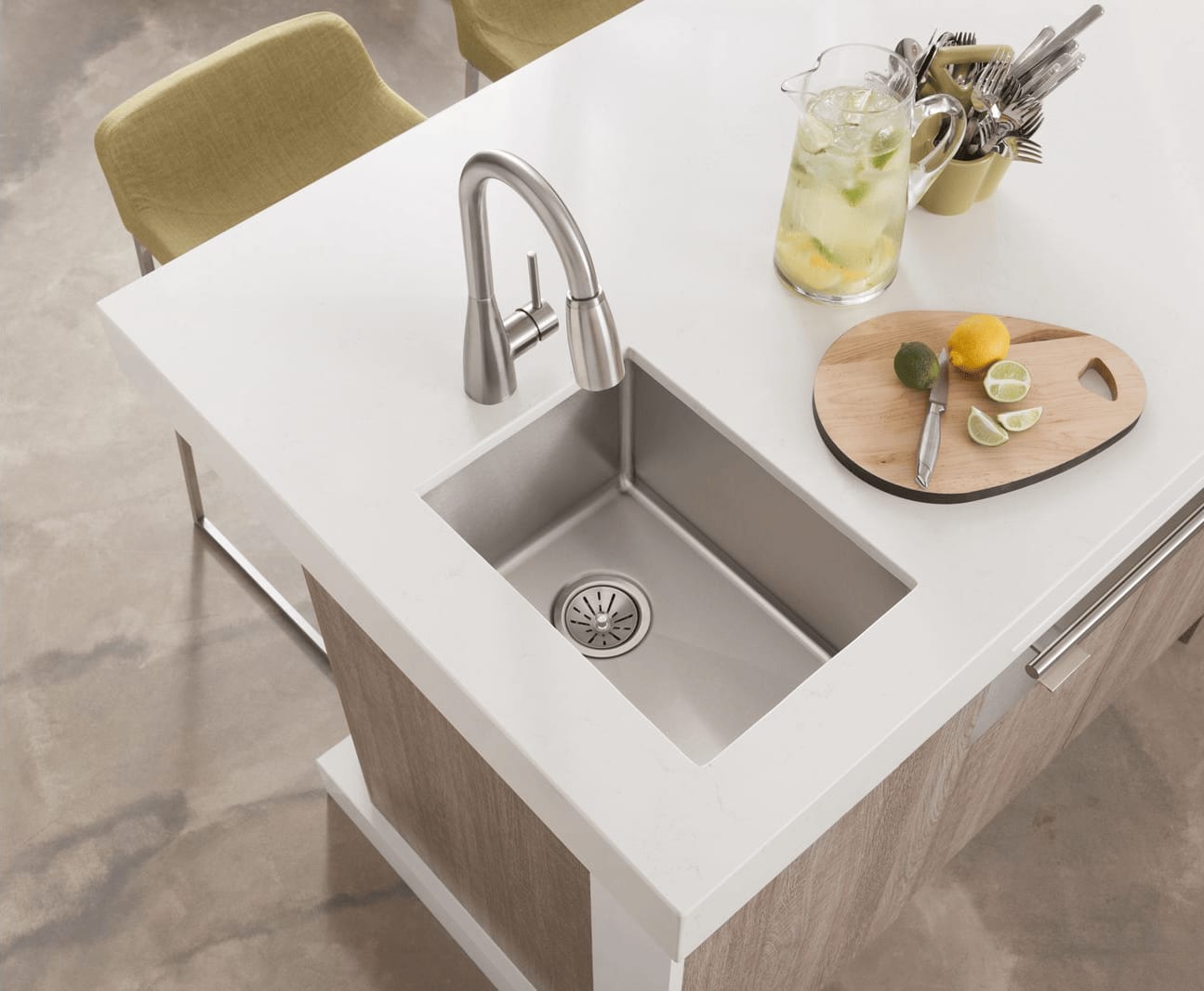
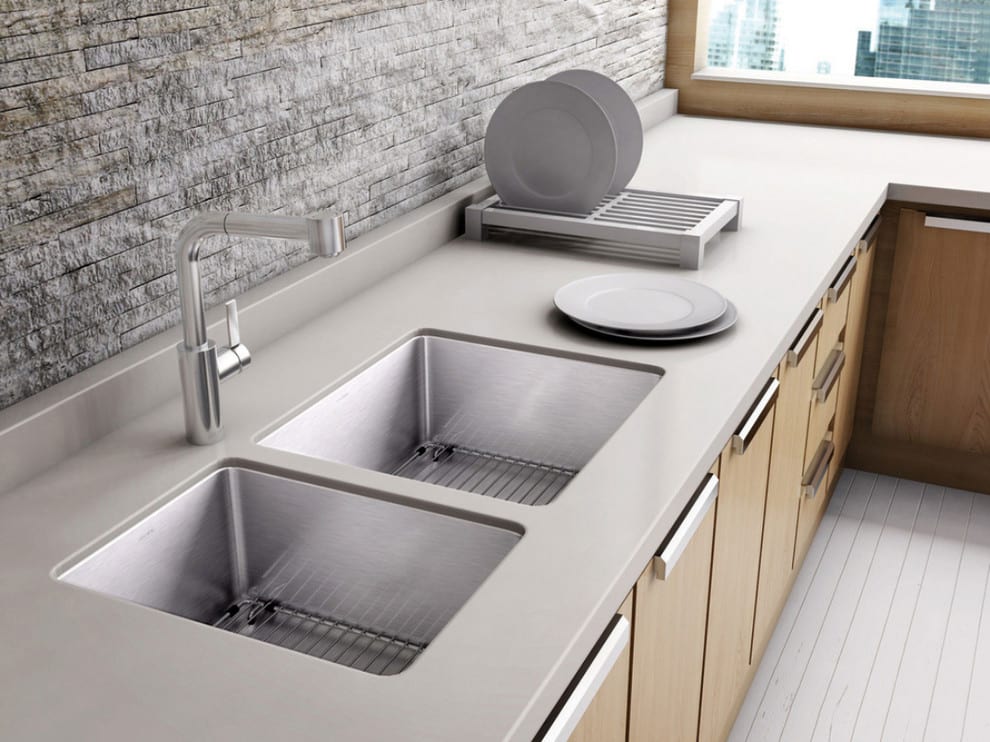
Because stainless steel is so popular, you’re bound to find one that works for your kitchen. If you regularly stack dishes, use large cookware or bakeware, or cook in large quantities, a single bowl stainless steel sink is probably your best option; if you prefer separate bowls for dirty dishes and food prep, try a double bowl stainless steel sink. You may even want a triple bowl sink to suit your needs!
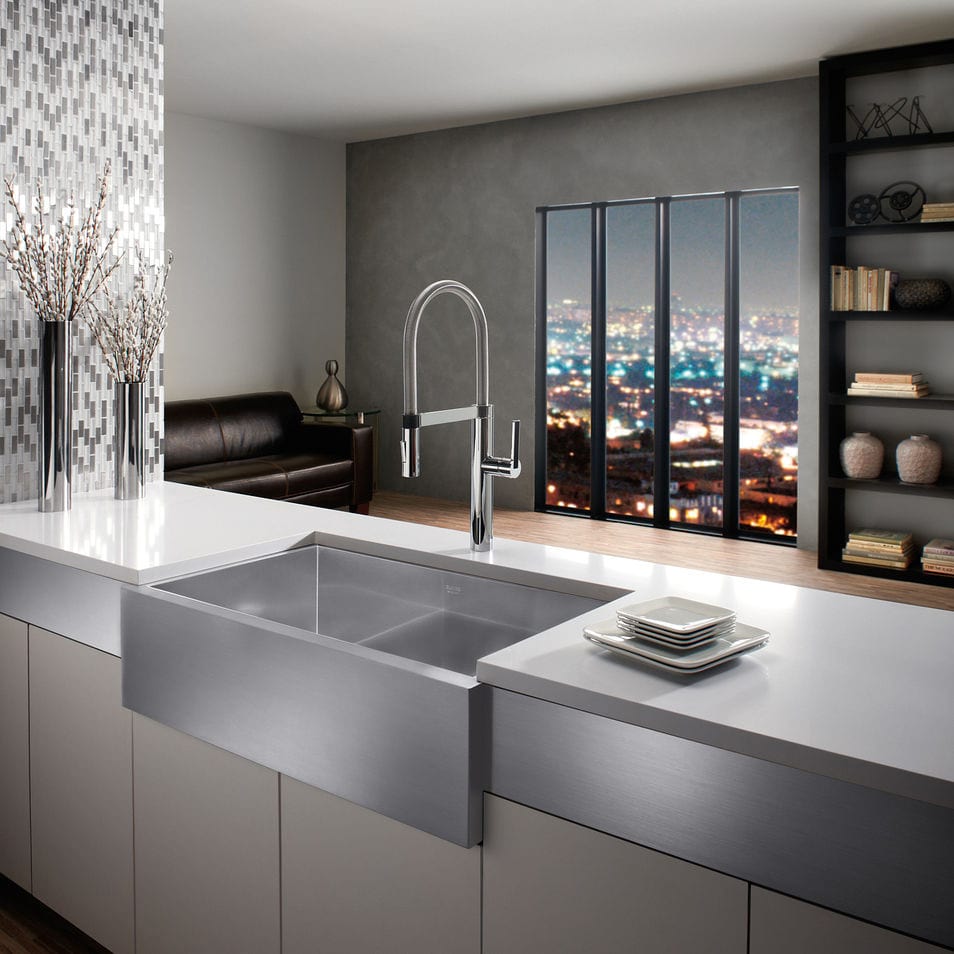
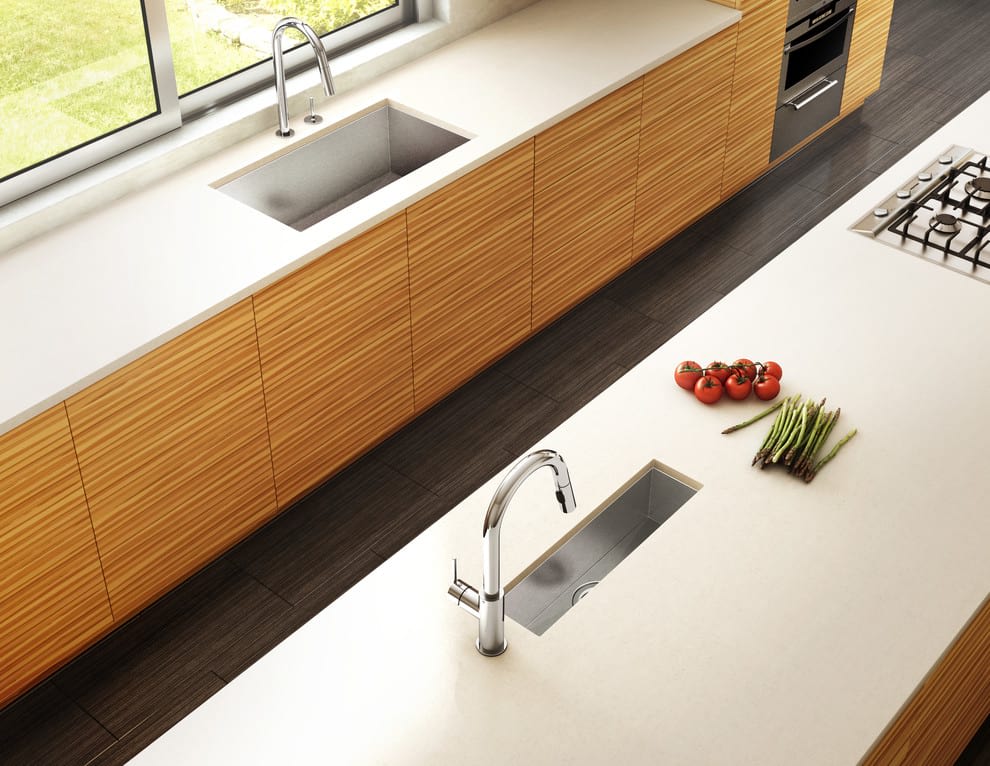
These sinks are incredibly versatile. You may choose an undermount, top mount, or even a farmhouse stainless steel sink (and they are gorgeous!). They’re available in every conceivable shape from round to rectangular, d-bowl to square, and novelty shapes for every kitchen.
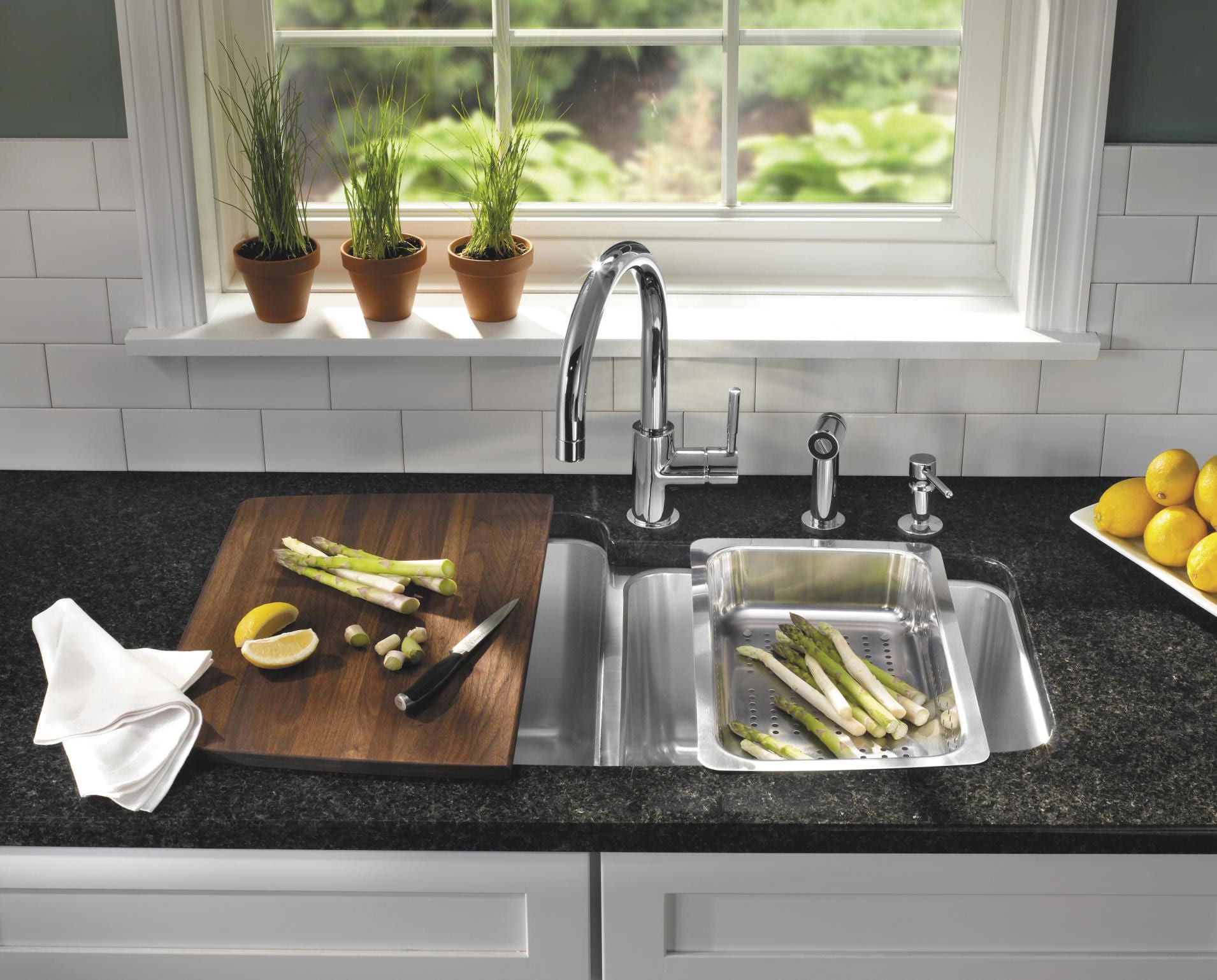
Many stainless steel sinks include features to ease your food prep and cleanup; look for a worktop sink or one with an integrated drainboard for extra efficiency. The options are virtually limitless.
Which finishes are available for stainless steel sinks?
The sink’s finish is largely a matter of preference. The most common choices are:
- Mirror finish: extra shiny without a visible grain, which looks lovely but is the most prone to noticeable scratches and water spots
- Brushed and matte finishes: duller, camouflages scratches
- Satin finish: most popular option, lustrous but not too shiny
- Textured finish: hides damage, but may be difficult to clean
Because stainless steel naturally produces a tinny sound and amplifies the sound of clattering dishes and silverware, many high-quality sinks are equipped with sound-deadening pads on the underside of the sink.
How much does a stainless steel sink cost?
Stainless steel is one of the most affordable sink materials. You can find quality stainless steel sinks for under $100; depending on size, brand, and other factors, a stainless steel sink can cost several thousand dollars, but most are reasonably priced with numerous options for every budget.
How to care for a stainless steel sink
While stainless steel sink scratches are not uncommon, scuff marks are typically easy to soften and eventually become part of the sink’s unique pattern and grain.
Stainless steel sinks are generally easiest to maintain, requiring no special treatment or cleaners. However, the life of your stainless steel sink can be increased with proper (easy!) care and a bit of attention to detail; maintain it properly to extend its life expectancy and keep it looking new and shiny for as long as possible.
To keep your stainless steel sink in top condition, follow these rules:
Do
- Wipe the sink with a soft cloth after each use (ideally) to avoid water spots
- Rinse the sink after use to prevent food particles from sticking
- Clean the sink thoroughly at least once a week with soap or a stainless steel sink cleaner (refer to our list of good products below) and a non-abrasive sponge or rag; rinse thoroughly to remove all cleaning residue
- Always clean with the grain, not against it
- Use a stainless steel sink grid (not a rubber mat, which may cause staining) to protect the sink bottom from scratches and dings; many sinks have custom-sized grids to fit precisely
Don’t
- Allow metal cans or food particles to remain in prolonged contact with sink surface
- Use knives to cut directly on stainless surface
- Leave cleaning products or wet sponges to dry on the sink; many may affect the finish
- Clean with abrasive materials like steel wool or wire brushes – only non-scratch cleaning pads
- Use bleach-based cleaners, which may corrode the steel
- Store open containers of cleaners or chemicals such as acids, bleach, sodium chloride, lye, toilet bowl cleaner, drain cleaner, or hard water stain removal products under your sink
Recommended cleaning products
- Fantastik Antibacterial Heavy Duty
- Formula 409 Antibacterial All Purpose
- Windex Original
- Bar Keeper’s Friend Soft Cleanser
Natural cleaning solutions:
- Baking soda scrub followed by white vinegar rinse
- Club soda for shine
- Thin layer of olive oil for shine
- Orange or lemon peel (rub clean surface with the peel for deodorizing and shine)
Now that you’re armed with this critical information, go out there and find your sink. You’ll have the peace of mind knowing that you made an informed decision.