Washlet or Bidet? How They Work and Which One is For You
Shop Washlets and Bidets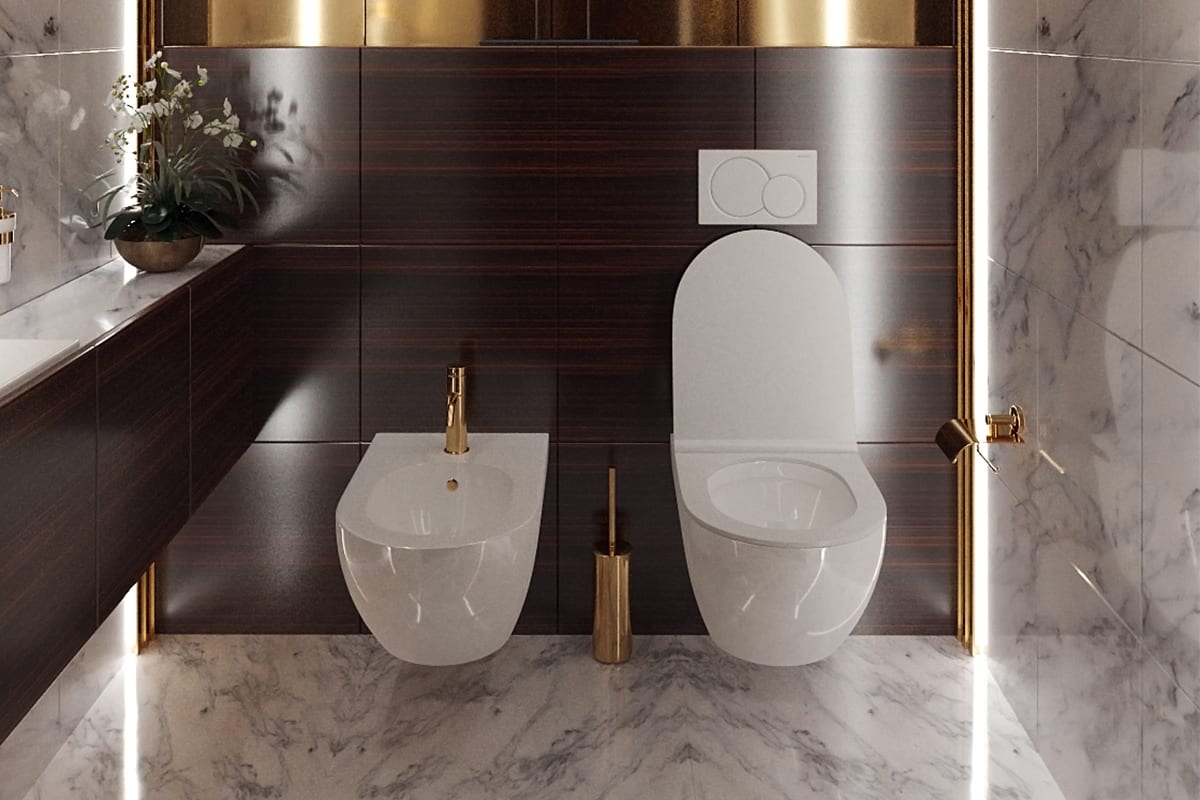
Ditch the toilet paper and prepare for a new level of clean. Washlets and bidets will keep you extra fresh… but what’s the difference between them?
There are the standard bathroom fixtures that we all know and love – sink, tub, shower, toilet – and then there are the more obscure fixtures that tend to raise a lot of questions. Case in point: the washlet and the bidet.
These two lesser-known toilet-related fixtures garner a lot of confusion. How is a bidet used? (An especially common question among those visiting Europe for the first time and unsure about why there are two toilets.) What is a washlet? What is a bidet toilet and how does it work? Do I need a bidet? (And if I do, how expensive is a bidet?) What’s the difference between a bidet and a washlet?
So many questions, and we have all the answers.
Why would I need a washlet or bidet?
A washlet or bidet is a cross between a shower and a toilet; it uses water to clean the user’s nether regions after using the toilet. Bidets are separate fixtures typically installed next to the toilet, with a standard faucet; washlets are seats that fit on top of a toilet bowl and often have several cleaning options and other features.
Washlets and bidets have gained popularity for several reasons.
- They’re eco-friendly; no toilet paper (and let’s face it – do you clean any other part of your body with dry paper?).
- They help keep your toilet in top working order, thanks to the no-toilet-paper factor (no paper = no clogs!).
- They provide an extra level of cleanliness and freshness (who wouldn’t want a mini-shower to freshen up every time they use the bathroom?).
- They offer a bit of luxury at a low price (especially multi-functional washlets).
Washlets
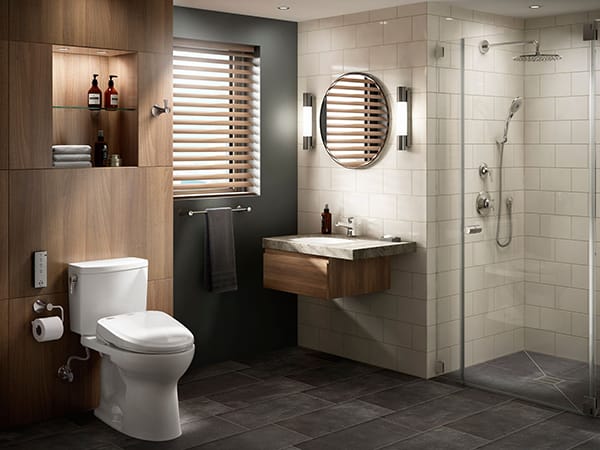
The term “washlet” was actually coined (and trademarked!) by Toto, the toilet manufacturer who remains the top seller of the washlet toilet seat. Also known as a shower toilet seat, bidet toilet, bidet toilet seat, or bidet seat, a washlet is basically a toilet seat with integrated bidet functions and (typically) additional features.
Washlet pros
- It’s a space saver; no need for more than one fixture, and the plumbing that comes along with a separate bidet. A washlet seat fits right on top of your existing toilet; check your washlet for compatibility as some are universally compatible while others may only be used with same-brand toilets.
- Many washlets include additional features for added comfort. Some models have a warm air dryer, heated seat, deodorizer, customizable front/back wash settings, auto open and close, self-cleaning system, and/or auto flush. You may even find a washlet with lights or the ability to set user preferences!
- It looks like a regular toilet seat; a washlet has a lid, unlike an open bidet that often resembles a urinal. Some toilets have a built-in washlet seat, like the Toto Neorest and Duravit SensoWash toilets.
- It’s easy to install; the washlet simply fits on top of your existing toilet (replacing the seat) and connects to the water supply with a single hose. Be sure that the toilet is within reach of an electrical outlet as washlets must be plugged in for full function.
- Many users find the seat to be more comfortable than the narrower bidet seat.
Washlet cons
- A washlet can be more expensive than a bidet, not including the extra plumbing costs. There are, however, more affordable options.
- Some users are averse to the look of a washlet; many have exposed connections that can detract from its appearance (some, like Duravit’s SensoWash C toilets, feature concealed connections).
Bidets
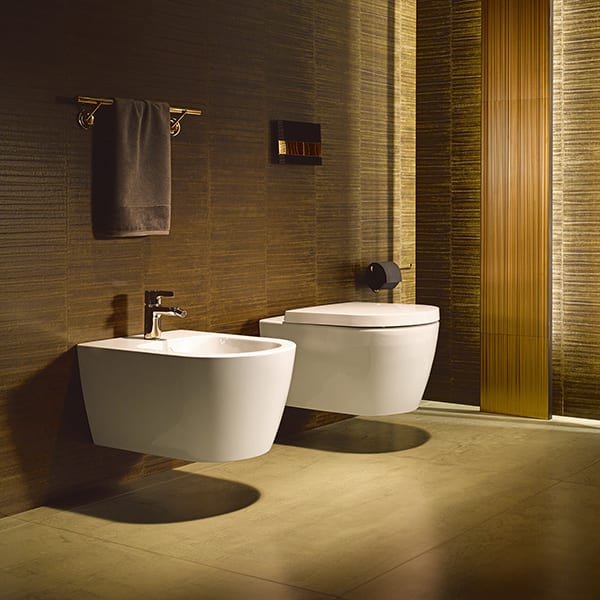
A bidet is primarily a European fixture that never garnered much popularity in the USA. It’s a freestanding toilet-like apparatus with a fixed faucet.
Bidet pros
- Some find bidets more comfortable to sit on than smaller washlets; this is a matter of personal preference. Try physically sitting on different models before making your choice.
- The faucet allows users to manually adjust water pressure instead of being confined to preset settings.
- A bidet will have a hot water line running to it for precise and consistent water temperature selection. Washlets rely on an integrated instant heater function that doesn’t always last as long and may result in temperature fluctuations.
- Due to their limited functions (compared to washlets), a bidet may cost less than a washlet; prices range from $170 to over $2,000 (remember to factor in installation costs).
Bidet cons
- Bidets are not commonly used in the USA; consider resale value on your home.
- A bidet will require more floor (or wall, depending on mount) space and extra plumbing costs.
- One must get up from the toilet to use a bidet; a washlet conveniently allows the user to stay in place.
- Water spray and reach is limited to the area of the stationary faucet.
What’s the best brand of washlet or bidet?
You can’t go wrong with an original Toto washlet – the washlet that started it all – though you’ll find excellent cleaning capabilities and luxurious features in washlets by other manufacturers as well. We recommend Brondell washlet seats and Duravit (for both combination toilet/washlet units as well as separate washlet seats) in addition to Toto.
Duravit and Toto also produce freestanding bidets in various styles; we also recommend bidets by Herbeau, Scarabeo, and Nameeks.