Behind the Walls: How Does a Shower Work?

Valve, rough, diverter, trim… so many details, so little comprehension! We’ll show you what goes on behind your shower walls – and why it’s important to know.
Installing a new shower? You’ve probably put a lot of thought into the externals: the handles, the heads, the tile. But the most important parts of the shower are the ones that you can’t see!
The plumbing may seem like the plumber’s job, but you need to be familiar with the different parts of the shower when choosing your fixtures. This knowledge will help you make the right choices and avoid potential problems (like the extra headache that bloggers Chris and Julia had to endure!).
So, just how does a shower work? Here’s a simplified guide that will help you make sense of those technicalities and make the right choice the first time.
The components
Terms to know
Valve: where the hot and cold pipes meet; controls the temperature and flow
Rough-in: this phrase refers to the “rough,” unfinished stage of plumbing when the system has been installed but not yet connected
Rough: the general term referring to the components found inside the walls (valves, pipes, diverters etc.)
Diverter valve: the valve used in a tub/shower combination or multi-head shower; may divert the water flow from the shower head to the tub spout, handshower, or body spray. The diverter may be found on the tub spout itself or integrated into the trim
Mixing valve: the valve that mixes hot and cold water; a thermostatic mixer will sense the water temperature before sending it to the shower head
Pressure balance valve: a valve that senses the ratio of hot to cold water; controls both temperature and flow volume
Thermostatic valve: a valve that senses the temperature of the water; temperature and volume are controlled separately
To learn more about thermostatic and pressure balance showers, check out this post.
Trim: the external handle(s) that you use to turn the shower on and off; some states allow single-handle trims only, so check your state’s plumbing code or consult with your plumber before buying
Putting it together
So here’s how the shower valve works: you turn the trim, which pulls water from your water source. Cold water goes straight to the cold pipe, while hot water makes a stop in the water heater first. Water from both pipes meets at the shower valve, which mixes it together and sends it to the shower head or tub spout.
Depending on your shower configuration, you will need different types of valves and hardware. The trim must be compatible with the rough, so check brands for compatibility.
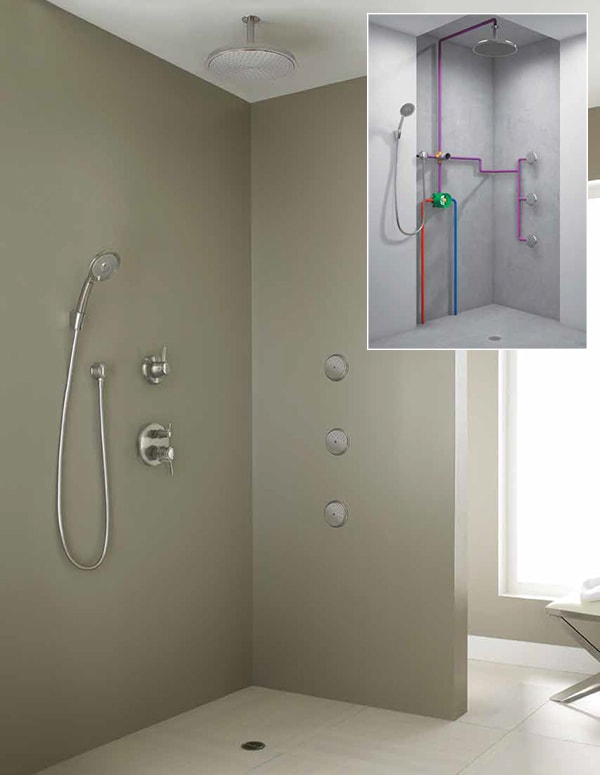
For simplicity’s sake, we’ll use the comprehensive illustrations from Hansgrohe (featuring the Hansgrohe iBox, their all-in-one expandable rough for all Hansgrohe showers) to demonstrate the inner workings of the shower.
Single-function shower
This classic, simple configuration features one wall-mounted shower head and a pressure balance valve. Water flows from the hot and cold pipes into the valve, where temperature is regulated before the water travels through a single pipe to the shower head.

Two-function shower
As showers become more luxurious, two-function showers are becoming increasingly popular. There’s the typical bath and shower combo, but also showers with multiple heads such as a rain head and handheld or overhead and body sprays.
In many two-function showers, the water can only be diverted to one faucet or function at a time, though it is possible to install plumbing that allows two or more heads to run simultaneously. These showers require a diverter to operate the different functions.
That brings up another frequently asked question: how does a shower diverter work? The diverter, as its name suggests, diverts the water to two (or more) bath or shower heads; when the diverter is turned, it stops the water from flowing through the tub faucet and sends it to the shower head instead.

Multi-function shower
If you’d like, you can have more than two functions for a truly indulgent shower experience. These require an additional three-way diverter rough to allow the water to flow to all heads and sprays. Some systems will need more roughs to allow multiple functions to be used simultaneously.
Exposed shower
Many showers proudly wear (most of) their plumbing on the outside, going along with the popular exposed shower trend and allowing users to see how the water comes through the system.
So the next time your plumber hands you what you think is an exorbitant bill, remember the journey that your water makes before it comes through your shower head.