Toilets: Wall Hung vs. Standard
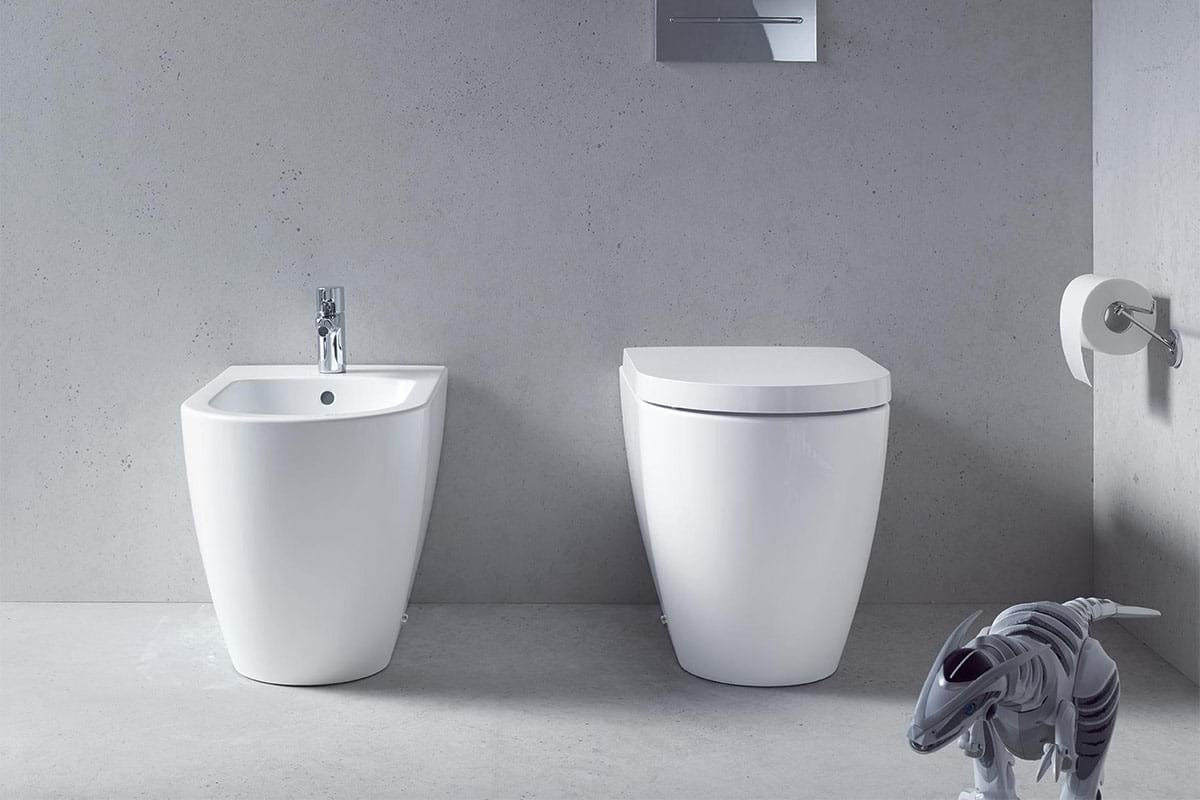
The average person spends a year and a half in the bathroom, so choose your toilet wisely! Start with an important decision: wall hung or standard toilet. Here's what you need to know.
If you’re redecorating a bathroom, the toilet can seem like the easiest fixture to pick. As a result, the toilet is often overlooked – though it’s really the whole point of the bathroom – until it’s time to actually choose the toilet. That’s when you realize just how mistaken you’ve been…
Choosing the right toilet is crucial in any bathroom. Confused about your options? Don’t worry – we at Quality Bath are here to walk you through it.
One of the first and most fundamental questions to answer is: what’s the difference between a wall mounted toilet and a standard toilet?
Toilets are divided into two main categories: wall mounted toilets and floor mounted (standard) toilets. The difference is fairly straightforward: wall hung toilets are mounted on the wall, with the tank hidden inside the wall, and standard toilets stand on the floor. Each has its advantages and disadvantages.
Wall Hung Toilets
What is a wall hung toilet?
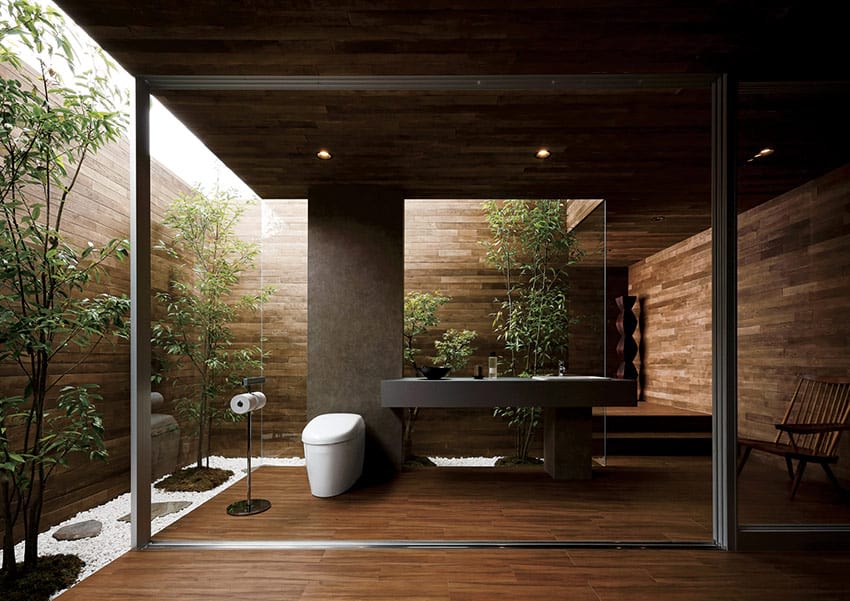
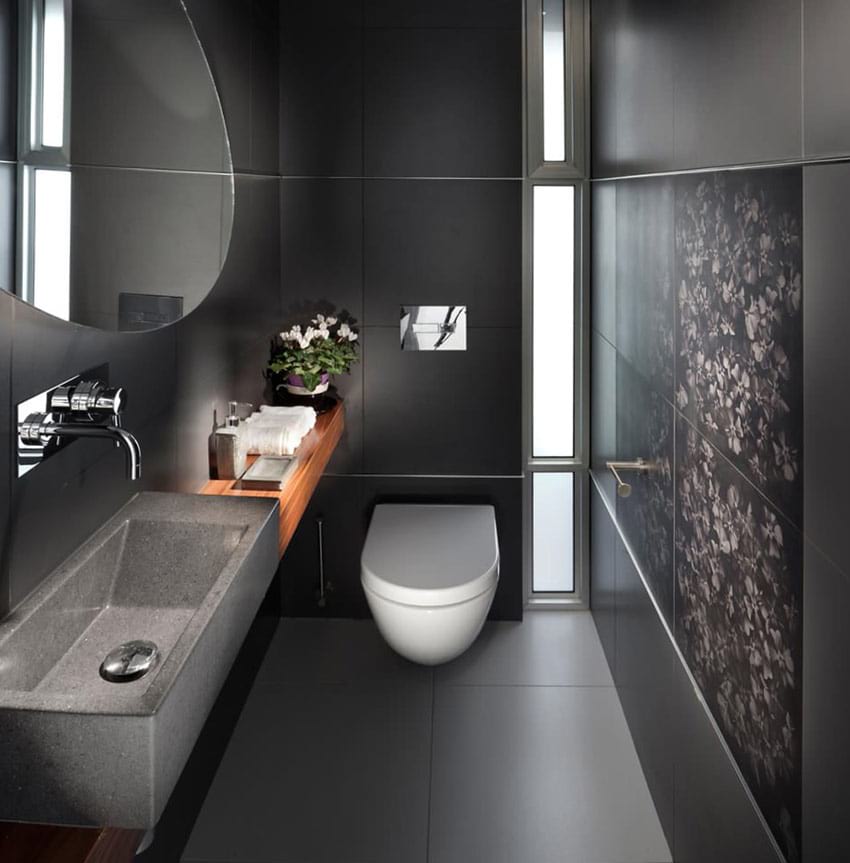
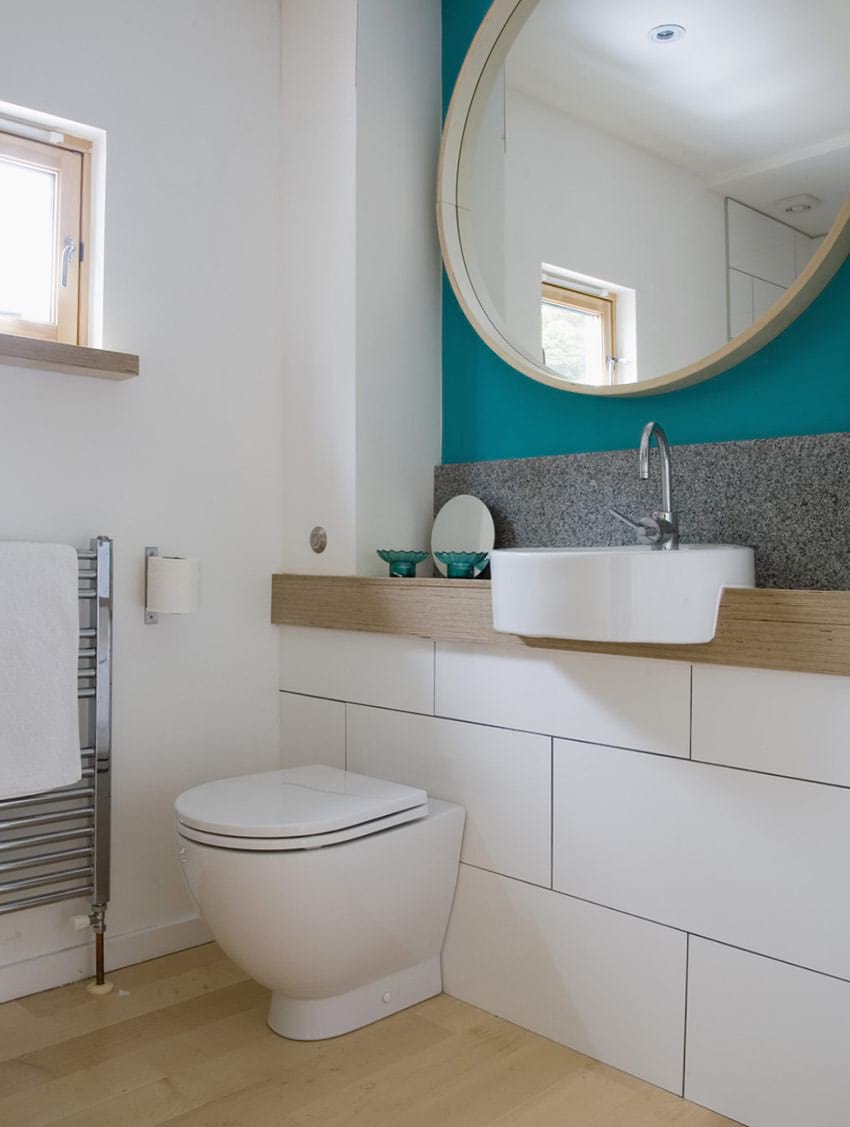
A wall hung toilet is installed with the tank inside of a wall and just the bowl protruding. It’s favored by minimalists and fans of streamlined design due to its sleek appearance and myriad benefits.
Pros of a wall hung toilet:
- Clean, modern, minimalist design
- Stylish appearance
- More floor space
- Illusion of openness and space
- Adjustable height
- Easy to clean
- Accessibility for those with disabilities
Cons of a wall hung toilet:
- More expensive than standard toilets; may require separate purchases for multiple parts
- Complex installation; may not be compatible with installation for in every bathroom
- Requires careful placement (not recommended for exterior walls in cold climates)
- More prone to loosening and leakage
- Requires thicker wall
- Requires removal of wall to install (best to install during a full renovation or new construction)
Do wall hung toilets require more maintenance than standard toilets?
Contrary to popular belief, wall hung toilets are not difficult to maintain. If there is a problem with the toilet, you don’t need to wreck the whole wall to reach the tank; an actuator (the panel that controls the toilet) opens to allow access when the toilet needs a repair. Just be sure that the toilet you’re ordering has an access panel.
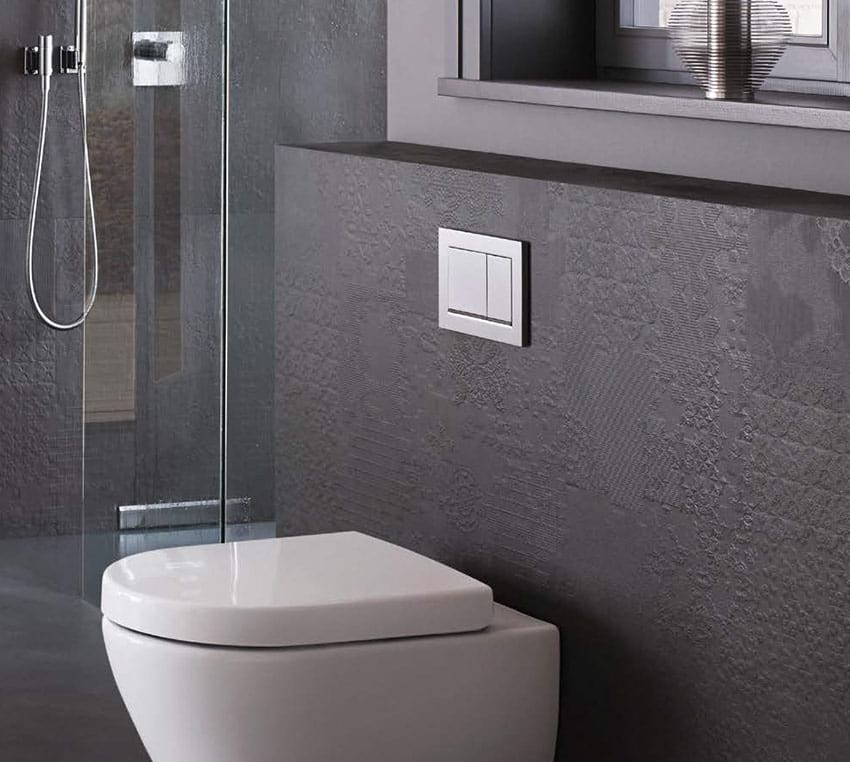
Wall hung toilets are more prone to leakage and loosening over time, especially with subpar installation, and may require tightening or repair. Persistent leaks around toilets, hidden pipe connections, or improperly sealed bathroom fixtures can gradually lead to moisture accumulation behind walls and beneath flooring, creating conditions that may contribute to mold growth, structural deterioration, and long-term water damage if left unaddressed.
These concerns can become even more significant in lower-level or basement bathrooms where excess humidity and drainage challenges already place additional stress on surrounding materials.
Homeowners are often encouraged to monitor for warning signs such as soft flooring, musty odors, peeling paint, or recurring dampness near plumbing fixtures, since early intervention can help prevent more extensive repairs later on.
Professionals familiar with moisture management, including Better Basements and Waterproofing, frequently emphasize the importance of proper drainage systems, waterproof barriers, and routine inspections to help reduce the impact of hidden bathroom leaks and maintain healthier indoor conditions throughout the home.
How should wall hung toilets be cleaned?
Wall hung toilets are easier to clean than standard toilets due to their one-piece design and the fact that they don’t touch the floor. Only the bowl, rim, and lid need to be cleaned; use your preferred toilet cleaner, disinfectant, or other cleaning solution and a toilet brush, and enjoy having fewer toilet parts to clean!
How much does a wall hung toilet cost?
Wall hung toilets are costlier than standard toilets but are available at many price points. Prices may range from under $200 up to over $3,000; be aware of potential hidden costs, as some toilets include just the bowl without a seat, carrier, or tank.

How is a wall hung toilet installed?
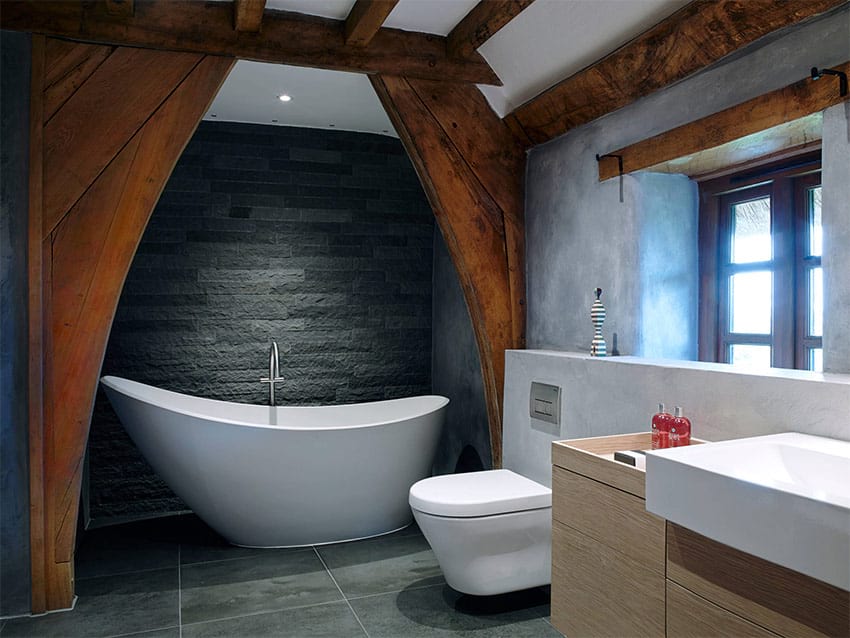
A wall mounted toilet is more complicated to install than a standard toilet but boasts many benefits.
The toilet’s slim tank is mounted on a strong metal frame, which is connected to wall studs. The wall is then constructed around the toilet’s parts, leaving the bowl – which does not touch the floor – protruding from the wall. When installed properly (use a reputable, experienced plumber), these toilets are extremely sturdy and will not start drooping over time.
These toilets may not be suitable for installation in every bathroom or every home, depending on wall thickness and location. A wall hung toilet requires a thicker wall, skilled installation, and partial removal of the wall during installation.
A word of caution: don’t mount a toilet to an exterior wall in cold climates – it can result in frozen pipes and a huge hassle.
Unless one does not like the look of a wall hung toilet, is not willing to undertake a more complex installation, or cannot afford the extra costs, this type of toilet is excellent for virtually any bathroom.
How high should a wall hung toilet be installed?
One major advantage of wall hung toilets is that the seat height is entirely adjustable. Universal toilet height is 14.5” from the floor to the bowl’s rim (not including the seat); “comfort height” toilet bowls are at least 16” off of the floor. If all users are tall or unusually short, a wall hung toilet can mean extra comfort and ease of access. Be sure to account for seat height when measuring.
Standard Toilets
What is a standard toilet?
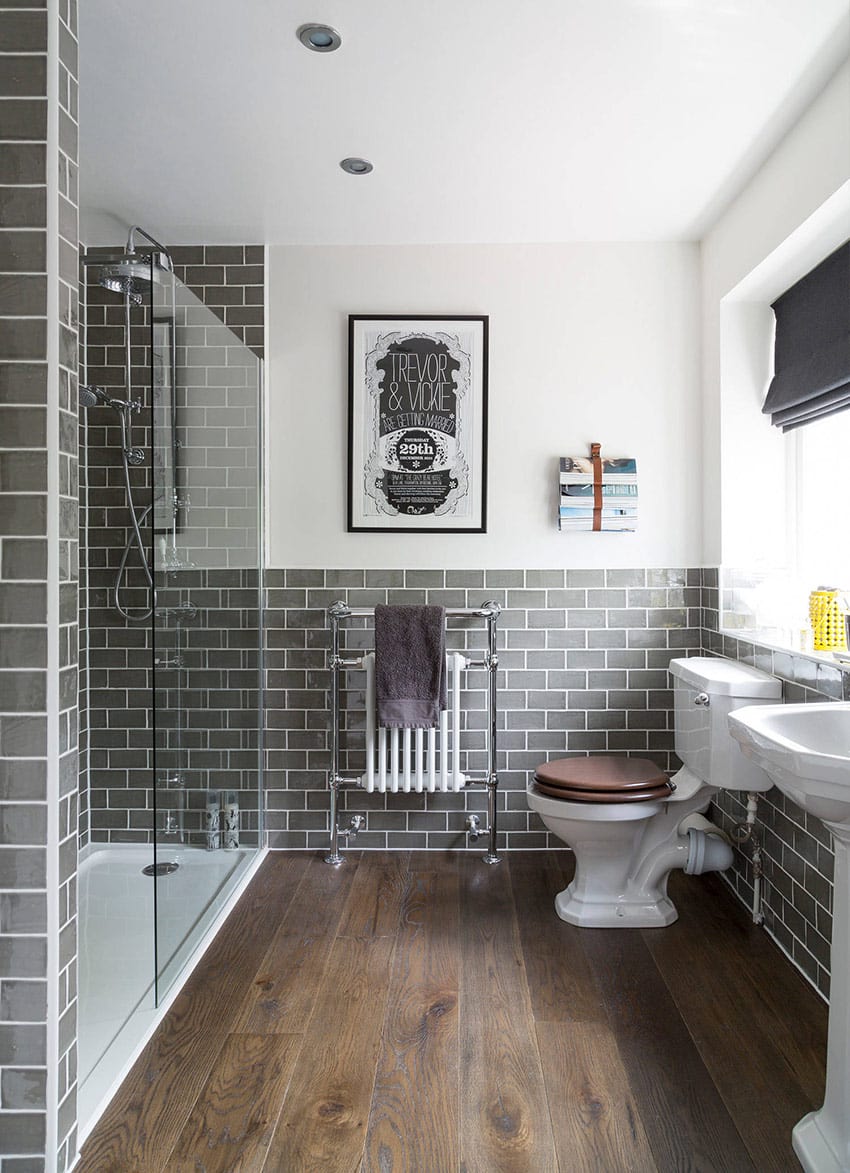
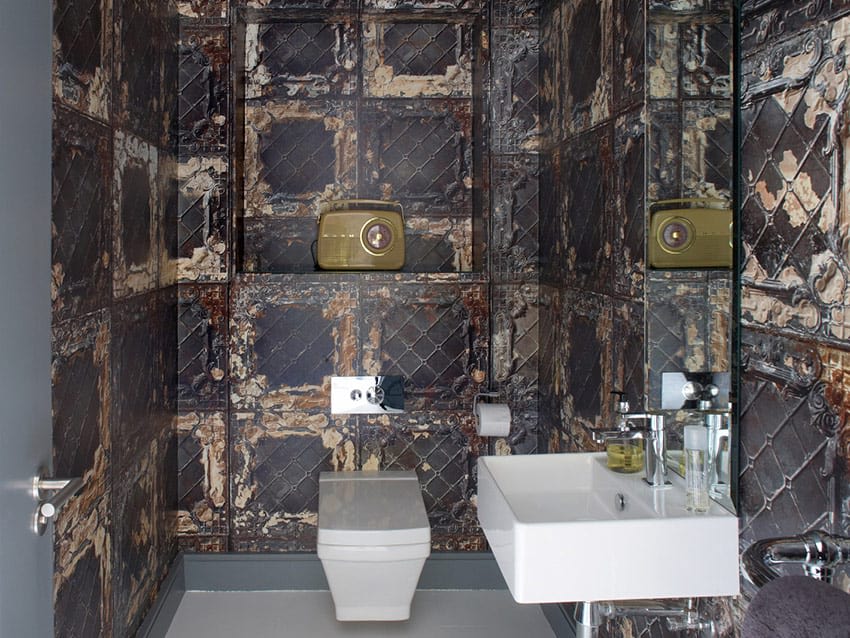
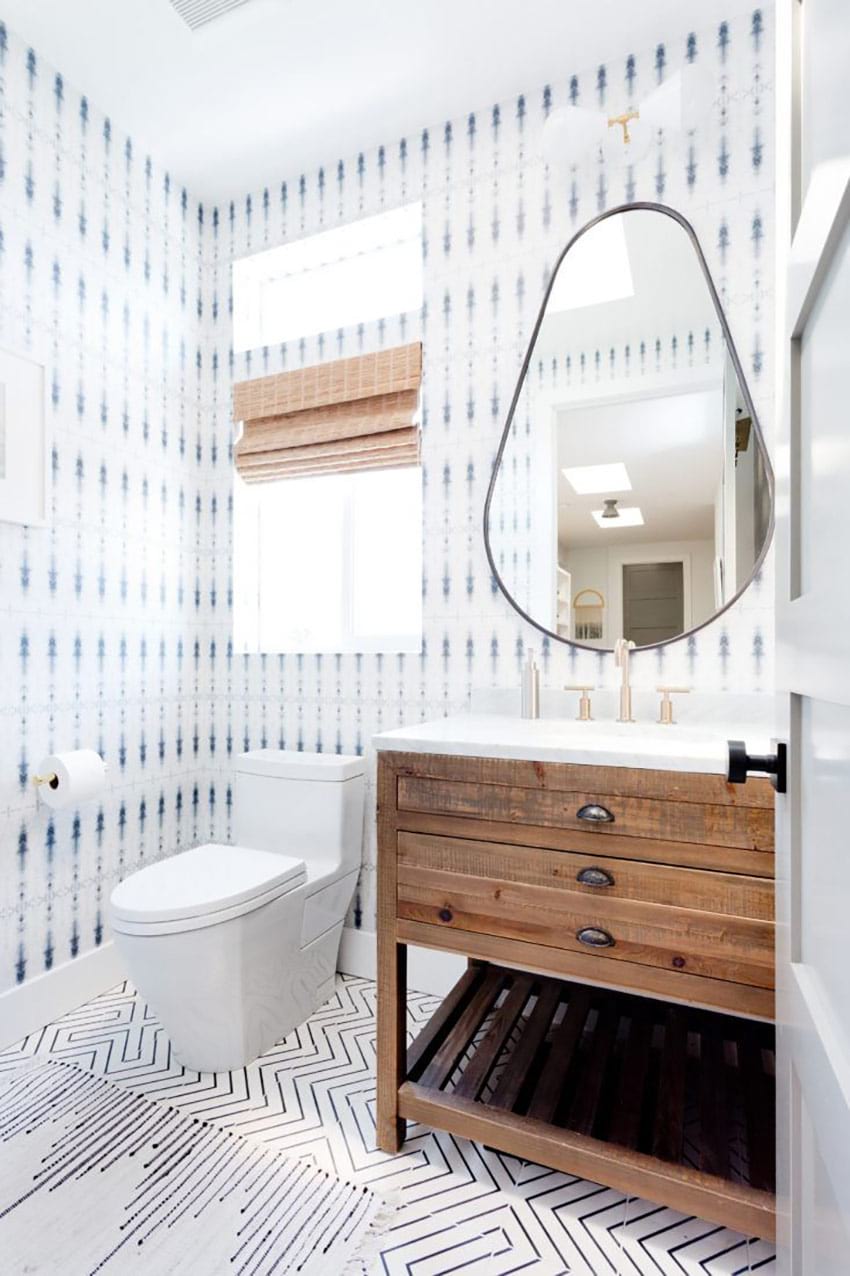
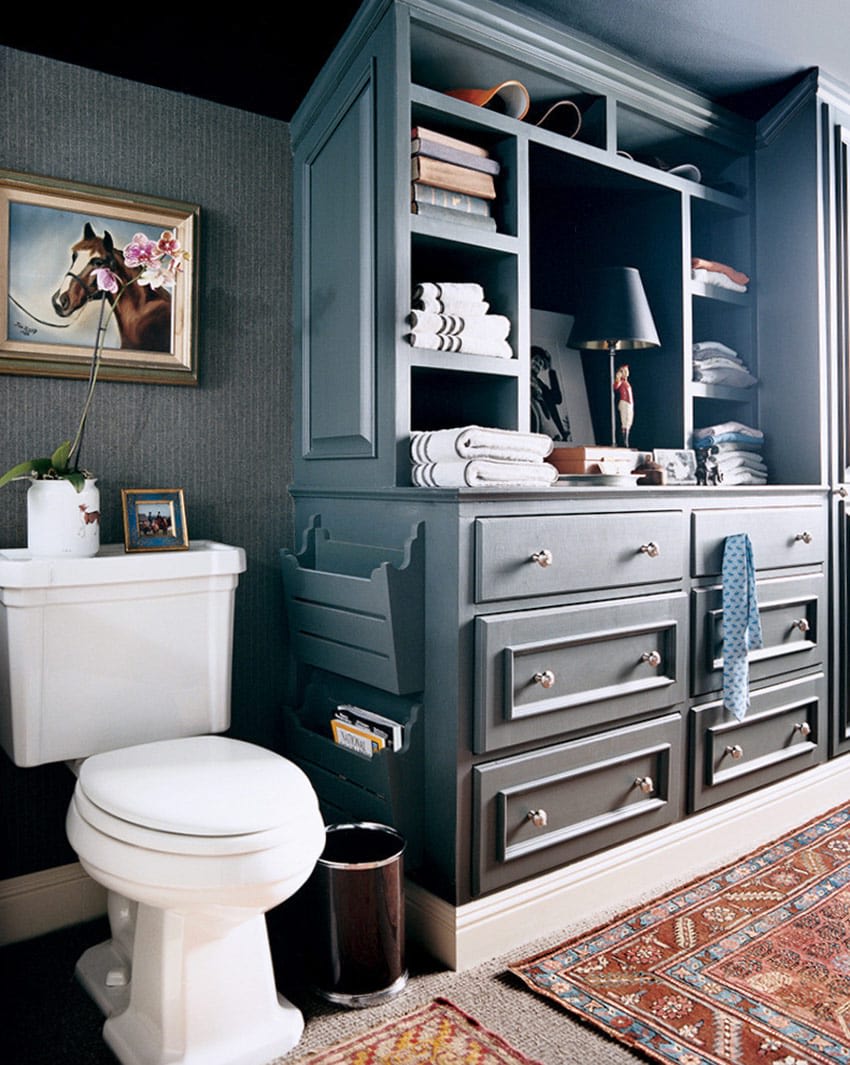
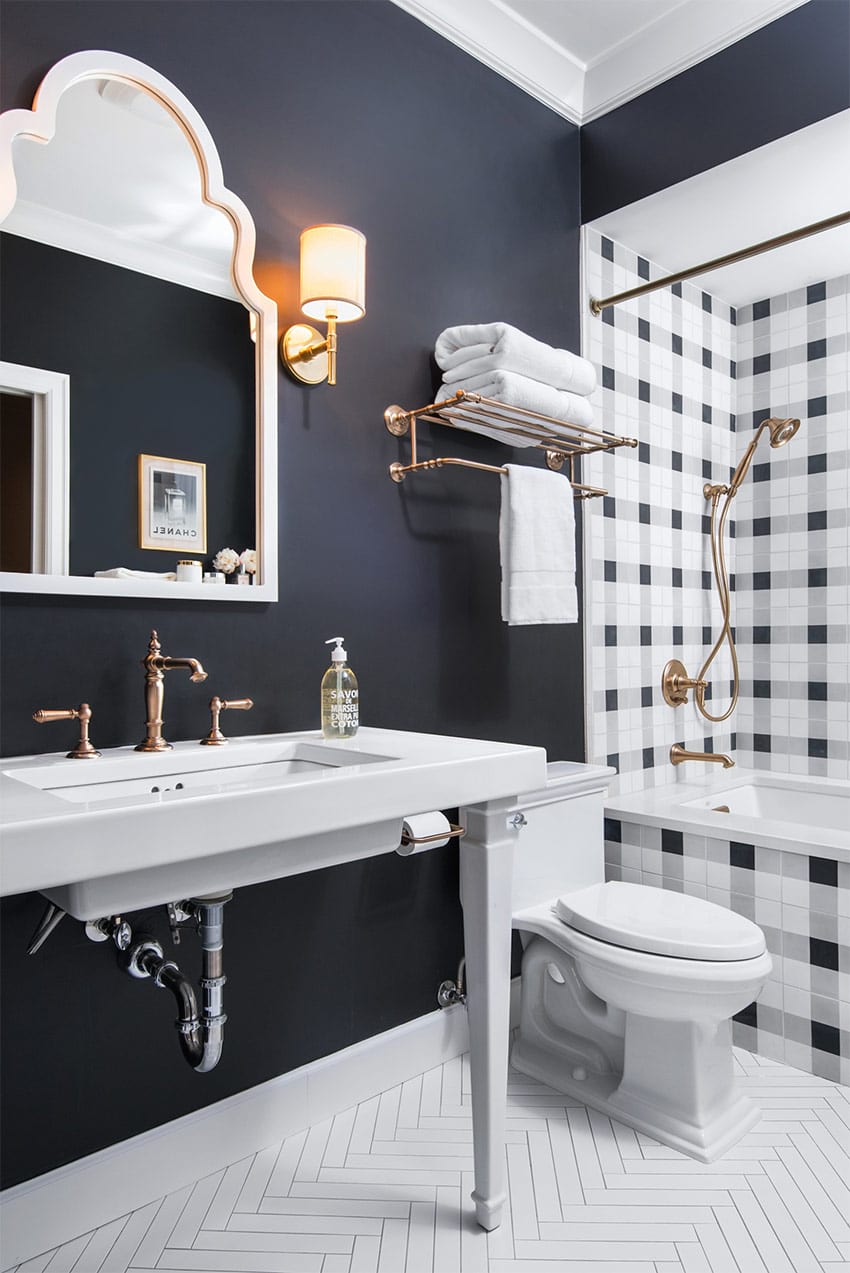
The standard (or floor mounted) toilet is what most of us picture when we think of a toilet. The typical tank-and-bowl combination is an old standby and is available in various shapes, sizes, and configurations.
Floor mounted toilets are generally (but not always) found in more traditional bathrooms. Of course, plenty of modern bathrooms have standard toilets, and it is the more affordable choice.
Toilet type is almost always chosen based on personal preference. In some cases, like wall structure or an inability to install certain types of toilets, one doesn’t have a choice. Within standard toilets, fortunately, there are options galore. One-piece toilets are seamless for easy cleaning and a sleeker appearance. Two-piece toilets, in which the tank and bowl are separate pieces, are more cost-effective than their one-piece counterparts; some may even be installed with in-wall tanks for a more minimalist look without wall hung costs.
What are the pros and cons of standard toilets?
Pros of standard toilets
- Easier installation
- Lower cost
- May be installed in virtually any bathroom
- Variety of sizes, colors, and styles to suit different tastes
- Easier access for repairs
Cons of standard toilets
- May be difficult to clean
- Takes up floor space and visual space
How is a standard toilet installed?
Standard toilets may be mounted to virtually any place in the bathroom with appropriate plumbing; the installation concerns associated with wall hung toilets do not apply to floor mount toilets. Unlike wall mount toilets, they don’t require removal of the wall and can easily replace an existing toilet without significant renovations.
How should a standard toilet be cleaned?
Due to the fact that they have more parts and are attached to the floor, standard toilets are more difficult to clean than wall mount toilets. Scrub the bowl with toilet cleaner and a toilet brush, and remember to clean the top of the tank, the seams where it meets the floor, and behind the toilet with cleaning solution.
How tall is a standard toilet?
Like wall hung toilets, standard universal height is 14.5” from floor to bowl rim and comfort height is 16” or more from floor to rim. It’s important to sit on a toilet in the height you’re considering before buying to ensure that it’s the most comfortable height for you and your family.
How much does a standard toilet cost?
Standard toilets are less expensive than wall hung toilets, though extra optional features will cost more. Prices range from $125 or less to several thousand dollars with luxury features and designs.
Are there any other choices besides wall hung and standard?
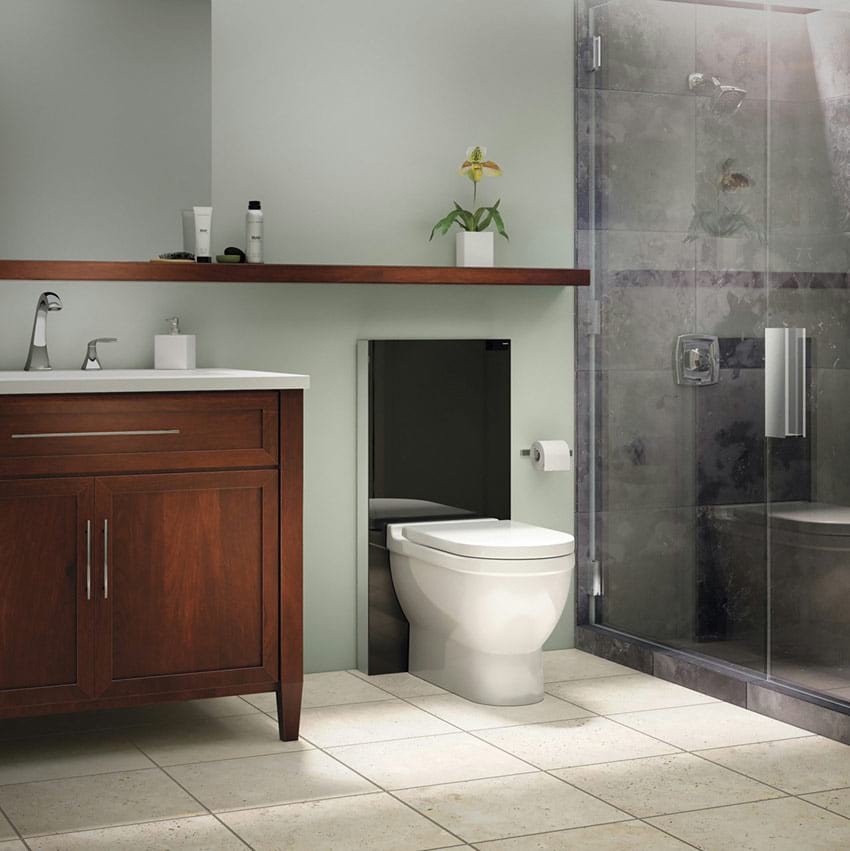
If you love the look of wall-mounted toilets but can’t swing the extra expense or installation, the Geberit Monolith covers the tank with a sleek panel (in a choice of colors) for a smooth, sleek look regardless of toilet type and brand.
What is a tankless toilet?
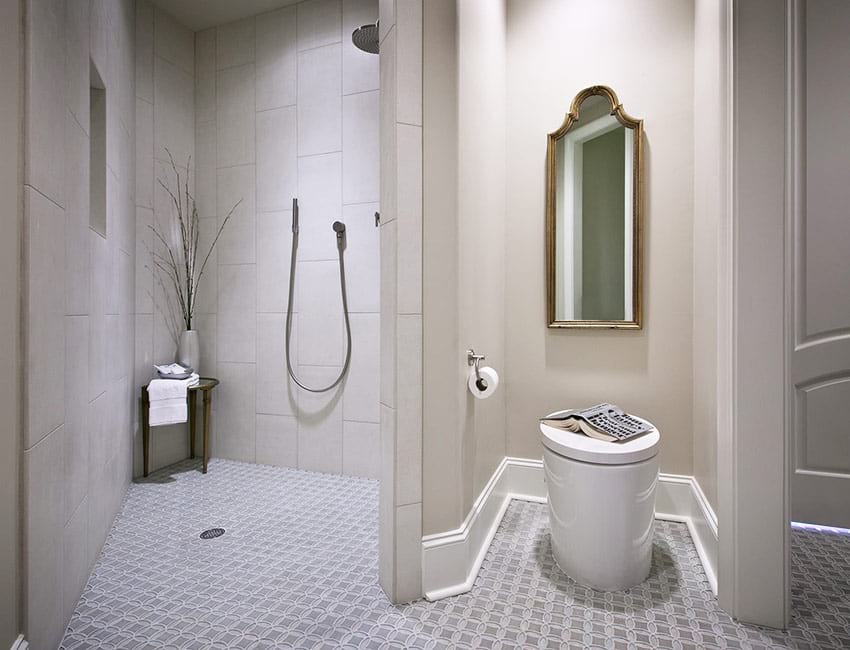
Instead of the standard tank-and-bowl design, tankless toilets use higher water pressure to flush waste without the need for extra stored water from a tank; they’re powered solely by the force of the water entering from the supply line when flushed. Though tankless toilets are generally found in industrial settings (so they may scream “rest stop toilet!” at first glance), they are now able to be used in private homes (though are infrequently used residentially).
Other Toilets
What is an upflush toilet?
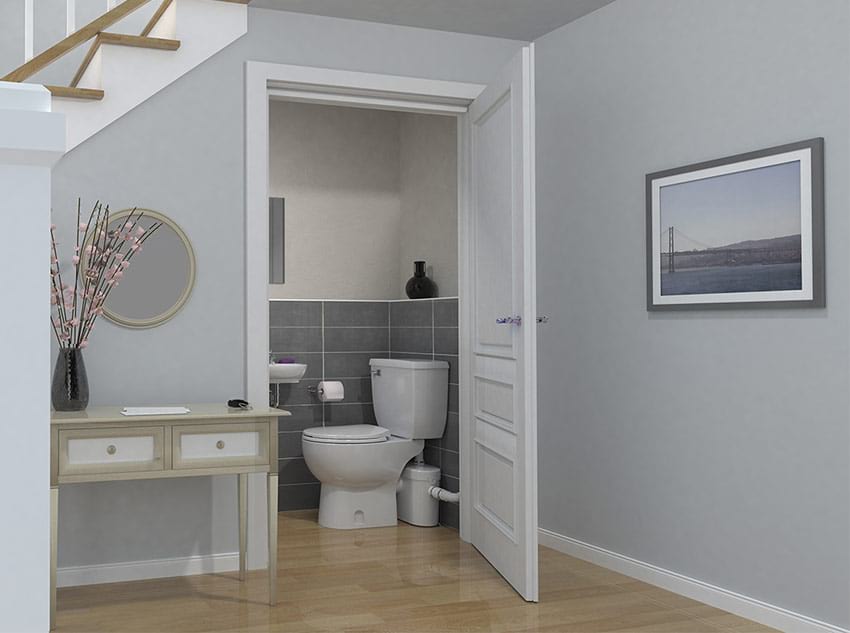
If you’d like to install a toilet in a complicated location such as below a sewer line, an upflush toilet uses a macerator to pulverize waste and pump it through the system. To learn more about upflush toilets such as the Saniflo system, read our detailed Saniflo upflush toilet buying guide.
What is a bidet?
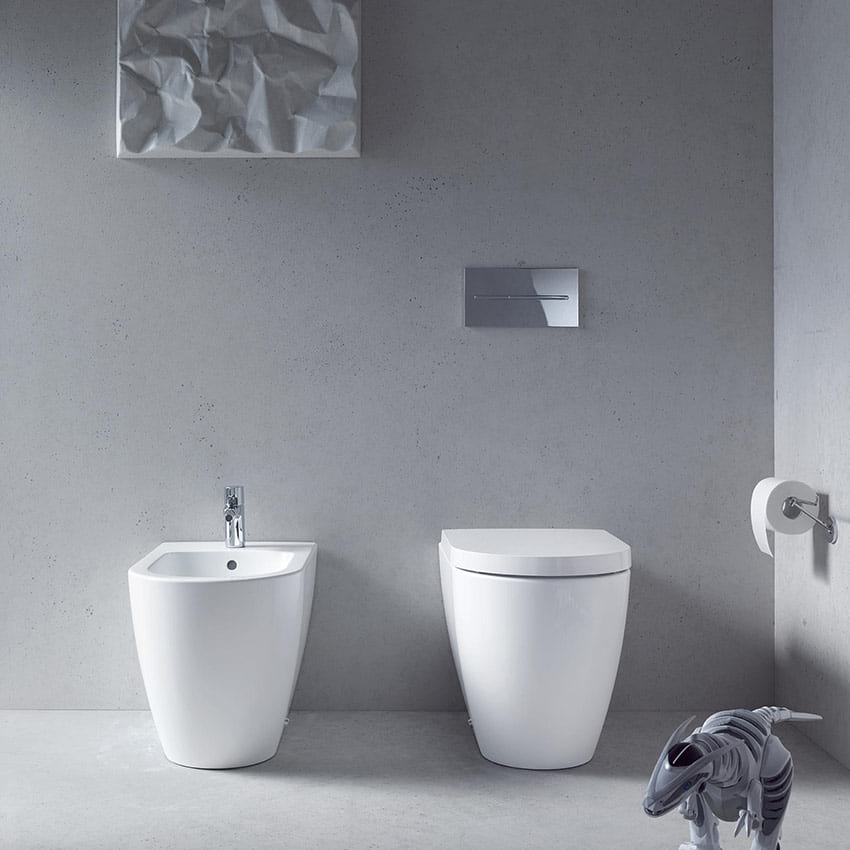
Bidets are not frequently found in the United States, but they’re a popular fixture in Europe. A bidet looks like another toilet found alongside the regular toilet, but without a seat and with a faucet; it’s used to thoroughly clean oneself after using the toilet. In the US, washlets are a far more popular option.
What is a washlet?
A washlet, also known as a bidet seat, offers the functions of a bidet (and then some, like air dryers and heaters) built into the toilet seat itself. The seat can be purchased separately, but some toilets, like the Duravit SensoWash line (available in wall hung and standard), includes a bidet seat for added luxury and convenience.

What are additional toilet features and options?
One feature that we recommend is the soft-close lid, which closes slowly and gently when pushed rather than slamming shut with a bang (and potentially bruising fingers). Depending on your water usage and “greenness,” you may want to choose a low-flow or high-efficiency toilet for additional eco-friendliness.
Most toilets are available with color options, seat options (round or elongated, try it out to see which you prefer), height options, and flush lever options; some luxury toilets feature heated seats, foot warmers, automatic lid openers, and even music connectivity.
What are the best toilet brands?
The quality of your toilet is important; a low-quality toilet will often end up costing you more in repairs or replacements over its lifetime. We proudly stock excellent toilets at Quality Bath, most notably Toto, a leading toilet brand (and for good reason); Duravit, known for their sleek, versatile designs; Icera, with low prices, low noise levels, and high quality; and St. Thomas, offering affordable and attractive options, among others.