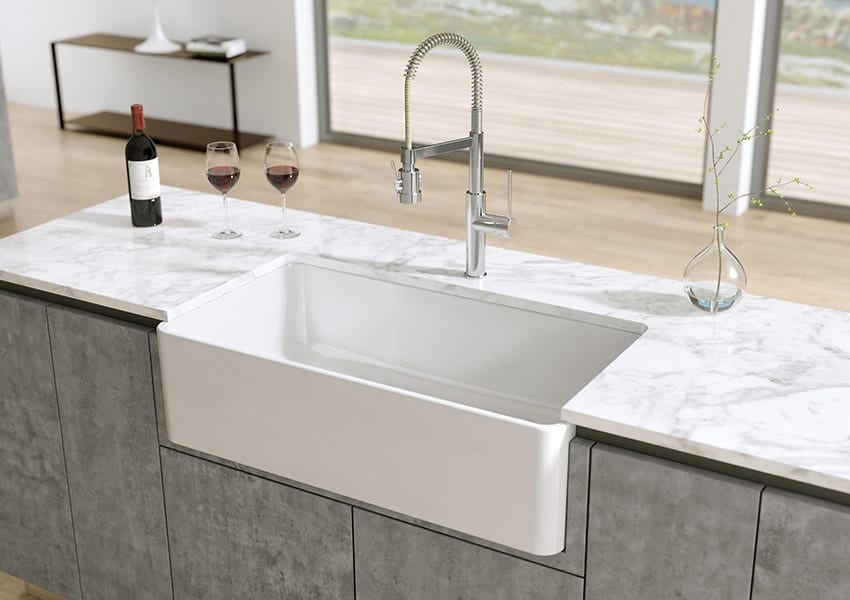
Fireclay Sinks: Everything You Need to Know
Shop Fireclay Sinks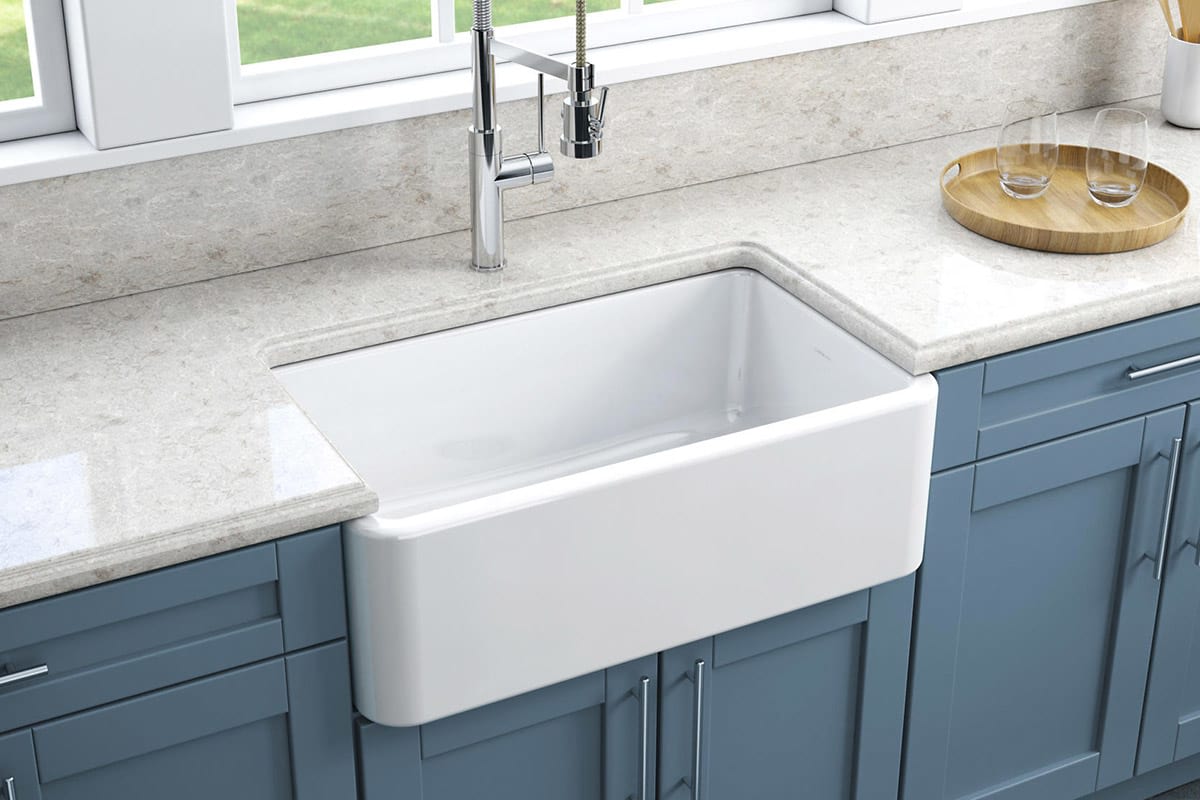
Looking for the sink that does it all? Fireclay is that super sink - super-stylish, super-versatile, super-durable, and downright gorgeous. Read all about it!
If you’re renovating your kitchen, chances are you’ve heard a lot about fireclay sinks. Fireclay is currently one of the “hot” materials for kitchen sinks, especially stylish farmhouse sinks. But what’s the big deal about fireclay? Where does it come from? Why is it suddenly so popular? What sets it apart from all other sink materials (porcelain, ceramic, stainless steel)?
Well, never fear, readers – we have the answers to all of your questions! Read on for a comprehensive report all about fireclay before deciding on your next kitchen sink.
What is a fireclay kitchen sink?
Fireclay is a highly durable material. It’s a special clay glazed and fired at immensely hot temperatures to produce a long-wearing, heavy-duty product.
Besides its practical benefits, fireclay sinks are not only trendy, they are attractive, classic and bound to remain in style (your kitchen will not scream “2017!” by virtue of its sink material). These sinks are not just for farmhouses and charming cottages anymore – they can serve as the focal point (and conversation piece) in your kitchen!
What is a farmhouse sink?
… and why are farmhouse sinks traditionally made of fireclay?
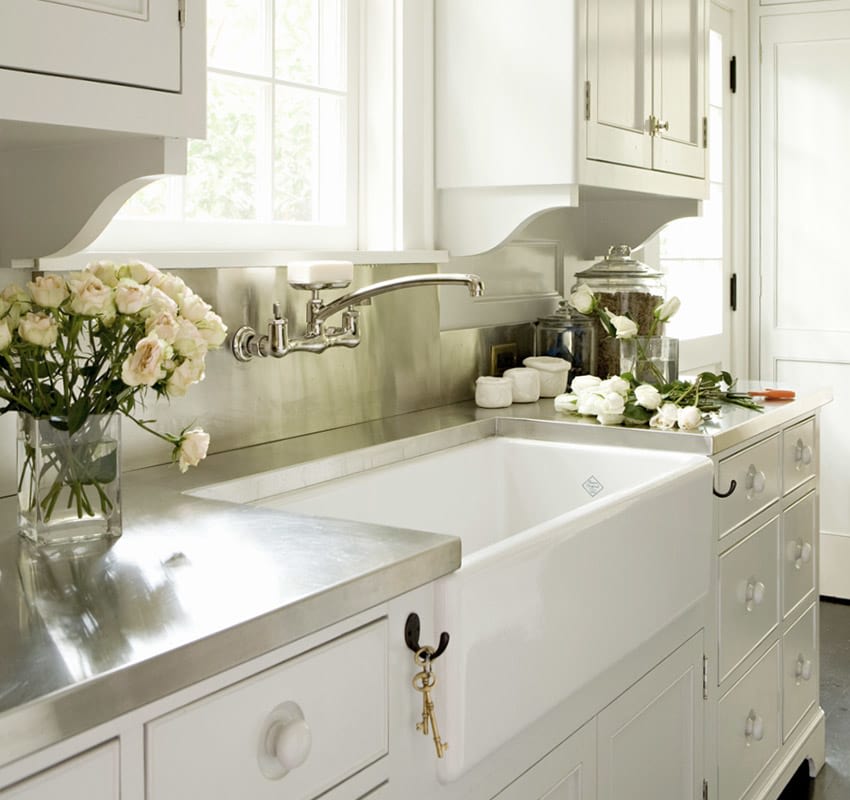
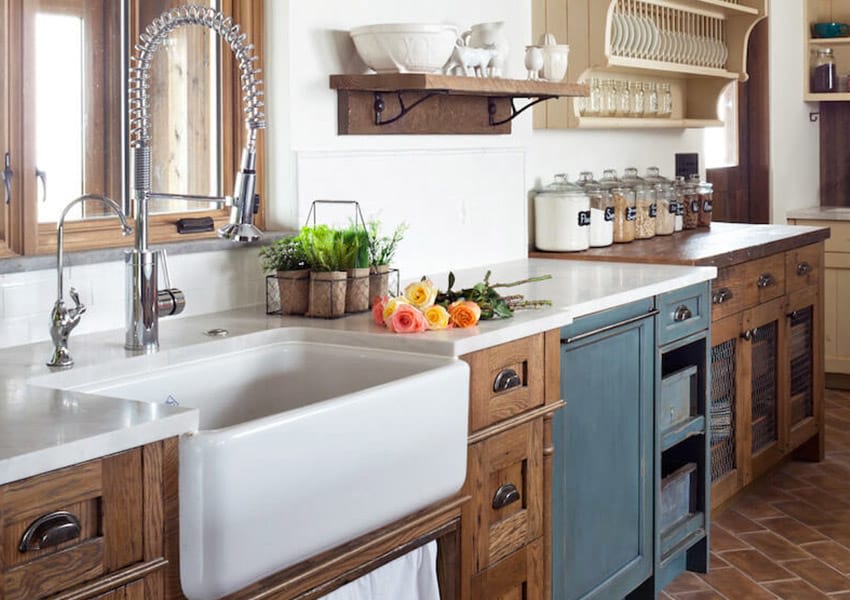
A farmhouse sink (also known as an apron-front sink) is a large, deep sink designed for heavy use. It’s attached to the counter on three sides (overmount or undermount) and features a finished front “apron” for easy reach and effortless style.
Interestingly enough, fireclay is not a new innovation. Over 200 years ago, fireclay sinks were all the rage in London, mostly used in industrial settings and – you guessed it! – actual farmhouses. Renowned for its resilience and practicality, fireclay was considered the best choice for rigorous use. Deep, sensible fireclay farmhouse sinks were used in high-traffic kitchens long ago.
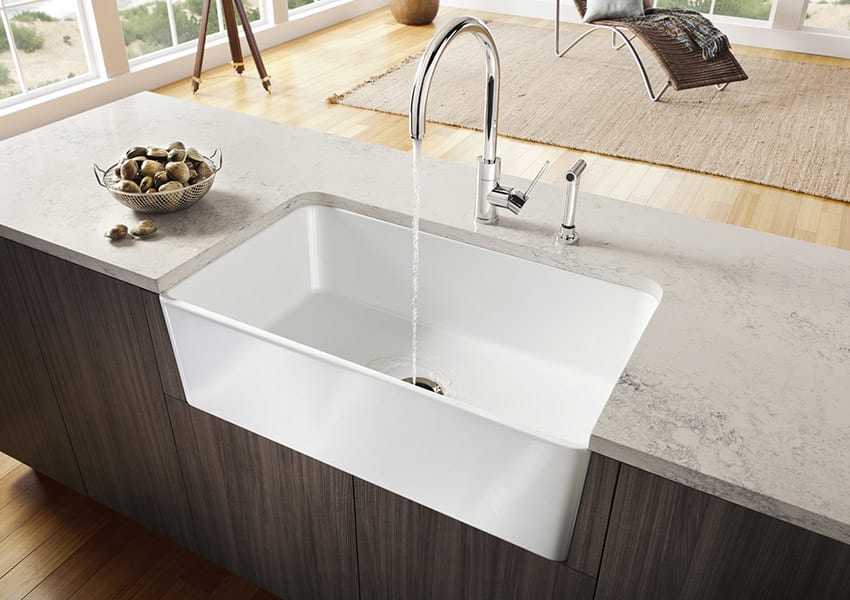
What is a fireclay sink made of?
(This question’s equally popular cousin: is fireclay the same as porcelain, just marketed under a fancy name?)
Every fireclay sink is meticulously handmade from a special white clay found only in certain regions of the world (including Italy, Israel, and Limoges, France). The clay is carefully mixed with water, poured into molds, and dried in humidity-controlled rooms. It is then hand-glazed and fired at over 2100° Fahrenheit, the temperature of liquid volcanic magma, while being monitored. At this intense temperature, the clay and glaze fuse together and create an entirely new material, one that is nonporous, strong, dense, and the most heat- and damage-resistant sink material available.
Porcelain may look similar to fireclay (and almost always comes at a lower price), but it’s less durable as the simpler clay is heated at a lower temperature during the manufacturing process; it’s more prone to chips, scratches, and discoloration than fireclay. One benefit of porcelain over fireclay: it’s available in colors other than white and off-white.
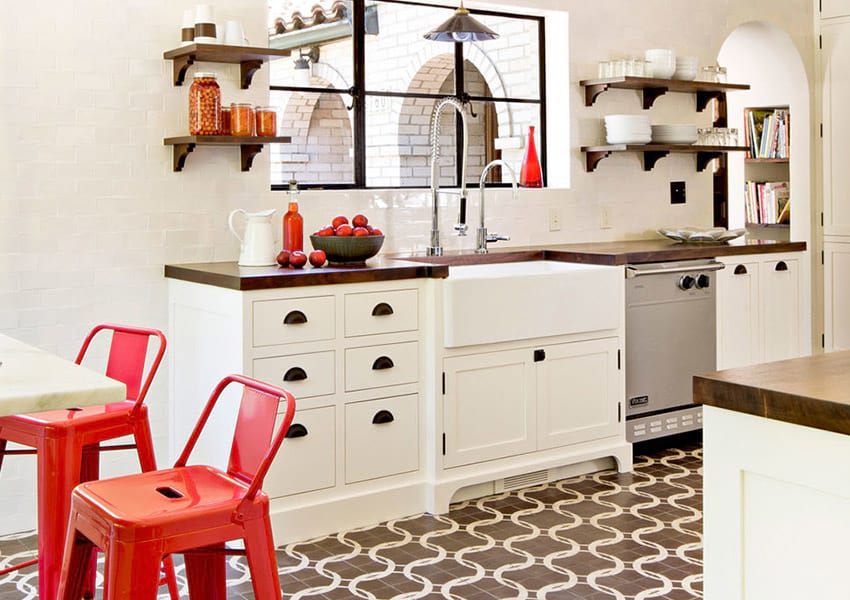
What are the installation options for fireclay sinks?
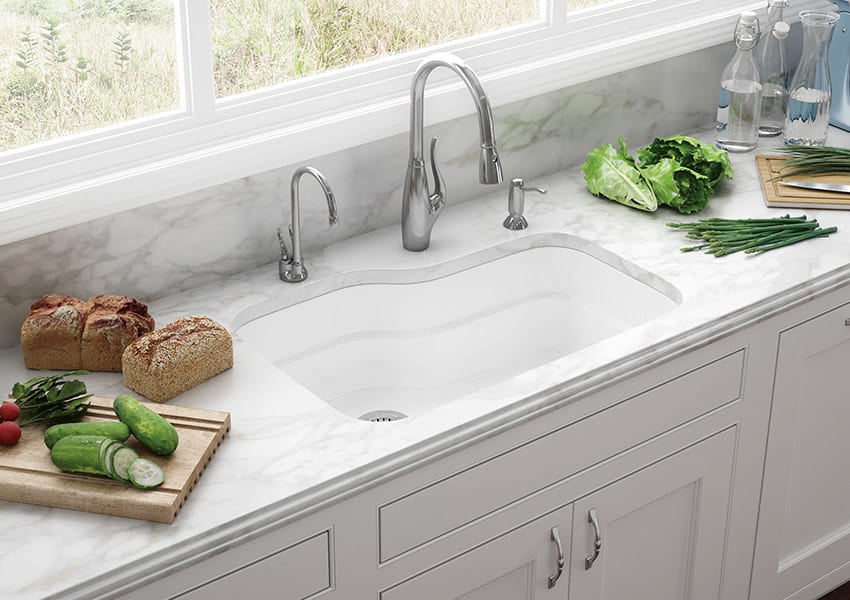
Though fireclay is most readily available in a variety of farmhouse styles (an added bonus; they’re comfortable to use – no counter to lean over, though some don’t like the sensation of cold sink against their warm torsos – and can hold stacks of dishes!), you can just as easily find a top-mount or undermount fireclay sink (some can even be flush-mounted!). Apron front fireclay sinks can also be mounted over or under the counter; with any fireclay drop in sink, be sure that your counter is equipped to handle its weight.
Not a fan of single-bowl sinks? Choose from a huge variety of double-bowl fireclay sinks to suit your tastes, needs, and kitchen style. Many sinks – single and double – include additional features like integrated drainboards.
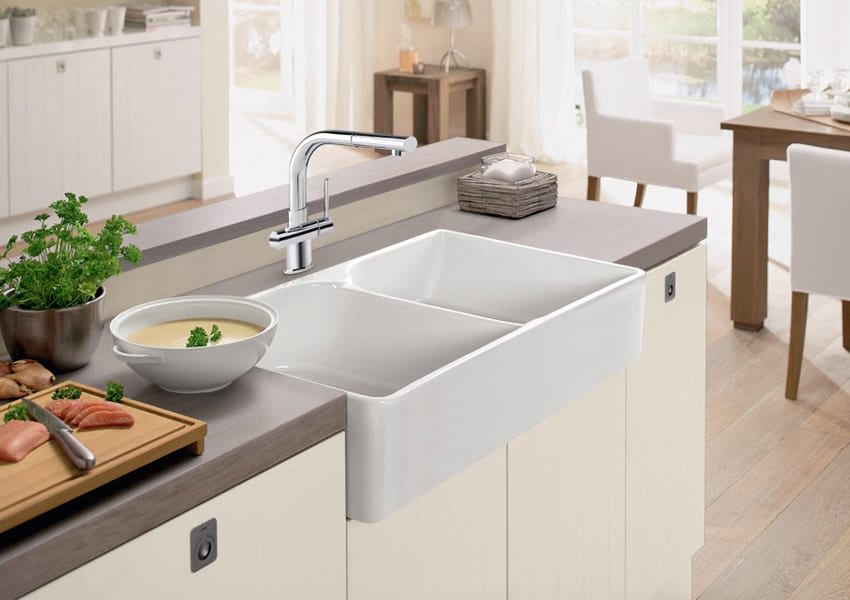
Be aware that many farmhouse and fireclay sinks are deeper than other sinks, which may require users to bend over to reach the bottom and may also contribute to additional splashing. The extra depth also means less storage space underneath the sink, so keep that in mind if you are short on space.
You may notice that some fireclay sinks are labeled as “reversible.” A reversible fireclay sink is finished on all four sides, often with a different design – such as a fluted side and a smooth side or rounded corners on one side with squared corners on the other – on the front and back, so that you can choose which side to display.
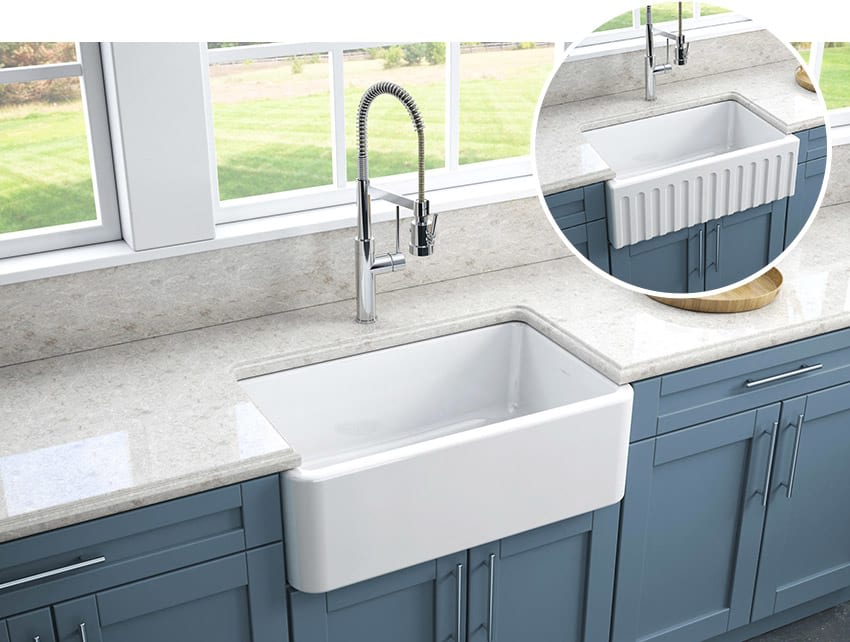
Can I use a garbage disposal with a fireclay sink?
Yes you can! Just be sure to use one that’s compatible with fireclay. Due to fireclay’s thicker nature, it requires special drain inserts, faucets, and accessories.
An extended flange fits the deeper drain hole and can be paired with a stopper or strainer basket according to your needs. Because fireclay sinks typically do not include holes for faucet mounting, a wall- or counter-mount faucet is necessary. Bridge faucets are commonly seen with fireclay sinks, as are country-style single-lever faucets.
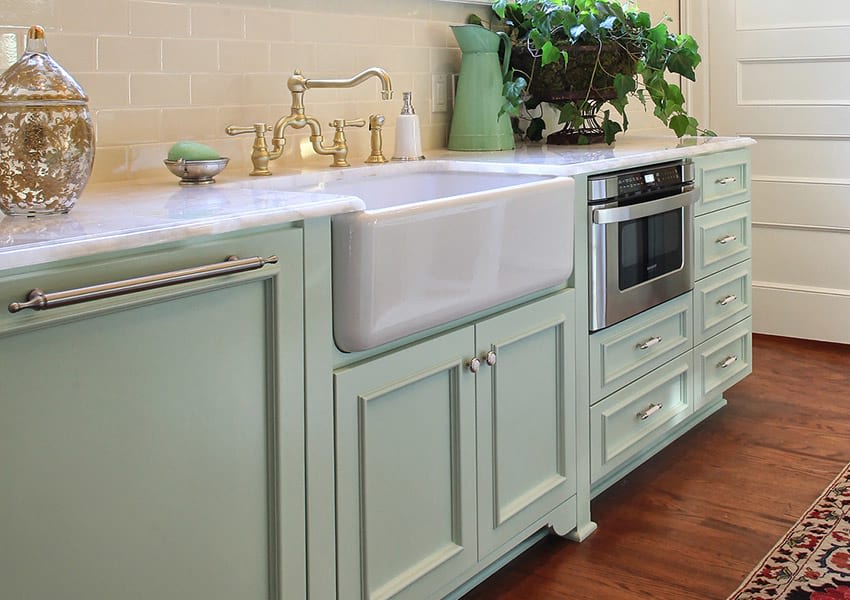
How much space do I need for a fireclay sink?
As with every kitchen sink, your sink size depends on several factors: kitchen size, layout, base cabinet size, usage patterns, and overall kitchen design.
To find the correct sink width for your kitchen, measure the inside of the base cabinet and subtract 3 inches – that’s the maximum sink size the cabinet can accommodate. So your 36″ base cabinet can hold a 33″ fireclay sink; a 33″ cabinet can accommodate a 30″ sink (this rule applies to most materials and mounts).
Fireclay sinks are available in a range of sizes to fit every kitchen; the most popular are large, single-bowl sinks, but every one – from a standard 24″ to a 36″ fireclay sink – will have an impact!
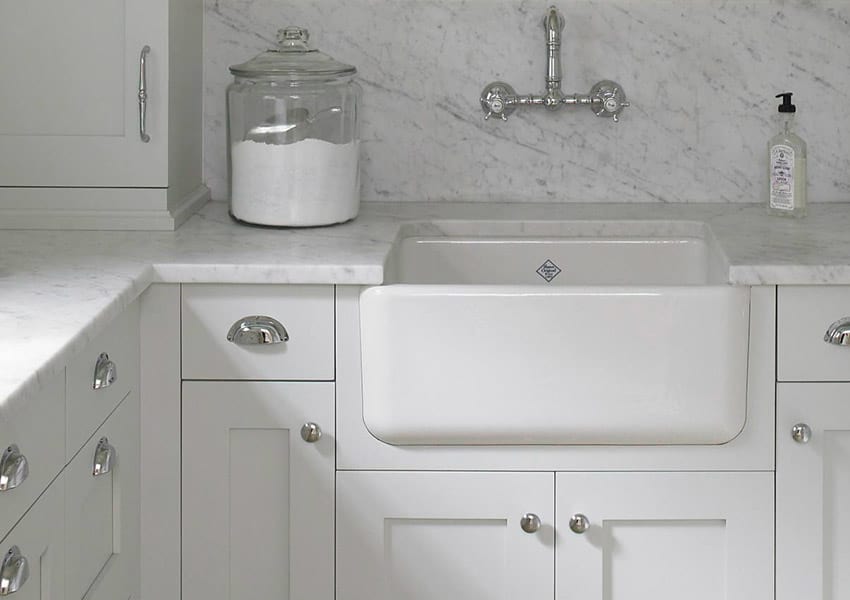
Be sure that your kitchen designer and installer have experience with fireclay sinks. Due to their handcrafted nature, fireclay sinks often vary slightly in size and shape (even on the same model); be sure your kitchen professional knows how to handle it.
What color options do I have with a fireclay sink?
Most fireclay sinks are limited to white and off-white (may be known as “parchment” or “biscuit”) due to the composition of the clay, but several manufacturers offer alternate finishes including black and blue.
Is a fireclay sink durable?
The kitchen sink is one of the highest-traffic areas in the home and is expected to stand up to regular use. Before choosing any sink material, it’s important to learn about its maintenance requirement.
Because fireclay is so heavy and dense, it requires special installation and reinforced cabinetry to hold its weight. Its hardness may also contribute to dropped dishes shattering more easily in the sink.
Does fireclay scratch or chip easily?
The most common complaints regarding fireclay sinks are that the finish can wear off (though in good-quality sinks it lasts longer than most finishes), it may be prone to chipping (again, less prone than porcelain and enamel and more scratch-resistant than stainless steel), and the material may stain, especially in flatbottomed farmhouse sinks where water gathers (avoided with proper maintenance: wiping out the sink after use and cleaning stains gently with mild abrasive cleaner).
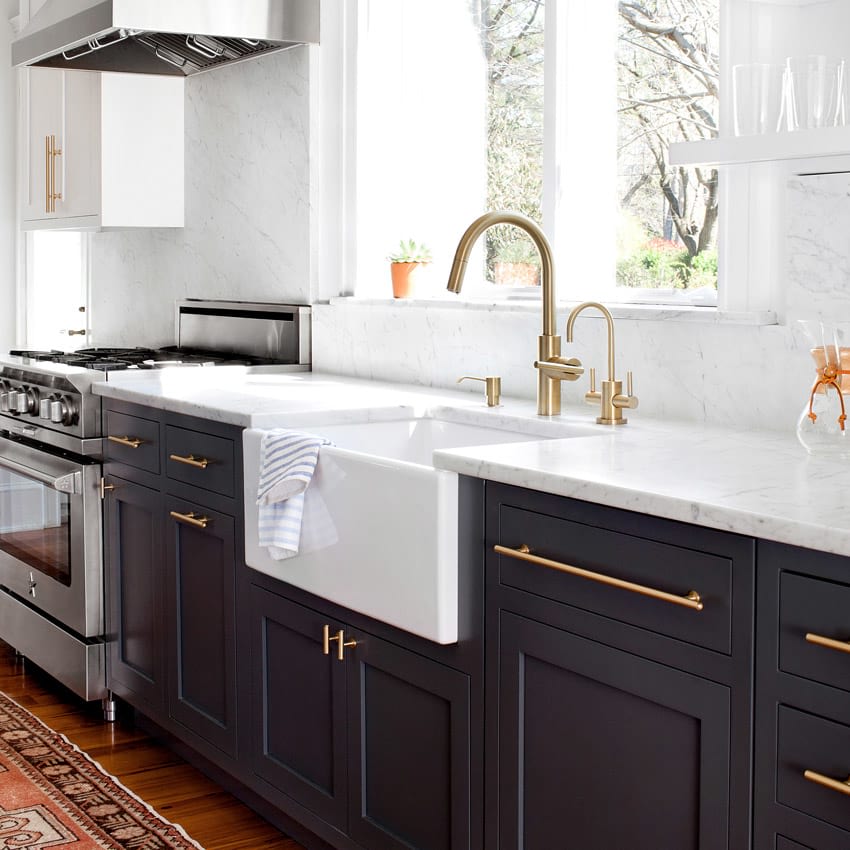
How to care for a fireclay sink
Like all materials, it’s important to learn how to clean a fireclay sink properly to maintain its finish and beauty. With proper (light) maintenance, its heavy-duty composition will look shiny and new for years to come; fireclay will not discolor or crack like other sink materials and is nonporous, acid- and alkali-resistant as well. (And if you’re committed to protecting our planet, good news – fireclay sinks are lead-free, made of all-natural, eco-friendly material, and entirely recyclable.)
Fireclay is relatively low-maintenance; follow these rules to keep it looking great:
- Wash the sink daily or whenever it gets dirty
- Wipe down the sink with a soft, dry cloth after each use to prevent water spots
- Clean more significant buildup or dirt with a mildly abrasive cleaning product or baking soda; apply with a damp sponge; daily abrasive cleaning will not harm the finish
- Lightly coat the sink with liquid wax once a month to encourage proper drainage
- A sink grid is recommended to protect your investment
How much is a fireclay sink?
There’s the million-dollar question. (Luckily, you don’t need to be a millionaire to afford a fireclay sink.)
Fireclay does have some minor disadvantages to consider when choosing a sink, most notably the price. Due to its excellent quality, it can be expensive; good-quality sinks will range in price from several hundred to several thousand dollars. You don’t need to shell out the big bucks to get a great sink, though; lower price does not necessarily indicate lesser quality.

What’s the best brand of fireclay sink?
Not all fireclay is created equal; be sure you invest in the best for many years of satisfying, beautiful use. We only sell the highest-quality products at Quality Bath; in particular, we recommend Rohl Shaws fireclay sinks, Latoscana fireclay sinks, and Blanco fireclay sinks, by virtue of their superior quality, manufacturer integrity, and overall caliber. Be aware that with fireclay, some lower-priced sinks may be correspondingly lower-quality; a common complaint is significant discrepancies in size or shape.