Kitchen Faucets: Everything You Need to Know
Shop Kitchen Faucets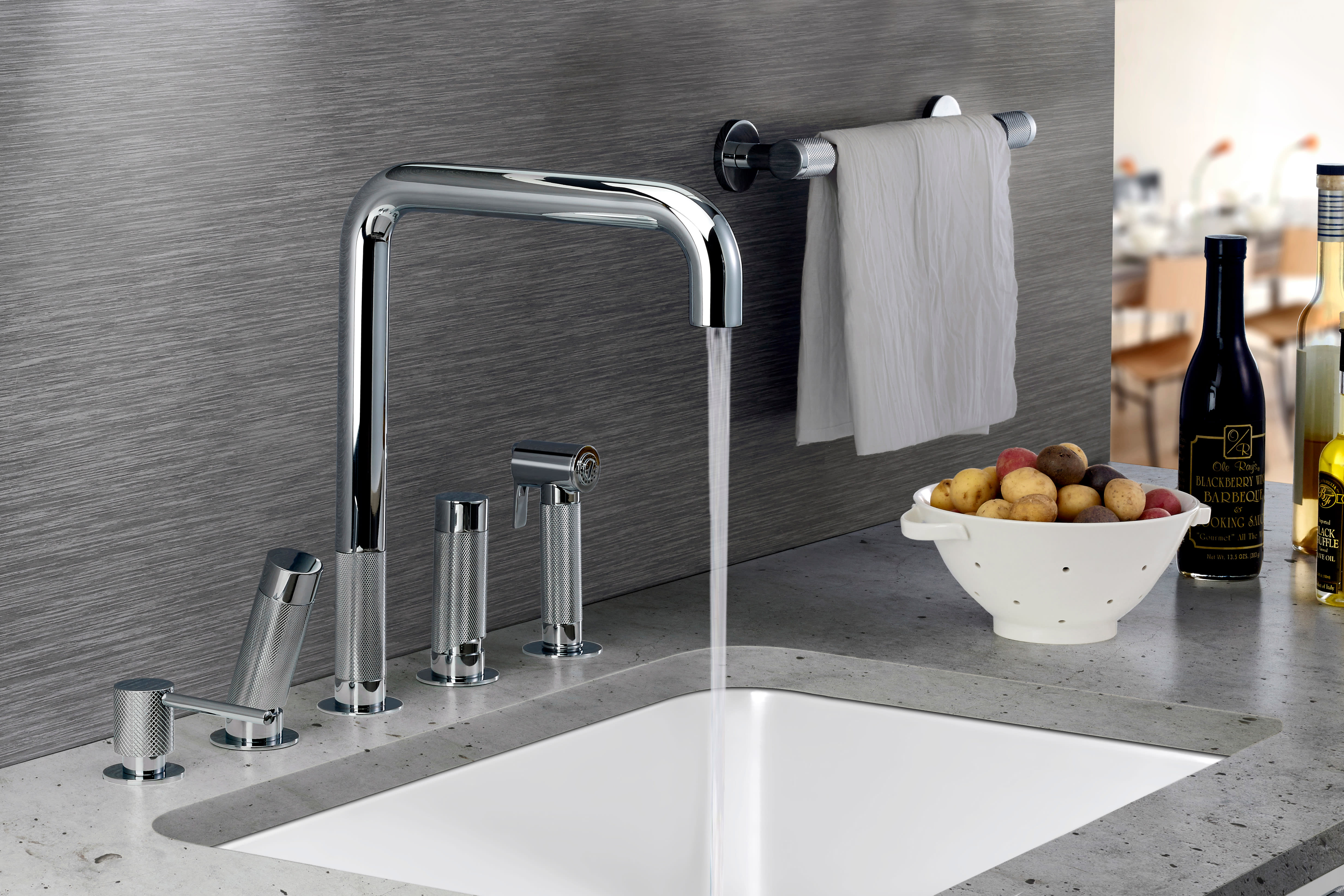
Mount, style, spray, valve, size… the decisions you’ll need to make seem endless! Our complete buying guide to kitchen faucets will help you decide with confidence.
The kitchen faucet is a hugely important fixture. You use your faucet countless times daily and for a wide variety of tasks – filling pots, washing dishes, rinsing produce, even taking a drink – and having the right one will make your day considerably easier.
With daily use, faucets can quickly accumulate water spots, soap scum, and food residue, making regular cleaning essential to maintaining a sparkling and sanitary kitchen. Pairing routine faucet care with consistent countertop, sink, and appliance maintenance ensures that your kitchen remains a safe and inviting environment for preparing meals.
Simple practices like wiping down surfaces after use, addressing spills immediately, and periodically deep-cleaning sink areas help prevent buildup and reduce the risk of bacteria or mold growth.
To elevate kitchen cleanliness further, professional cleaning services can provide targeted solutions that save time and deliver thorough results. Services offered by americanhousecleaning.com focus on creating spotless, sanitary kitchens through thorough cleaning techniques that reach sinks, faucets, and surrounding surfaces.
By combining these professional services with your own regular upkeep, you create a comprehensive system for maintaining a hygienic space, making daily kitchen tasks more efficient and enjoyable.
Ultimately, attention to detail in both general kitchen cleanliness and faucet maintenance ensures that this essential fixture continues to function smoothly while complementing a pristine, well-cared-for kitchen.
Go into the faucet-selection process with your eyes wide open and a thorough knowledge of the terms and features related to kitchen faucets. We’ll tell you everything you need to know!
Faucet Features
Mount
Kitchen faucets may be mounted in several different configurations. If you are adding a faucet to an existing sink or counter, first check how many holes you have – your faucet will need to fit into those holes.
- Single-hole faucets have a handle mounted directly on the faucet body; these are commonly sleek and minimalist
- Multi-hole: any faucet with a separate handle, such as a widespread faucet or bridge faucet, will require more than one hole in the counter or sink; most require three holes, but can use up to six for various accessories; these are commonly regarded as more elegant or traditional
Some faucet configurations can be tricky; they may look like they need more (or fewer) holes than they really require. Always check the faucet description first. A few general rules to tell you how many holes you’ll need:
- A single handle faucet typically requires one hole
- A faucet with a separate single handle typically requires two holes
- A faucet with two separate handles typically requires three holes
- Add a hole for each additional faucet or accessory (hot water dispenser, filtered drinking faucet, side spray, soap dispenser)
- Some building codes require the use of an air gap (which prevents backflow contamination) for the dishwasher; if yours does, add another hole
If your sink or counter has more holes than you’d like to fill, you can cover them with escutcheons (decorative plates) to coordinate with your faucet.
Decide where you want to mount the faucet.
- Sink mount faucets are mounted on the sink itself; they’re usually found on drop-in sinks
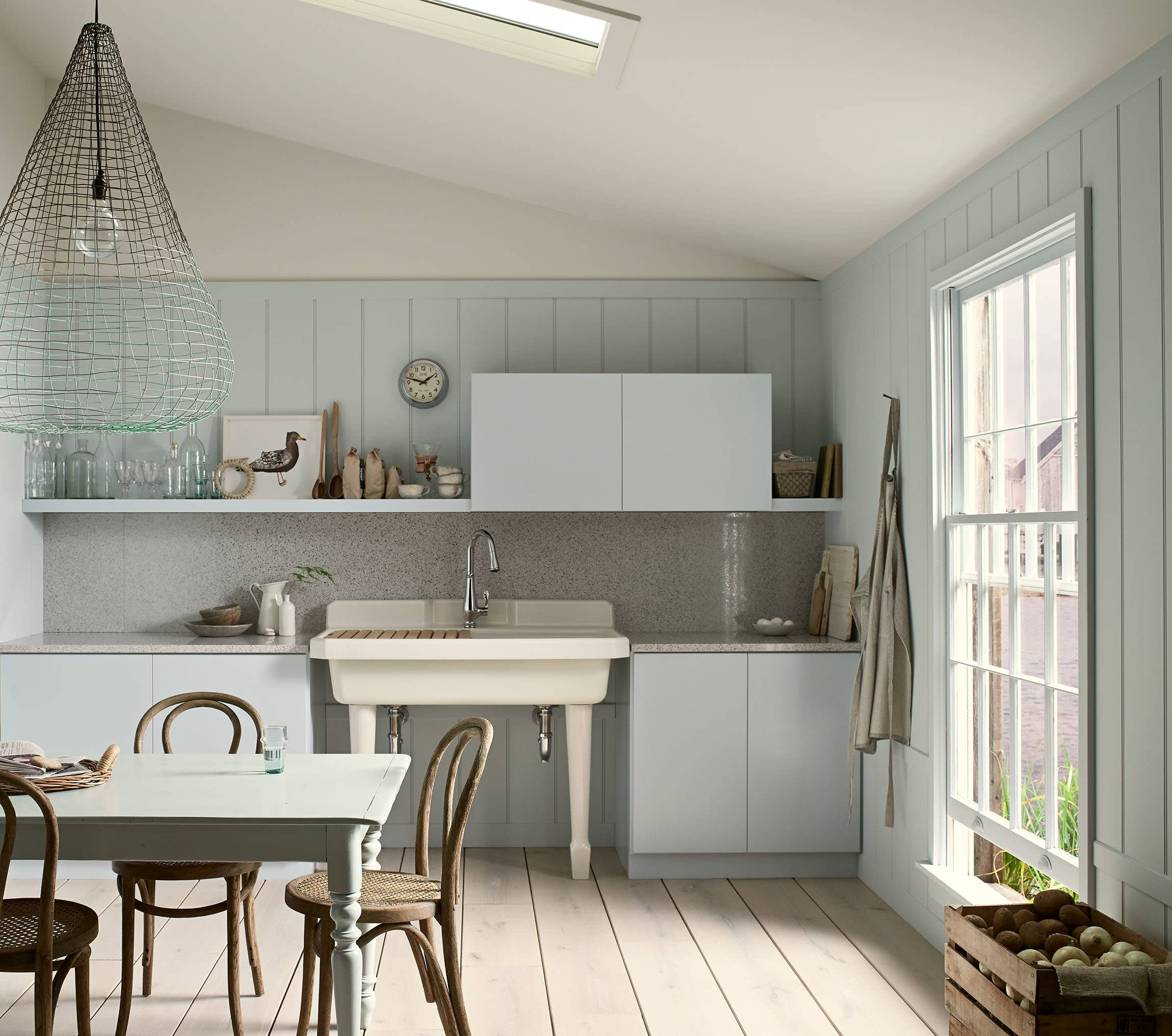
Kohler Sink Mounted Faucet - Deck mount faucets are mounted on the counter; they’re usually used with undermount sinks
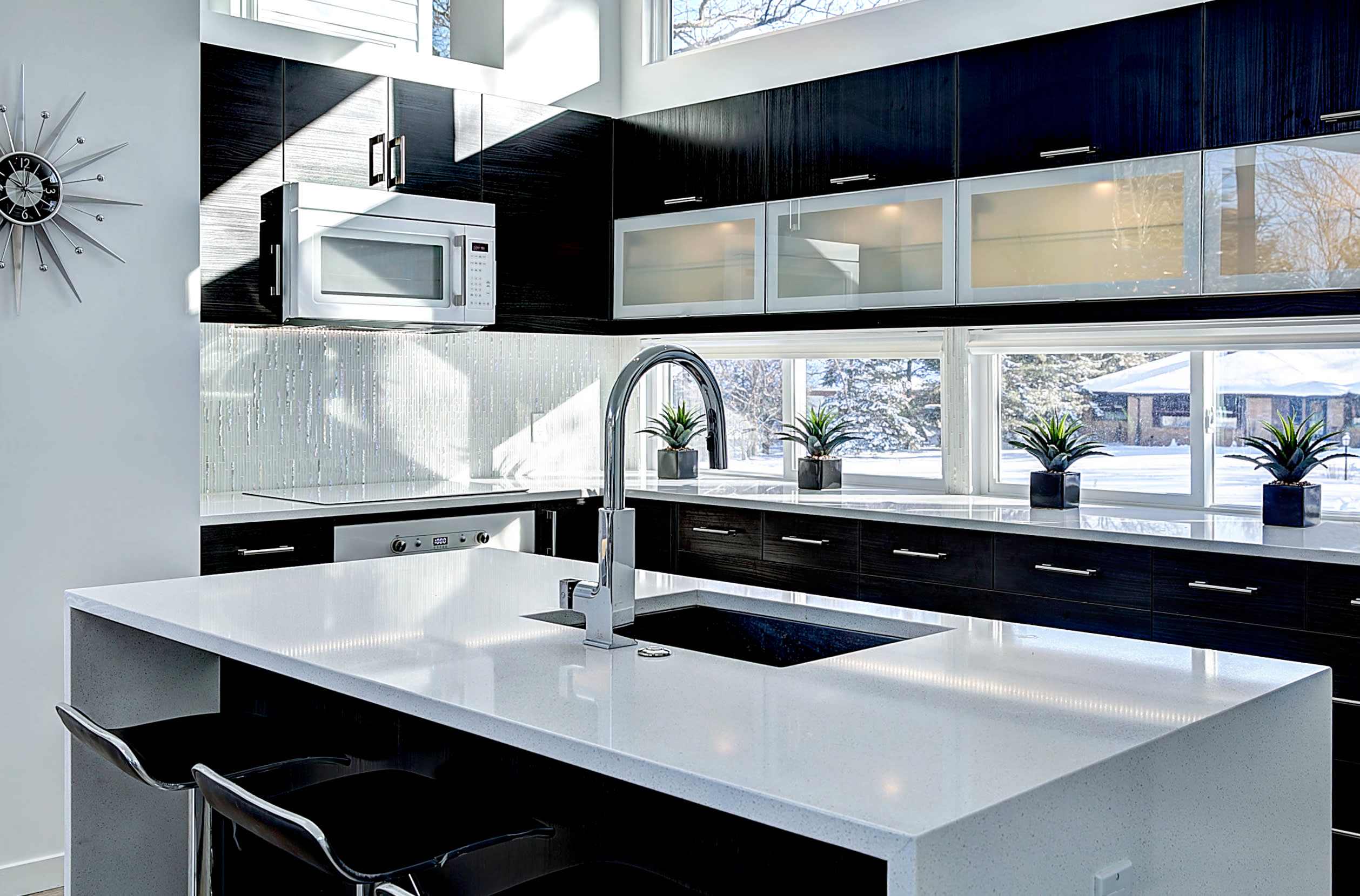
Berghuis Construction - Wall mount kitchen faucets are mounted directly on the wall rather than the sink or counter, requiring no holes; these are commonly paired with apron-front sinks
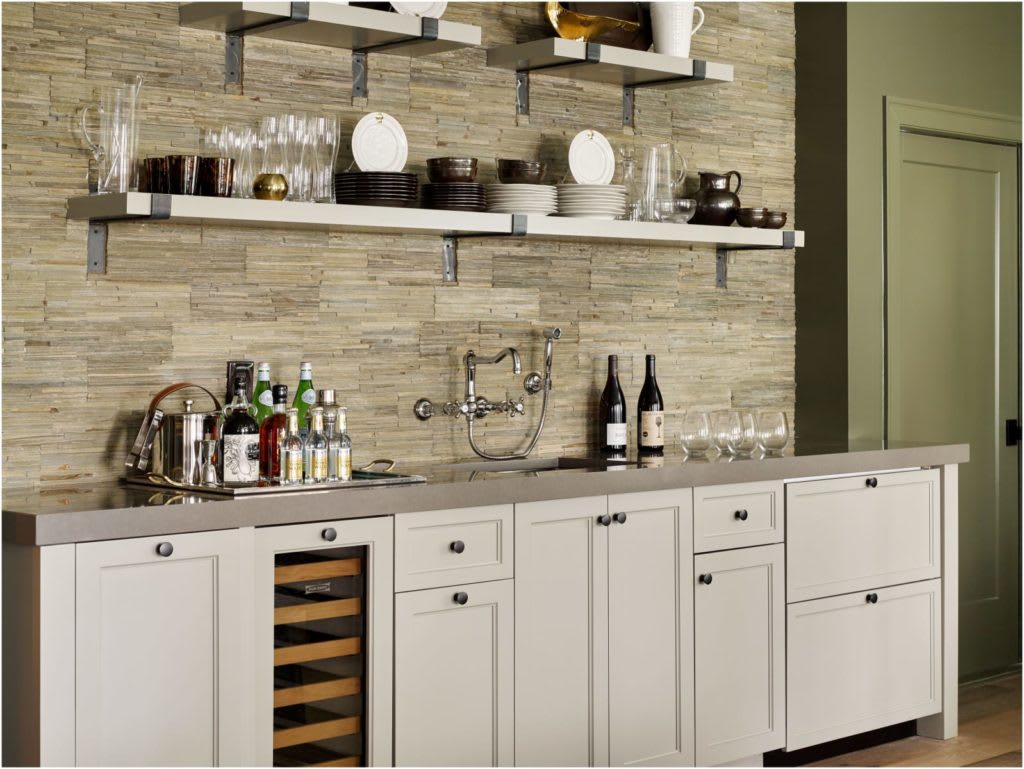
Rohl
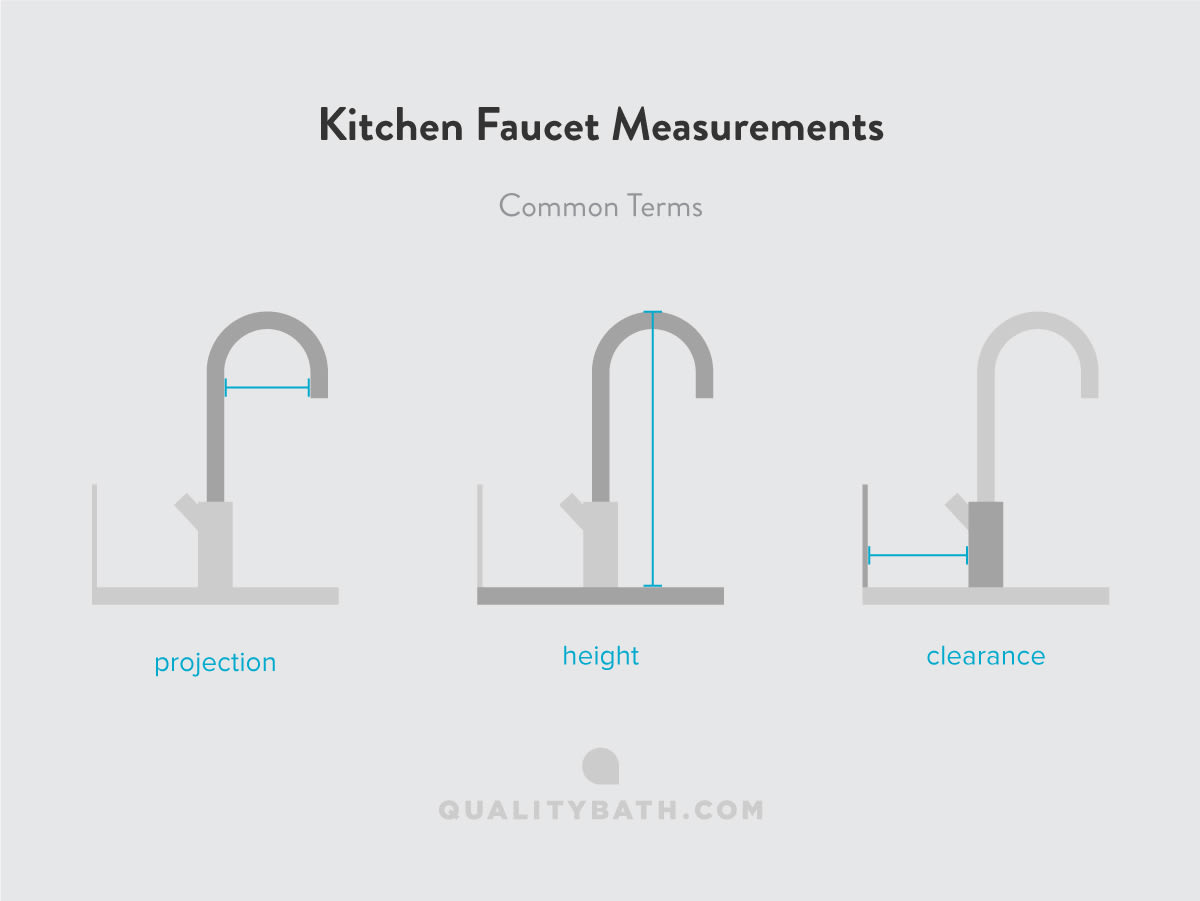
You’ll also need to consider the spread (the distance between the center of one outer hole to the center of the furthermost hole) and three more important measurements: projection, height, and clearance.
Projection
“Projection” refers to how far the faucet extends over the sink. Measure the faucet projection from base to spout to ensure that your faucet will extend far enough; the spout should reach adequately past the sink wall. Projection is an especially important consideration when you’re choosing a wall mount faucet.
If you plan on using the faucet with a double bowl sink or triple bowl sink, be sure that the projection will allow it to reach every part of the sink. There is no particular style that is best suited for multi-bowl sinks, as long as its size and projection are adequate.
Height
Many sinks are located in areas without upper cabinets; if yours will be mounted beneath a cabinet measure the height to ensure that it will not be impeded by the cabinet above it, especially if it’s a high-arc faucet.
Height is an important consideration if you tend to wash or fill large pots or if you prefer extra space between the faucet and the sink. A high faucet combined with a shallow sink may result in splashing.
Clearance
For a faucet that swivels and for easy cleaning, measure the distance between the faucet hole and the backsplash to ensure that the faucet has enough space to move freely (without the spout or handle hitting the wall).
Handle type
Consider how you want to turn on the faucet. The most popular type of handle today is a single-lever, which allows one to turn on the water without (excessively) touching the handle, keeping the kitchen cleaner and more sanitary. If your hands are full or greasy, you can use your forearm to turn on the water. Single-lever faucets are also easier to install than side-mounted handles.
While a single handle kitchen faucet keeps the lever at the last temperature setting (handy if you like your water at a certain temperature), one positive aspect of side-mounted handles (aside from the look – some people prefer the dual-handle appearance) is that they make precise temperature-setting easier. Two-handle faucets are also generally less expensive.
Some faucets completely bypass the handle and feature a hands-free touch-sensitive spout; simply touch the faucet with any part of your body to turn it on or off.
Spray type
Adding a sprayer to the faucet will make washing dishes and cleaning the sink infinitely easier. Many faucets now include an integrated sprayer in the head, but you can opt for a multi-piece set with a separate sprayer if you have available holes. The best option (and preferred by professional chefs) is generally a faucet with a pull-down spray head, which allows the user to simply pull out the sprayer head and then retract it back into the main spout.
Three important points to consider when choosing an integrated spray head: 1. make sure it’s good quality; an inferior sprayer, especially a pull-down, will break easily and dangle if the magnet is insufficient; 2. pick one with an easily accessible spray/stream button to change flow type; and 3. ensure that the sprayer will reach all corners of the sink.
To learn about sprayer types in more depth, see our guide: Pull Down, Pull Out, or Side Spray?
Components
The outside of your faucet is important, but the innards are even more important. Choose solid brass components for durability and look for faucets with replaceable parts (so that you don’t have to replace the entire faucet if one piece breaks). You’ll know immediately if it’s brass; it’ll feel heavy when you hold it in your hand. If it’s suspiciously lightweight, it’s probably plastic.
When it comes to the inner workings of your faucet, you’ll probably encounter some unfamiliar terms. Here are some of your more common questions, answered and demystified:
What is a kitchen faucet valve?
The faucet valve controls and regulates the flow of water.
- A ball valve faucet uses a metal or plastic ball to control the flow; choose metal, which will last longer
- A ceramic disk valve is the most expensive but most durable option; two disks inside the faucet lock together to form an airtight seal when the faucet is turned off
- A cartridge valve faucet has a cylinder-shaped cartridge with rubber rings; choose brass for best results
- A compression valve faucet uses a washer inside the faucet to restrict or allow water flow; it is the least expensive type but also the most prone to leaks
What is a kitchen faucet aerator?
An aerator introduces air into the water stream for better flow and better water efficiency. Check your state’s water flow laws to ensure that yours is in compliance, especially if you’re in California (where the rules are stricter – read more about it here).
What is a kitchen faucet diverter?
A diverter valve – like its name suggests – diverts the water to different parts of the faucet, such as the sprayer.
Technology
In addition to touch-free technology, some faucets have high-tech features such as temperature-indicating LED lighting, water filtration, and even carbonation options.
Accessories
Complete your sink/faucet set (or fill some extra holes) with faucet accessories such as hot water dispenser, filtered drinking faucet, and soap dispenser.
Style
Faucet style
Style options are virtually endless. You’ll find faucets in every style from the contemporary high-arc faucet to the traditional bridge faucet and everything in between – rustic, modern, industrial, antique, and beyond.
While faucet styles can be fluid (pun intended) – you can find a modern bridge faucet, though most are traditional – there are several style indicators for different style types:
- Traditional faucets are classically styled, featuring curves and details
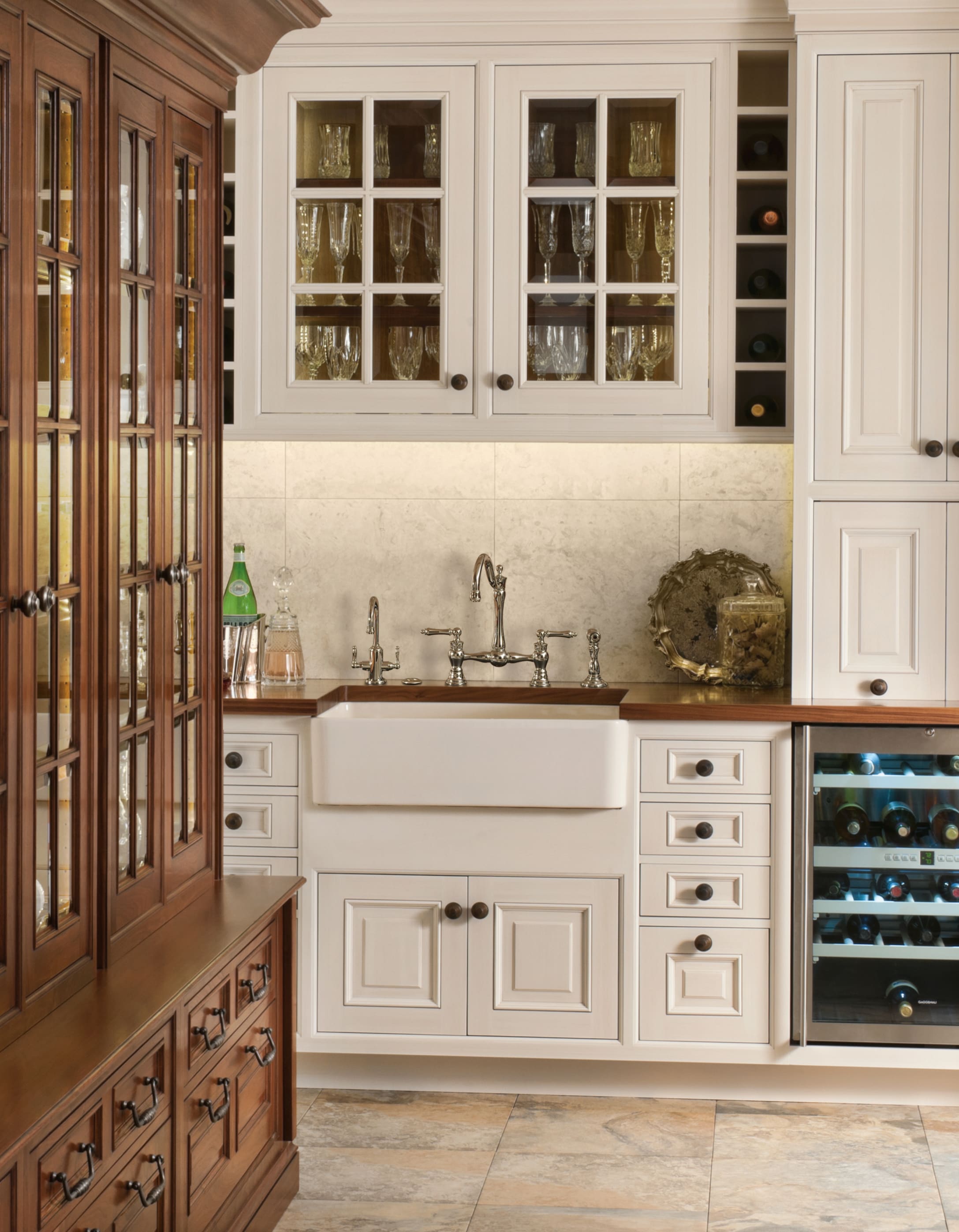
Franke Bridge Style Kitchen Faucet - Contemporary faucets are typically minimalist and sleek, without unnecessary detailing
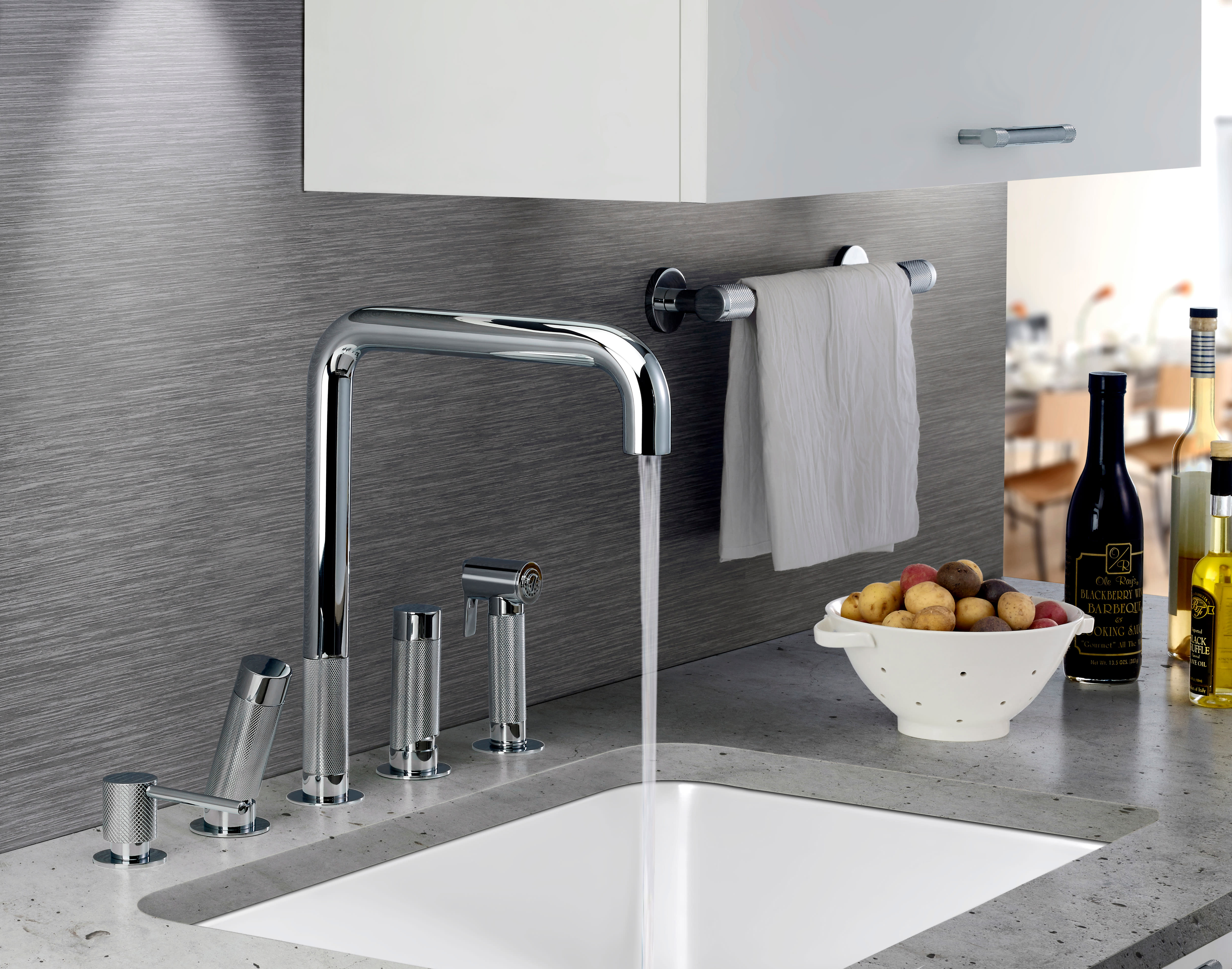
Watermark Tod2 Kitchen Faucet - Farmhouse and rustic faucets feature traditional styling with farmhouse-inspired and aged finishes such as bronze and distressed finishes
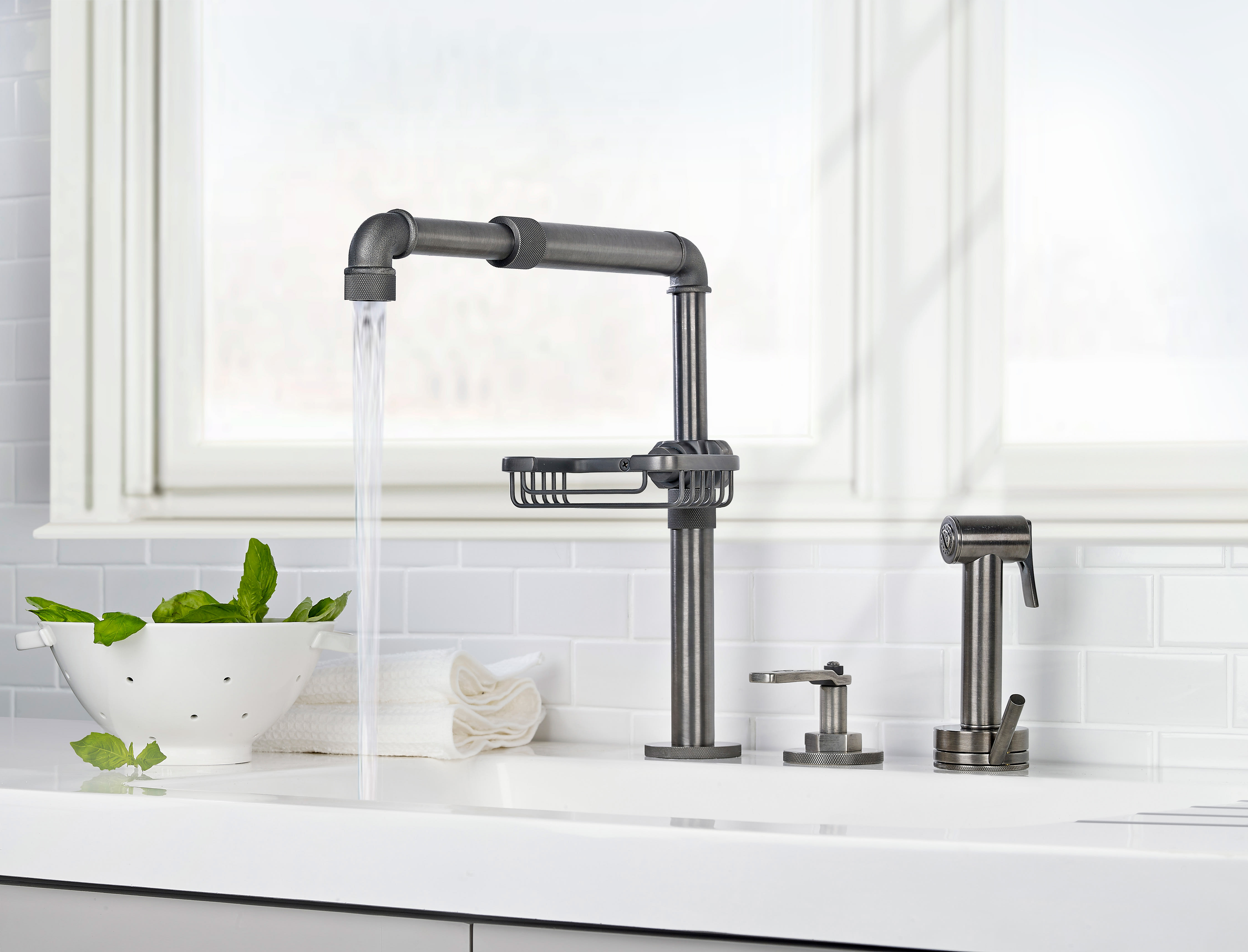
Watermark Elan Vital Single Control Telescopic Kitchen Faucet With Sidespray - Industrial faucets often have visually interesting details such as wheel-shaped handles
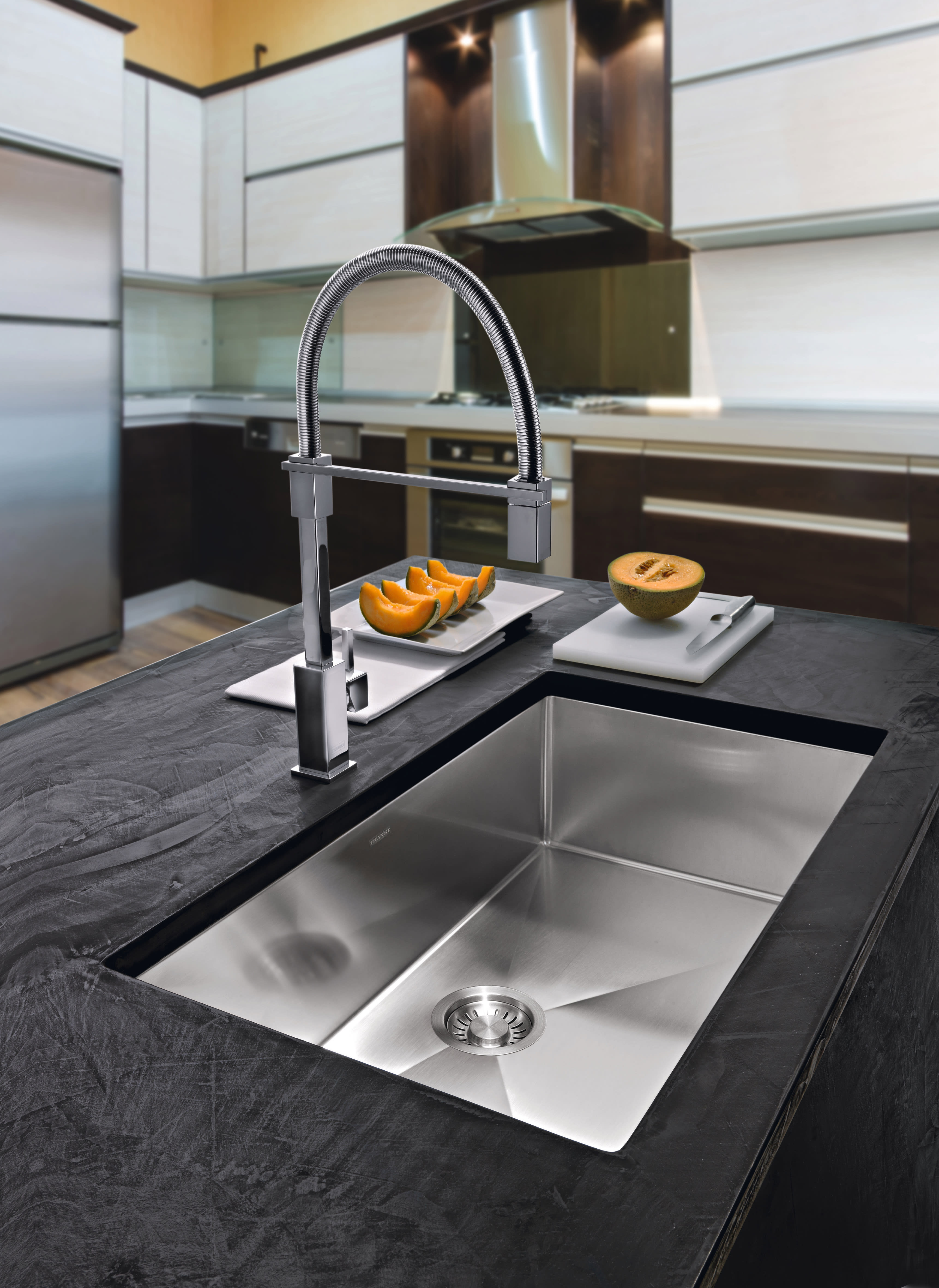
Franke Planar 8 Semi-Professional Faucet - Transitional faucets are a cross between traditional and contemporary, with clean curves and minimal detailing
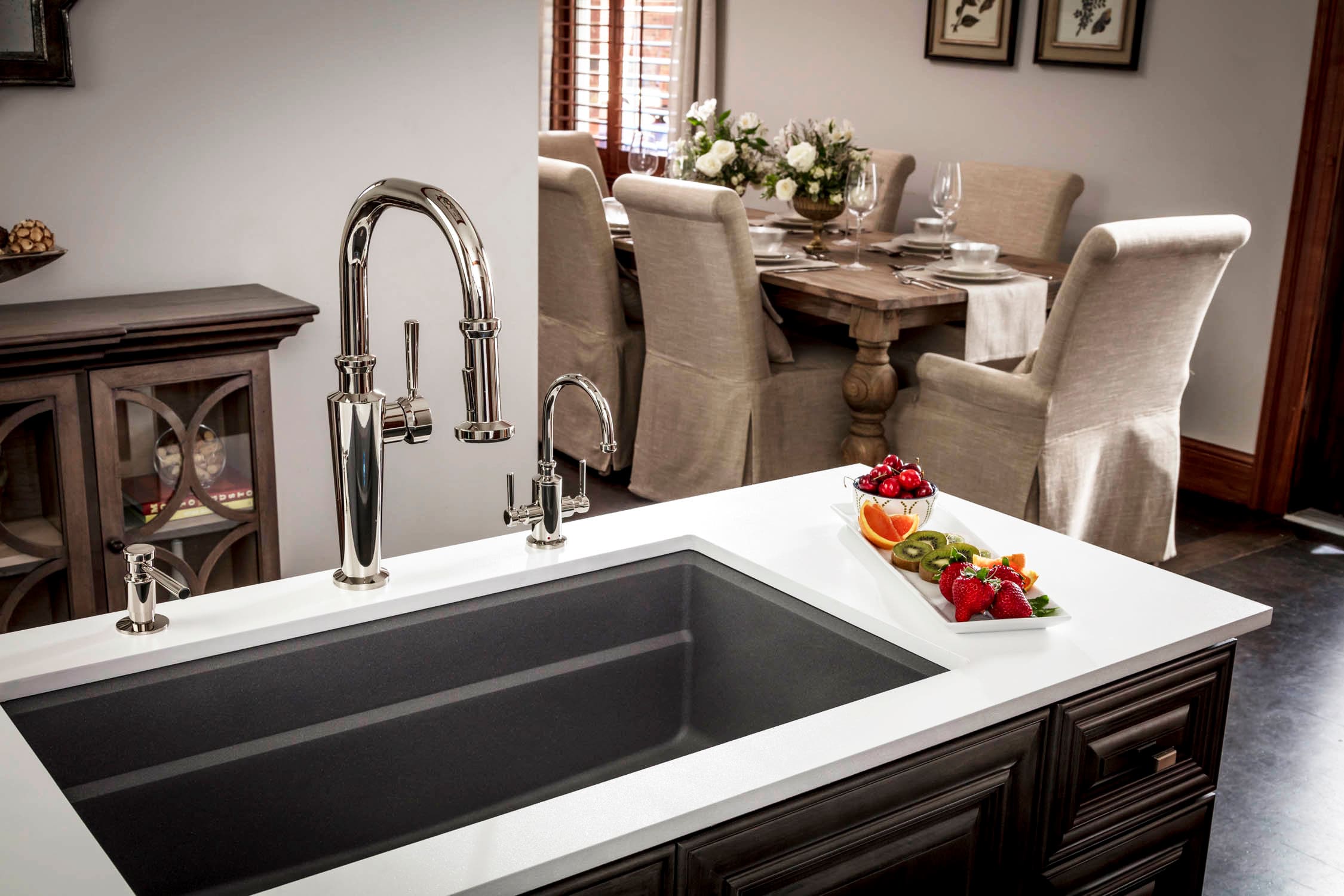
Franke Absinthe Pull Down Kitchen Faucet
Handle style
Some faucets have several handle options, including lever, knob, cross, and wheel in various colors and styles.
Faucet type
In addition to the standard kitchen faucet types, you may want to consider a popular culinary faucet (for a professional look and function in a home kitchen), a bar or prep faucet for a smaller sink, or a pot filler to install directly over the stovetop (great for filling large pots and eliminating heavy lifting).
Faucet finish
Gone are the days when silvery finishes such as chrome or nickel were the only options for kitchen sink faucets; today you can choose from a huge variety of colors – including bronze, copper, and gold tones, white and black, and custom colors – and visually interesting finishes, such as brushed, weathered, oil-rubbed, matte, and two-tone. A PVD (physical vapor deposition) finish, while more expensive, prevents tarnishing and corrosion.
Choose a finish that coordinates well with your kitchen color scheme; consider sink material, hardware, cabinets, and countertops.
Faucet Brands
We want you to have the best faucet possible. All of our faucets are of superior quality; we particularly recommend several exceptional brands. Blanco produces fashionable, durable faucets for every kind of kitchen and cook; Grohe’s ultra-reliable and ultra-chic faucets are (bonus!) affordable; Newport Brass offers sturdiness and style in every dependable faucet; and Rohl’s classic faucets lend unmistakable elegance and excellent quality to any sink.